Faculty of Health Graduate Mentorship Award
Graduate student mentorship is one of the most important contributions of faculty members and has a significant impact on the lives of students during and beyond their programs at the University of Waterloo. The Faculty of Health Graduate Mentorship Award honours exemplary graduate mentorship in the Faculty.
Mentorship is recognized as formal supervision of graduate students or as significant support provided to students outside of the classroom by a faculty member.
Since 2020, we have celebrated outstanding mentors not only through this award, but also through the voices of graduate student nominators who have shared inspiring stories of mentorship excellence across the faculty.
Nominate
Nomination deadline: Sep 5, 2025
Award categories
This award provides faculty-level recognition to excellent graduate mentors and provides emerging mentors with an opportunity for recognition. Accordingly, we have the following award categories:
- Senior Mentorship Award: 16 years or more since first academic appointment;
- Mid-Career Mentorship Award: 5–15 years since first academic appointment and;
- Emerging Mentorship Award: Less than 5 years since first academic appointment.
Three awards will be available annually, one for each category above.
Please feel free to contact the Administrator, Faculty Graduate Studies to confirm eligibility and/or award category.
Eligibility
- Candidates must be tenured or tenure-track faculty members or continuing lecturers. They must have their main appointment in the Faculty of Health.
- Winners of these Mentorship Awards are not eligible to be nominated again for 5 years.
Nomination process
Nominations are initiated by a student or faculty member. The nomination must be supported by a senior faculty member, such as Associate Chair/Director Graduate Studies for KHS, RLS or SPHS. Nominators are responsible for assembling the nomination letters and letters of support and submitting as a single PDF nomination package through the nomination form.
The nomination package must include the following:
- A cover letter by the nominator that outlines the qualities of the proposed mentor and reason for nomination.
- A minimum 3 and a maximum of 7 letters of support from current or prior students or post-doctoral fellows within the faculty. Each letter must include the student’s name, level of graduate student and time-frame supervised, and current position.
- With the above information assembled, the Associate Chair/Director Graduate Studies (or designate) then writes a letter of support for the nomination.
Submission due date: September 5, 2025 (normally early September each year)
*Complete nomination packages may be considered for 2 consecutive years, before requiring updated letters of support.
Evaluation process
Review criteria
(Note: these criteria are largely adopted from university-level guidelines)
Supervision as a mentor/advisor. This could include the following:
- effective guidance in planning of graduate student research;
- established mechanism for ongoing interaction with graduate students;
- timely reading and provision of feedback on students' work;
- maintaining their role as an advisor while instilling independence among their students;
- fostering and facilitating students' skills for problem solving, critical thinking, self-directed learning and effective communicating;
- providing a supportive environment that stimulates creativity, debate, engagement, and progression toward career goals;
- promoting dissemination and presentation of student's research results;
- commitment to students’ personal and professional development;
- sharing wisdom, insights and skills with students.
Adjudicators
A Faculty of Health Awards Committee should be formed, composed of Associated Chairs/Directors (or designate) from the three departments, a faculty member from each department, the Associate Dean, and a graduate student representative from each unit (KIN, RLS, and SPHS). All awardees should be invited to sit on the subsequent year’s award adjudication committee.
To be nominated by the students that one mentors is a tremendous honour and speaks to the significant and lasting impacts that graduate mentors are having. In recognition of all nominees:
- All nominees will receive a letter indicating that they were nominated for a Faculty of Health Mentorship Award. The letter is to be copied to their Chair/Director.
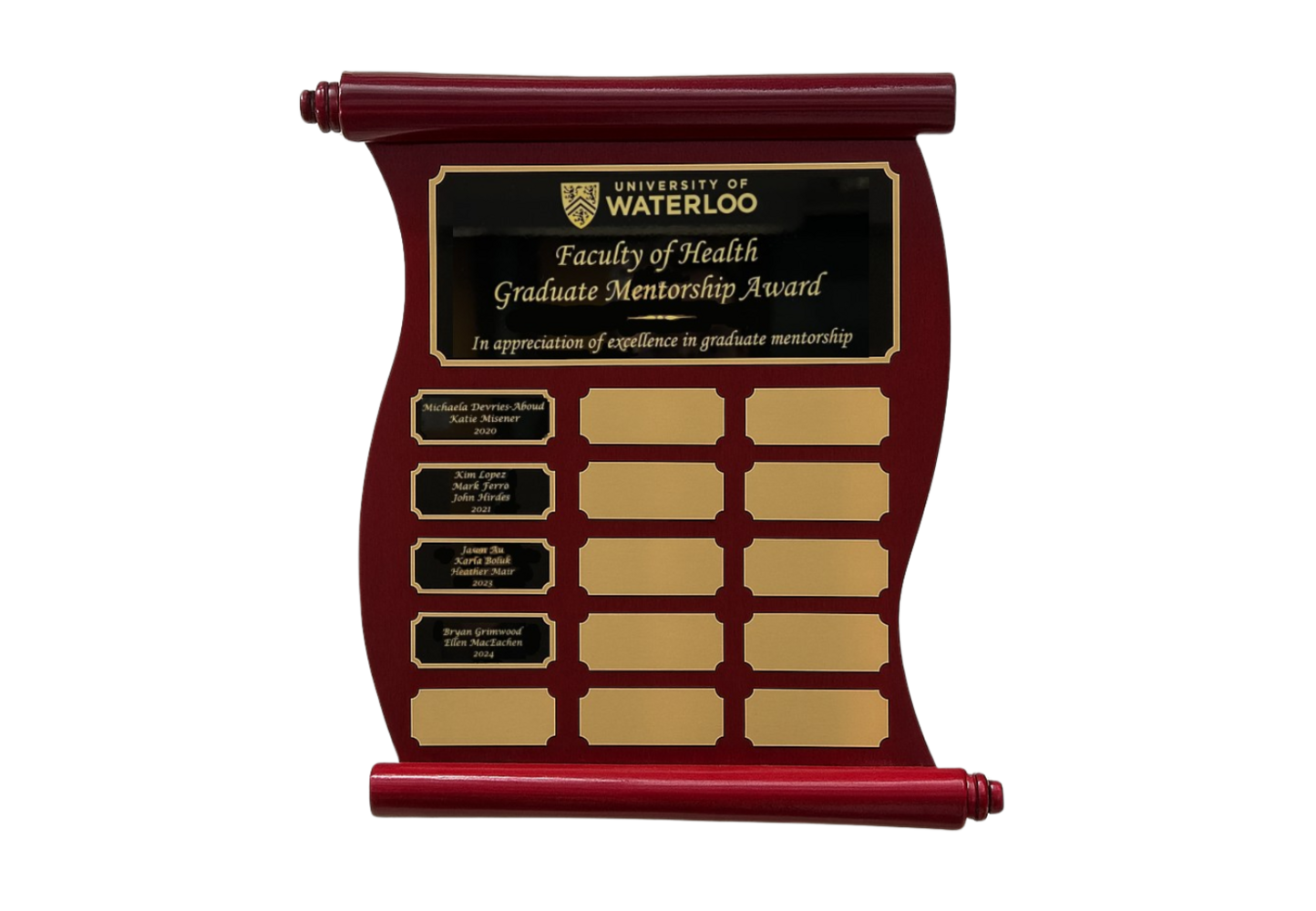
- Awardees will receive a certificate and their names will be added to a plaque to be displayed in the Burt Matthews Hall foyer.
Resources for nominators
Every year, the adjudication committees are always deeply impressed by the effort that student nominators and their colleagues invest in the strong nominations, and the high esteem they hold for their mentors. We appreciate that putting together these nominations can be challenging, and therefore we've put together some resources below that will hopefully be helpful along the way.
If something is missing that you think would be helpful, or if you have any questions, comments or other suggestions, please don't hesitate to reach out to the Administrator, Faculty Graduate Studies.
Getting started
First of all, thank you for taking the time to read over information about the Faculty of Health Graduate Mentorship Award and considering putting forward a nomination. Not only is it important to the Faculty to recognize excellence in graduate supervision and mentorship, but it is equally important and encouraging to hear from the students about their positive experiences.
When you're ready to start a nomination, the first thing to know is that you are not alone. The Administrator, Faculty Graduate Studies, is available to answer questions and provide support along the way. To help you get started, we've put together some tips and tricks below that we've compiled from hearing from other student nominators.
Tips and Tricks
- Consider a co-nominator to help share the tasks of coordinating/reviewing support letters and compiling the final nomination package. While most nominators to this date have put together the full package on their own, chances are there are many students who feel the same way as you about your mentor. In addition to writing a letter of support, they may also be interested in co-nominating with you. We've heard from nominators in the past that this can significantly help with the workload of collecting and coordinating support letters, especially if the nominator(s) already graduated and are no longer on campus.
- Start reaching out to letter writers as soon as possible to give them enough time to craft an excellent letter and for them to send back in time for you to review and provide feedback. Remember to also build in an appropriate amount of time to share all letters with your unit's Associate Chair/Director for them to write their support letter. If you need help identifying other students that your nominee has mentored, the Administrator, Faculty Graduate Studies can provide a list of students that they supervised.
- The max number of letters to support your nominee is 7. You could either reach out to more than 7 potential letter writers and then make a selection if needed, or only solicit 7 in total. While the latter ensures you won't exceed the maximum, the former will result in the highest total number of letters.
- Don't wait until you have received all the student support letters before reaching out to the Associate Chair/Director for their letter of support. Review the list of contacts below and reach out well in advance so that the Associate Chair/Director can be prepared to write their letter in time for the deadline. Keep in mind that they may also be approached to write more than one letter of support, so additional time would be very appreciated in accommodating more than one letter or finding a delegate to avoid any conflict of interest.
- Attend the scheduled information session (time and date will be announced with the call for nominations is sent out) for graduate students to hear more advice on preparing a strong nomination package, and also for an opportunity to ask any of your own questions and meet other nominators.
Contacts
| Name (with profile link) | Role |
|---|---|
| Associate Director, Research Graduate Programs, SPHS | |
| Jennifer Yessis | Associate Director, Professional Graduate Programs, SPHS |
| Michael Barnett-Cowan | Associate Chair of Graduate Studies, KHS |
| Heather Mair (current) Karla Boluk (starting Sep 1) | Associate Chair of Graduate Studies, RLS |
| Ryan McGuinness | Administrator, Faculty Graduate Studies |
Reaching out to letter writers
The ask
Request that the referee write a letter on behalf of [X]
- Explain who you are and why you are writing them.
- Explain why you have chosen them and why you think they will make a good writer.
- Summarize the requirements of the competition (copy excerpts from the call for nominations) and provide a link to the Faculty of Health Graduate Mentorship Award webpage for more details, highlighting the resources and tips.
- Attach any information that you think may help them assess the nominee (when sending to the department chair/director, provide all other support letters and your nomination letter).
- Indicate a specific date when you would like to receive the letter (consider giving the writer at least 2 weeks and leaving yourself 1-2 weeks before the deadline for review).
- Give them a deadline to respond with their acceptance or denial and let them know that you will send additional supporting information if they are willing to volunteer.
The confirmation
- Write back and thank them for agreeing to write a letter of support.
- If applicable, suggest what specific areas you want them to address and highlight any rules or required statements. It could strongly improve a nomination package if you are able to spread out certain areas of information between the various letter writers to avoid over-emphasis on some criteria over others.
- If you are willing (or if requested), consider sending resources such as your own nomination letter and/or other letters of support that those writers are willing to share. However, be selective and careful of providing too many examples to the point that it because more of a template for them, preventing them from creating a more unique letter.
- Restate the deadline by which you need the letter (ideally giving the writer at least 2 weeks and leaving yourself 1-2 weeks before the deadline for review).
- Provide your contact information in case they have questions or concerns.
Tips for student letter writers
Thank you for taking the time to recognize and celebrate your exceptional mentors. It is an honour to read each of the letters that are part of the nomination packages every year. We truly value your efforts in sharing their impact and how they've made a difference.
In addition to the overall tips for letter writers above, consider the following tips for writing a letter of support for your mentor:
- Follow the instructions. Be sure to provide all information specifically requested (e.g., about the candidate’s relation to you, about the time frame of contributions being discussed, etc.). Aim to write a letter that is 350-600 words long. Shorter letters may also be helpful, but often lack sufficient detail to be convincing for the adjudication committee.
- Where possible, use appropriate letterhead on your nomination letter.
- Organize your letter effectively. For example, you might start with a clear statement of who you are nominating and for which award/category, share your enthusiasm and gratitude for being given the opportunity to support your mentor's nomination, followed by a succinct summary of why you think this candidate deserves recognition. Then use subsequent paragraphs to describe and detail the candidate’s impact and contributions to your academic and personal growth. Finally, conclude with a compelling summary that underscores the exceptional character of the candidate.
-
Provide concrete evidence to support your assertions about the candidate. It is not enough, for example, to say that “X provided excellent mentorship throughout my academic career.” You must offer details about exceptional contributions, describe impacts, perhaps quote words of praise or appreciation offered by others, provide relevant qualitative and/or quantitative evidence that demonstrates this excellence.
-
Write in an engaging manner, so that the reader catches your enthusiasm for the candidate. Use superlatives and strong adjectives where warranted, but do not exaggerate. Be precise in your word choice, compelling in your narrative, and strategic with your comparisons. Avoid repetition, needlessly long sentences, and clichés.
- Use comparisons to emphasize how the candidate stands out from their peers and other mentors you've had. For example, compare to what your original expectations were for a mentor, what’s technically required in the role of supervisor, professor, etc. In other words, make the case that the candidate has gone “over and above” what’s expected or required.
- Provide specific examples, addressing the award criteria such as:
- instances where your mentor provided effective guidance in planning/structuring your research;
- how they facilitated ongoing interactions, timely feedback, and constructive discussions, beyond the basics;
- how they fostered a positive, engaging environment that nurtured creativity and professional development.
- Be personal; share the unique actions and initiatives, big or small, that they did to support you and your colleagues.
Tips for faculty letter writers
Thank you for taking the time to recognize and celebrate your faculty colleagues. Writing letters of support for another faculty member is a meaningful way to recognize their contributions and inspire the academic community, while fostering a culture of mutual respect, positive growth and encouragement. We truly value your efforts in sharing their impact and how they've made a difference.
In addition to the overall tips for letter writers above, consider the following tips for writing a letter of support for your colleagues:
-
Follow the instructions. Be sure to provide all information specifically requested (e.g., about the candidate’s position and/or career stage, about the time frame of contributions being discussed, etc.) Aim to write a letter that is 350-500 words long. Shorter letters may also be helpful, but often lack sufficient detail to be convincing for the adjudication committee.
-
Where possible, use appropriate letterhead on your nomination letter.
- Organize your letter effectively. For example, you might start with a clear statement of whose nomination you are supporting and for which award/category. Then share your enthusiasm and gratitude for being given the opportunity to support your colleague's nomination and seeing them recognized by their students, followed by a succinct summary of why you think this candidate deserves recognition. Then use subsequent paragraphs to describe and detail the candidate’s impact and contributions that you've witnessed or heard of, especially examples that the candidate's student may not be aware of (e.g., has the candidate advocated for graduate students at council meetings, faculty-level meetings, etc.). Finally, conclude with a compelling summary that underscores the exceptional character of the candidate.
-
Provide concrete evidence to support your assertions about the candidate. It is not enough, for example, to say that “X provided excellent mentorship for all their students.” You must offer details about exceptional contributions, describe impacts, perhaps quote words of praise or appreciation offered by others, provide relevant qualitative and/or quantitative evidence that demonstrates this excellence.
-
Write in an engaging manner, so that the reader catches your enthusiasm for the candidate. Use superlatives and strong adjectives where warranted, but do not exaggerate. Be precise in your word choice, compelling in your narrative, and strategic with your comparisons. Avoid repetition, needlessly long sentences, and clichés.
- Use comparisons to emphasize how the candidate stands out from their peers and other mentors. For example, compare their impact with what your expectations are for a mentor, compare their contributions with others at the same career stage, compare their workload and supervisor load with their peers, etc. In other words, make the case that the candidate has gone “over and above” what’s expected or required.
- Provide specific examples, addressing the award criteria such as:
- instances where the candidate actively supported their students' research and dissemination above and beyond expectations;
- how they facilitated career/research advancement, through leveraging their own networks;
- how they fostered a positive, engaging, and collaborative environment that nurtured creativity and professional development.
- Be personal; share the unique actions and initiatives, big or small, that they did to mentor their graduate students
Past award recipients
Congratulations to our Faculty of Health Graduate Mentorship Award recipients over the years!
While all nominees are deserving of praise and recognition, our award recipients listed below have made an exceptional impact in the mentorship of graduate students through fostering students’ skills in problem-solving, critical thinking, self-directed learning and communication, committing to students’ personal and professional development, and providing a supportive environment that stimulates creativity, debate, engagement and progression toward career goals. Award recipients will have their name engraved on the plaque in the Burt Matthews Hall (BMH) foyer. Thank you for all that you do for our graduate students!
2024
2023
Jason Au - Emerging Graduate Mentorship Award
Karla Boluk - Mid-career Graduate Mentorship Award
Heather Mair - Senior Graduate Mentorship Award
2021
Kim Lopez - Emerging Graduate Mentorship Award
Mark Ferro - Mid-career Graduate Mentorship Award
John Hirdes - Senior Graduate Mentorship Award