News

Filter by:

Limit to news where the title matches:
Limit to items where the date of the news item:
Date range
Limit to news items where the audience is one or more of:
Limit to news items where the faculty or school is one or more of:
Thursday, December 10, 2020

Digging Deeper

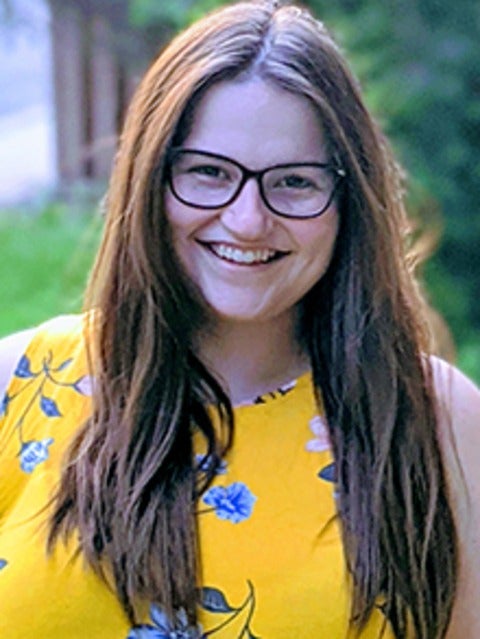
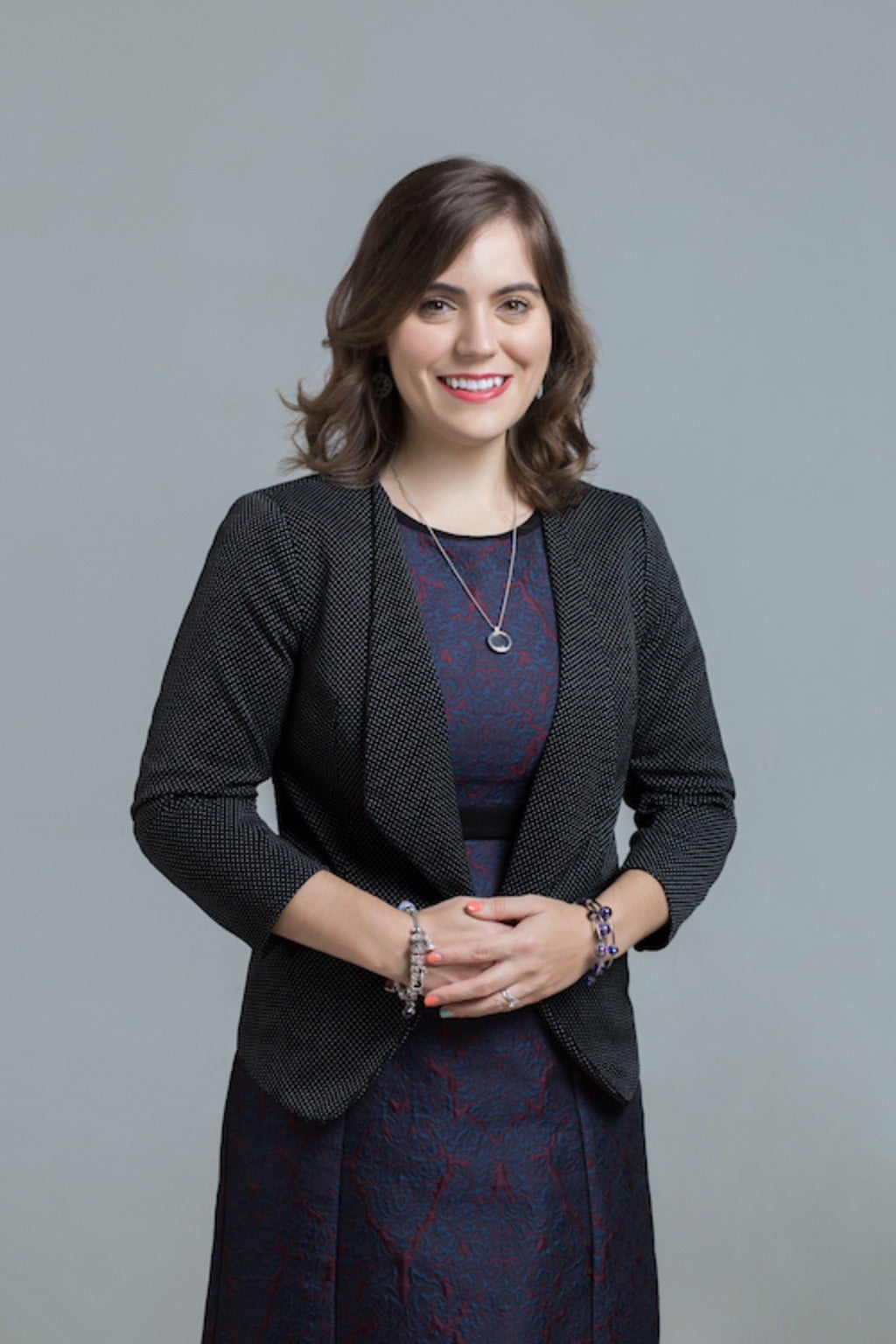
She grew up in Alberta and Nova Scotia, but she considers Nanchang, China, her second home. After earning undergraduate degrees in pure mathematics and education, Alyssa Schultz Dey took a leap of faith and accepted a teaching position at the Nanchang No. 2 High School Sino-Canadian Nova Scotia International Program in southeastern China.
Internet users from Canadian rural and remote communities suffer from frequent Internet interruptions, which generally result from various network issues. The lack of human resources, expertise and support make these issues difficult to identifyand fix. Remote areas lack responsive and cost-effective operations or maintenance efforts.

Axelar, a decentralized network that connects application builders with blockchain ecosystems, applications and users, has raised $3.75 million USD in seed funding from Silicon Valley investors, including DCVC, a San Francisco–based venture capital firm specializing in deep tech, and notable blockchain companies and investors such as Binance X, Lemniscap, Collab+Currency, North Island Ventures, Divergence Ventures, Cygni Labs, and others.

The main difference between current wireless networks and 5G networks comes down to two words — speed and latency.

5G networks are expected to be up to 100 times faster than current networks. And at that speed, 5G drastically cuts latency when connecting to the network, the lag between instructing a computer to perform a task and its execution. One thing we know with certainty — by delivering mountains of data at warp speed wirelessly, the impact of 5G will be enormous and it will be felt across all sectors of society.

Friday, November 6, 2020

Learning to teach

Hayley Reid almost attended another university. “I was leaning in a different direction, but Waterloo Math blew me away on Visitation Day,” she remembers. “There was a real sense of community, which was a key factor for me.” Hayley also had the opportunity to meet Dr. David McKinnon, her future PhD supervisor who introduced her to an area of research that blends geometry with number theory. “It was my first exposure to the field, and I was sold,” she says. She committed to a master’s degree in pure mathematics and never looked back.

Wednesday, November 4, 2020

It all added up for Jason Bell

Professor Jason Bell has been named a Fellow of the American Mathematical Society (AMS) for 2021. Bell (BMath ’97) was selected as one of the 46 mathematical scientists from around the world and the only one from a Canadian university.

Saturday, October 24, 2020

What Math taught me

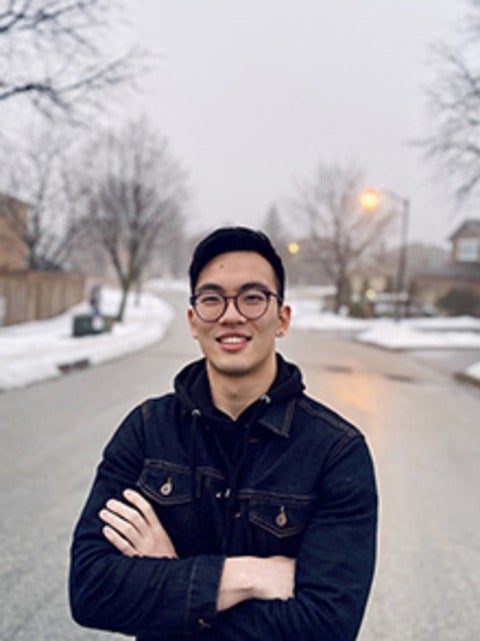
Alan Li headed west on the 401 from Markham, ON to start his postsecondary education in Waterloo. He chose the University of Waterloo because of its co-operative education program and the practical education of a computer science degree.

Since 2016, he has completed his degree, been an undergraduate teaching assistant, member of a couple of clubs, a Feds councillor and MathSoc President. Along the way, he learned a few things (beyond writing code or integrating a function).

Nicholas Richardson wanted to experience the full potential of his time at university. A well-rounded student in high school, Richardson performed in musicals, played soccer, and participated on the trivia team. It was important to him to get involved and engaged in a number of activities once he started his studies at the University of Waterloo.