
Wednesday, August 5, 2020

Motivated by prior research that reports elevator buttons as a huge source of contamination, a new study co-authored by Waterloo Faculty of Math student presents a touchless elevator concept to slow the spread of COVID-19.
Prior research shows that elevator buttons produce the highest rate of bacterial contamination (97 per cent) and can house more germs than toilet stall surfaces. However, for many people (especially health-care and front line workers), elevators are a daily necessity.
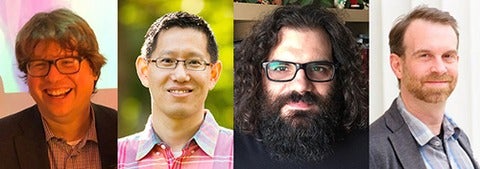
Suppose you’re an archivist, librarian, or historian who’s trying to document and preserve for posterity a narrative of the COVID-19 pandemic or the ongoing Black Lives Matters protests. You’ll naturally be gathering documents from the web, and with tools available today it won’t be difficult to accumulate thousands or even millions of relevant records. How can you make sure that a scholar down the road can actually use the material that you’ve collected?
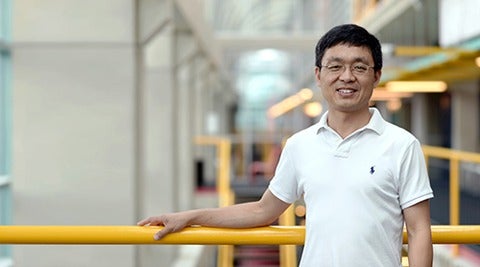
A world-leading University of Waterloo spinoff company, that decodes blood samples for potential treatments for illnesses like cancer and COVID-19, is expanding operations with the help of a $5-million USD investment.
Bin Ma, a University of Waterloo computer science professor who cofounded Rapid Novor in 2015, says the company’s technology is the most advanced in the world when it comes to deciphering the complex workings of antibody proteins, a process called sequencing.
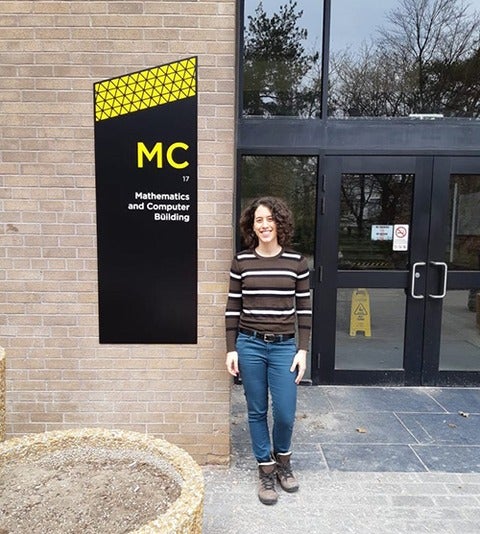
Irene Melgarejo Lermas has never been one to shy away from a challenge. At the recommendation of a friend who studied at Waterloo, she moved from her native Spain to study quantum field theory at the Institute for Quantum Computing (IQC). In addition to tackling a complex subject in her second language, she was assigned to teach a class of 200 undergraduate students during her first semester. “I didn’t have any teaching experience at the time,” she remembers.
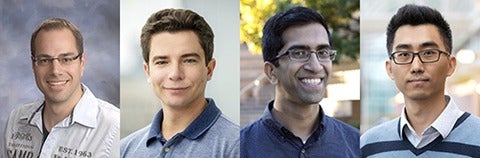
Department of Statistics and Actuarial Science professor Marius Hofert and David R. Cheriton School of Computer Science professors Sergey Gorbonuv, Gautum Kamath and Jian Zhao have each been awarded a Natural Sciences and Engineering Council of Canada (NSERC) Discovery Accelerator Supplement (DAS).
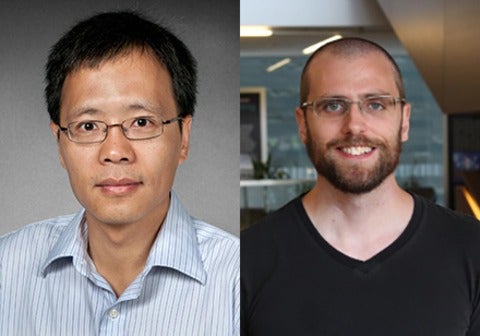
Two faculty members have been awarded the 2020 Faculty of Mathematics Golden Jubilee Research Excellence Award. Pengfei Li and William Slofstra are each awarded $2,500.

In addition to a new dean in the Faculty of Mathematics starting on July 1, we welcomed two new unit heads. Jochen Koenemann returns as chair of the Department of Combinatorics and Optimization and Raouf Boutaba becomes the eighth director of the David R. Cheriton School of Computer Science.
The Defence and Security Foresight Group (DSF-G) is cohosting a lunch-and-learn webinar with the Waterloo Cybersecurity and Privacy Institute (CPI).

This year’s Convocation was one no one expected. The Class of 2020 graduated without an in-person ceremony, but not without celebration. The University handed out lawn signs for local graduating students, staff and faculty members, we designed downloadable signs in multiple languages for our diverse students and gifs for social media, and the entire University community shared congratulations messages.