
Graduate with more than a degree, be an IDEAL Scholar!
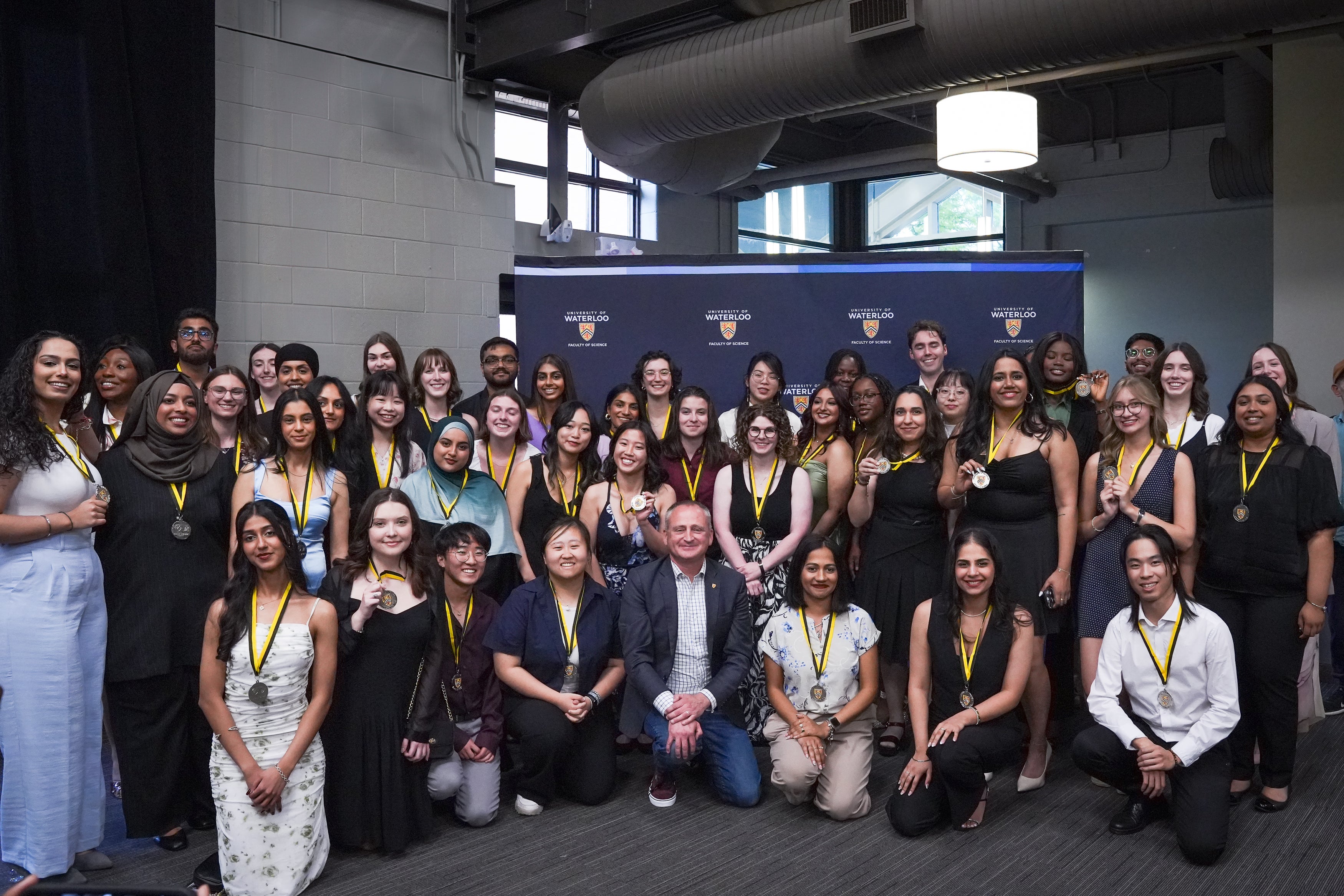
We know that our students are doing amazing things in and outside the classroom, and we want to reward your hard work. To be a part of the IDEAL Scholar program, undergraduate students participate in activities throughout their time in Science at Waterloo that support Innovation, Discovery, Engagement, Application, and Leadership. Students who have completed activities in two or more of these themes can apply to be an IDEAL Scholar to receive a medallion at graduation to celebrate their achievement.


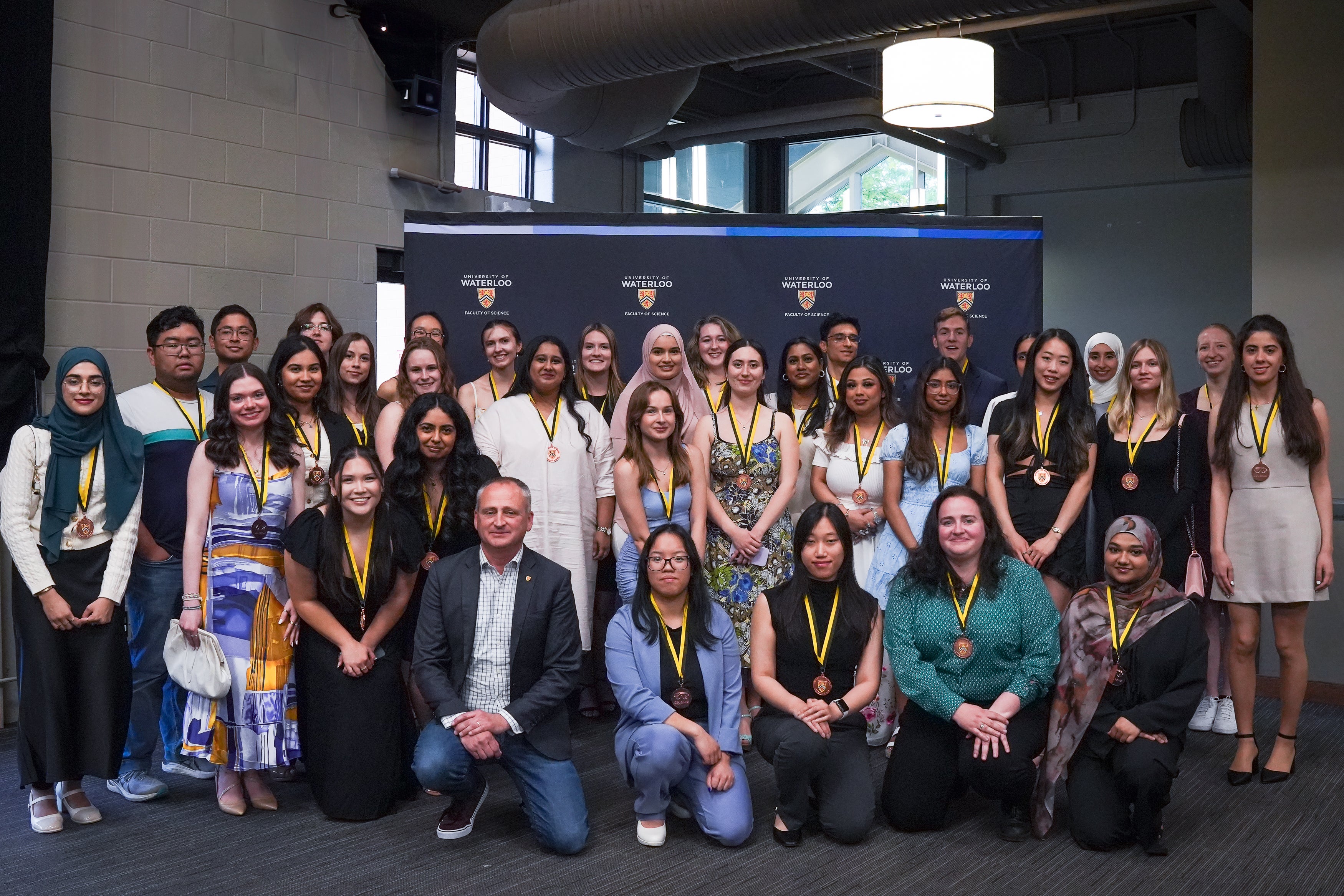


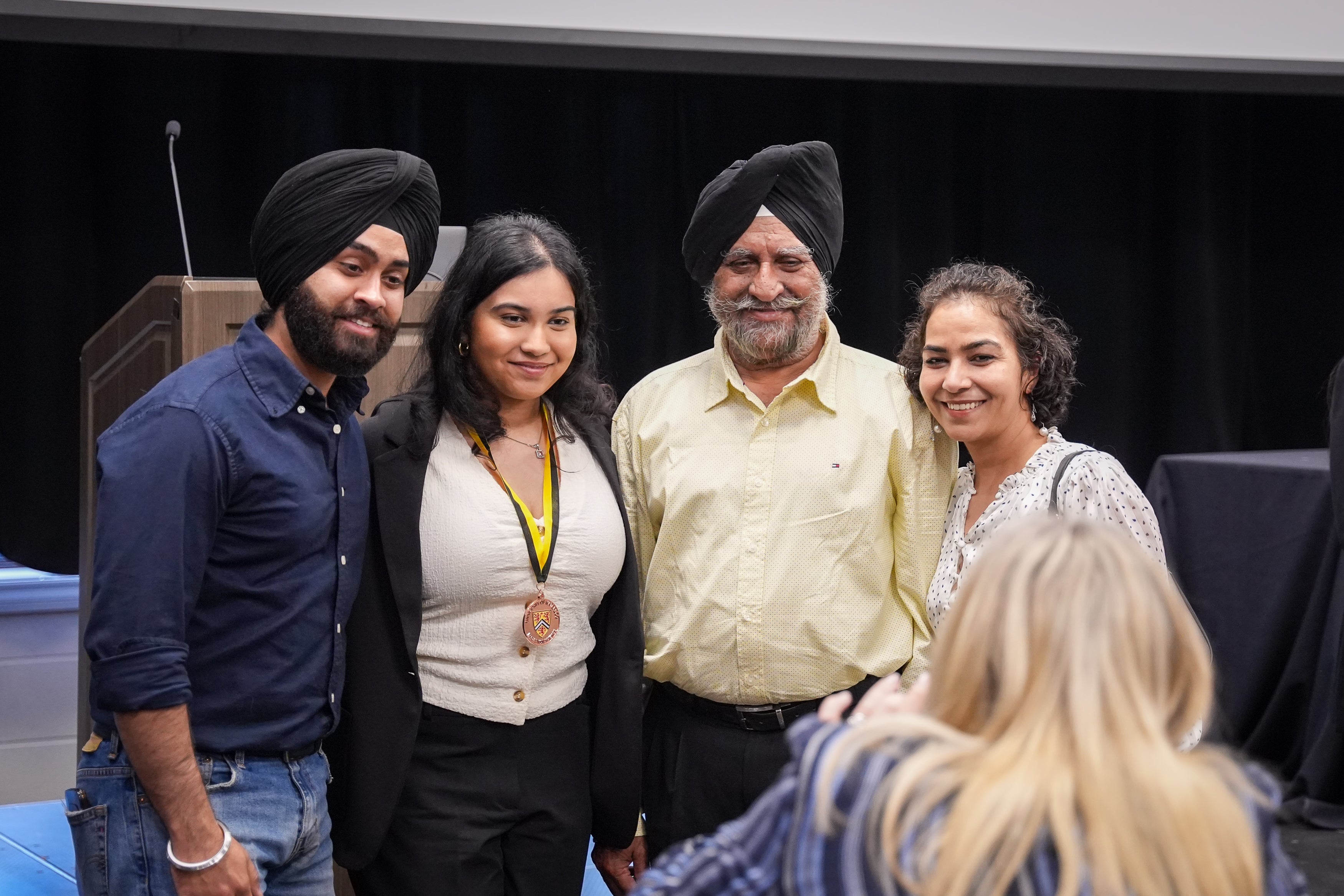
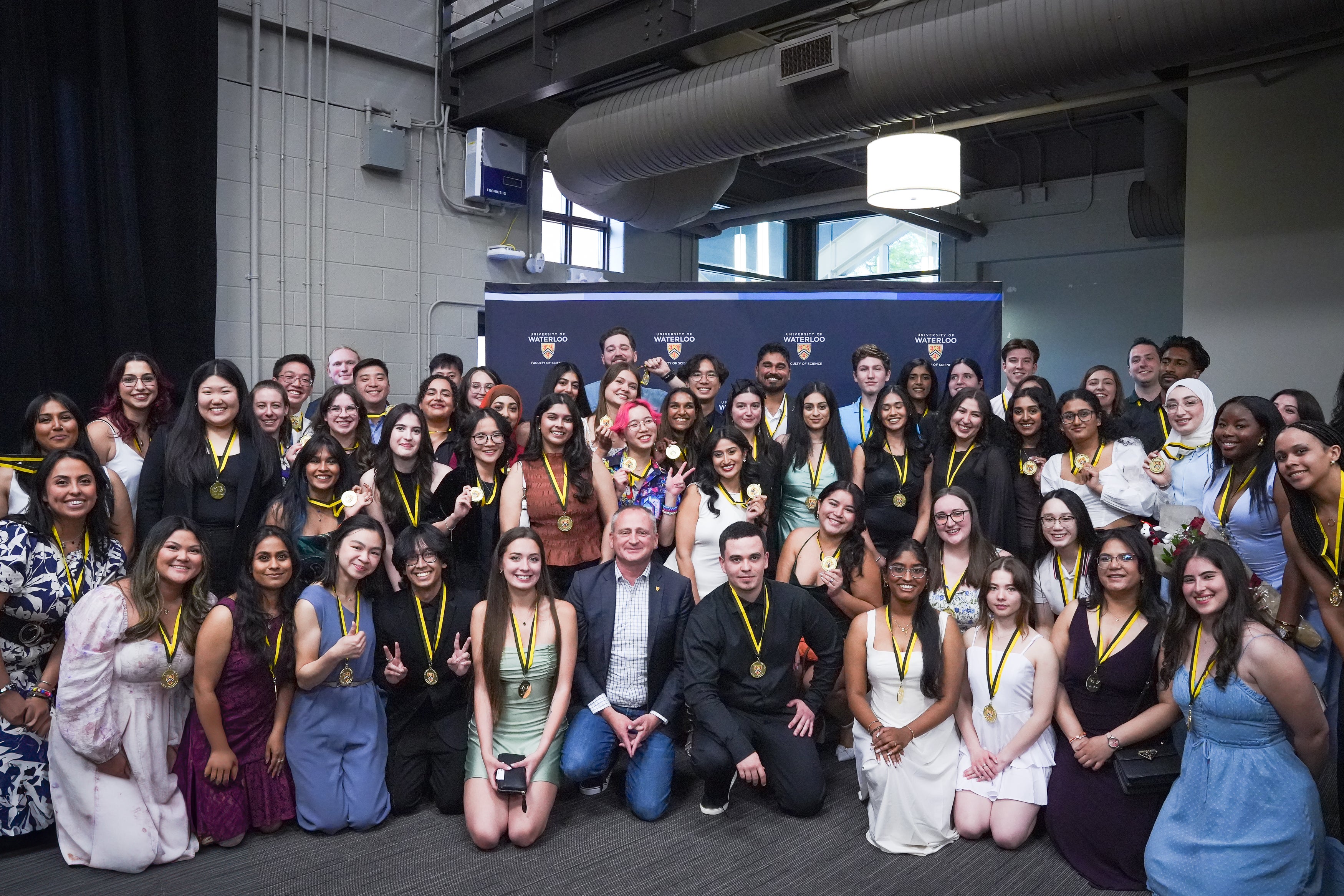
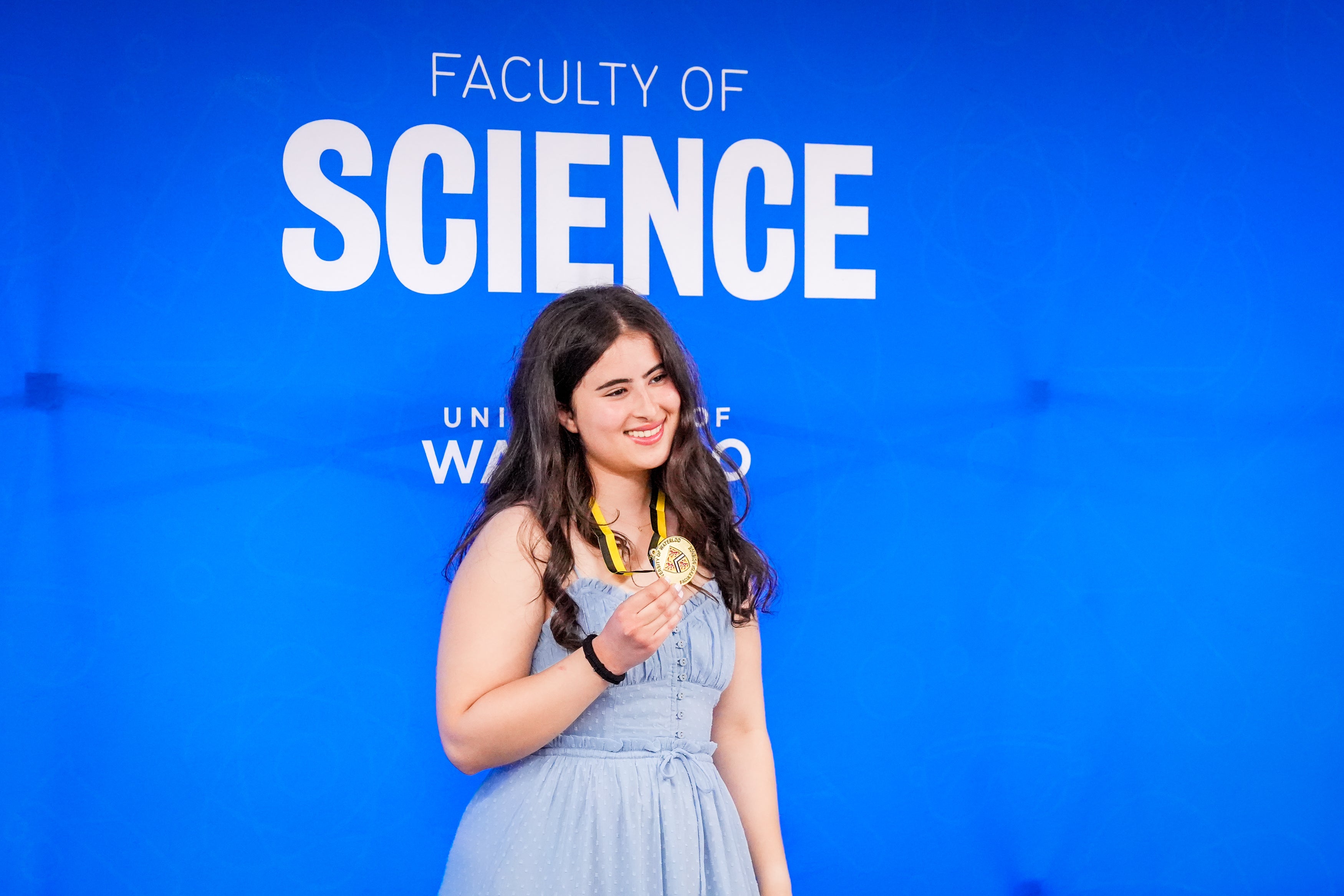

Medallion Categories
Once you have completed activities in two of the IDEAL themes, you will receive a bronze medallion. Every additional theme achieved heightens the medallion level all the way up to a special cobalt-coloured medallion:
-
Complete 2/5 themes, they will receive a bronze medallion
-
Complete 3/5 themes, they will receive a silver medallion
-
Complete 4/5 themes, they will receive a gold medallion
-
Complete 5/5 themes, they will receive a cobalt medallion
Each activity you take part in can only count toward one area of the IDEAL Scholar program.
What are the categories in the IDEAL Scholar program?
IDEAL Scholars are graduating undergraduate students who participated in activities that go above and beyond their course load during their undergraduate degrees.
The letters in IDEAL Scholar stand for Innovation, Discovery, Engagement, Application, and Leadership. To obtain an IDEAL Scholar Medallion, students must complete activities in at least two of the IDEAL themes.
Students must participate in each activity for a minimum of one term (4-months) unless specified in the criteria below. A single activity will not be considered for multiple themes.
How do I participate in the program?
IDEAL Scholar Applications for 2027 will re-open in late Fall 2026 or early Winter 2027.
If you believe you have achieved at least two of the IDEAL categories, congratulations, you are an IDEAL Scholar! To complete your application, please ensure you have applied to graduate (Go to "Studying" and click on the link "Graduation and convocation"), then fill out the form below. You will be asked for specifics about your activities and proof of completion for verification, so please have those ready.
Applicants are not guaranteed to receive recognition for every theme you fill out. Activities must be verified and associated with the University of Waterloo before the award committee makes their decisions about the relevance of the activity to the theme. Failure to meet the criteria for each theme may result in a different medallion status. A single activity may not be considered for multiple themes.
If you have any questions about the program, please email science.engagement@uwaterloo.ca.
Please note, we're not able to confirm whether a specific activity meets the theme criteria before you apply. We recommend including all experience and activities you believe are relevant when completing your application. During the review process, an activity may be considered if your description explains how it connects to the theme.