When Felicia Corrado began studying Public Health at Waterloo, she knew she wanted a career where she could make a positive difference in people's lives.
What she didn't anticipate was that her journey would eventually lead her to become a nonprofit leader and co-founder of a charitable organization.
Today, Felicia Corrado serves as CEO and Co-Founder of Keep Your Head Up, an organization dedicated to supporting young adults through concussion recovery and helping them feel less alone during a challenging period of their lives.
Her story highlights how a Waterloo Public Health education can equip students with the skills to identify community needs, create innovative solutions, and make a lasting impact.
Finding purpose through public health
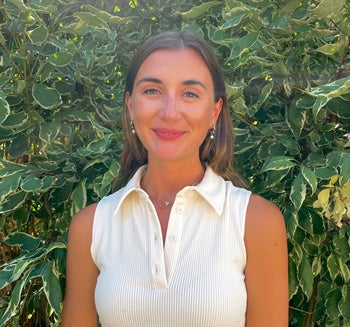
Unlike many entrepreneurs, Felicia did not enter university with a business plan or a vision of leading an organization.
"I never imagined that after my undergraduate studies I would go on to co-found a charity," she explains.
What drew her to Public Health was the opportunity to improve health and wellbeing at a broader level.
She was particularly interested in understanding how social, environmental, and systemic factors influence health outcomes and how communities can work together to create healthier futures.
These interests eventually became the foundation for the work she would later build through Keep Your Head Up.
Turning personal experience into community impact
The inspiration for Keep Your Head Up came from lived experience.
Felicia first met Allie Harrison in high school, where both experienced sports-related concussions and faced many of the same challenges. They navigated persistent symptoms, academic pressures, and uncertainty about educational and future plans while trying to recover.
"Leaning on each other during our recoveries made a significant difference, offering validation and hope even when progress felt slow."
After graduating from high school, both attended the University of Waterloo. Felicia pursued Public Health, while Allie studied Health Sciences. Their shared experiences and complementary educational backgrounds strengthened a common goal: supporting young people facing similar challenges.
As they spoke with neurologists, physiotherapists, researchers, and other healthcare professionals, they discovered that many young adults were navigating concussion recovery without adequate support systems. The gap was real, significant, and largely unaddressed.
Recognizing this need, they decided to build something that would provide the connection, understanding, and resources they wished had existed during their own recoveries.
Applying public health to real-world problems
As Keep Your Head Up evolved from an idea into an organization, Felicia found herself using many of the skills she had developed through her Public Health studies.
Two areas of learning proved especially valuable:
- social determinants of health
- program planning and evaluation
Through her coursework, she learned that health outcomes are influenced by much more than healthcare services alone. Factors such as environment, identity, access to resources, and social support all play a role in people's wellbeing.
"Supporting health isn't just about giving information or encouraging behaviour change. It's about understanding the bigger picture of people's lives."
This perspective continues to shape Keep Your Head Up's approach.
Rather than focusing solely on physical recovery, the organization designs programs that support young adults socially, emotionally, and educationally while they recover from concussion.
Her knowledge of program planning and evaluation also allows the organization to assess community needs, measure outcomes, and continually refine programs to better support participants.
Learning to think upstream
One of the most influential lessons Felicia learned in Waterloo's Public Health program was the importance of upstream thinking.
Studying population health and health equity helped her recognize that meaningful public health work often happens before a crisis occurs. Instead of only responding to existing problems, public health professionals work to prevent issues and create conditions that support wellbeing from the beginning.
"Studying population and equity-focused approaches shifted my thinking toward upstream strategies and highlighted ways we can act early to prevent problems and support health before crises arise."
This mindset has directly influenced Keep Your Head Up's programs, which emphasize education, connection, resilience-building, and empowerment alongside immediate recovery support.
Building programs that respond to community needs
One of the strengths of Public Health is learning how to move from identifying a problem to developing effective solutions.
For Felicia, this meant creating programs based on evidence, lived experience, and community feedback.
Today, she applies the same principles she learned at Waterloo by:
- designing programs that address identified needs
- evaluating program effectiveness
- gathering feedback from participants
- adapting services over time
- ensuring supports remain relevant and impactful
This approach allows Keep Your Head Up to remain responsive to the needs of the young adults it serves.
Why students should consider public health
Felicia's journey demonstrates the versatility of a Public Health degree and the many career paths available to graduates.
Public Health is ideal for students who want to understand health beyond individual care and are interested in improving outcomes at the community and systems level. Students develop skills in:
- health equity
- population health
- program planning
- evaluation
- critical thinking
- community engagement
- evidence-based decision-making
These skills can lead to careers in healthcare organizations, government, policy, nonprofit leadership, consulting, health promotion, and entrepreneurship. They can also help students identify community needs and create meaningful solutions that improve people's lives.
Creating change through community and compassion
For Felicia Corrado, Public Health provided more than academic knowledge. It gave her the tools to understand complex health challenges, the confidence to advocate for change, and the skills to build something that supports others facing difficult experiences.
Her journey from Waterloo Public Health student to nonprofit CEO demonstrates how education, lived experience, and a commitment to helping others can come together to create lasting community impact.
What started as two students sharing their experiences with concussion recovery has grown into an organization dedicated to ensuring that young adults never have to navigate that journey alone.
Next steps
- Learn how co-op can help you explore career paths and gain work experience.
- Take our quiz to find the Health program that's right for you.
- Sign up for our monthly newsletter to get program updates, tips and event invitations.