When Abbie Simpson first applied to the University of Waterloo, Recreation and Leisure Studies wasn't part of her original plan.
She entered Waterloo through the Social Development Studies (SDS) program, drawn to learning about social policy, community development, and how systems affect people's lives.
But after arriving on campus and becoming involved in student life, she discovered Recreation and Leisure Studies (RLS), a program that would ultimately shape both her education and career.
"I fell in love with campus the moment I arrived for my tour," Abbie says. "I felt right at home."
Through volunteer work with Waterloo Athletics, she learned more about Recreation and Leisure Studies and realized it complemented her Social Development Studies courses in a meaningful way.
"I added Recreation and Leisure Studies to my degree because I felt it connected well to my Social Development Studies. I would learn about social work and social policy and then come to my Recreation classes and connect this to program development and evaluation."
Today, Abbie serves as Senior Manager of Constituent Relations for the City of Ottawa, where she works directly with residents and communities to help improve public services, community spaces, and civic engagement.
Understanding recreation as a foundation for community
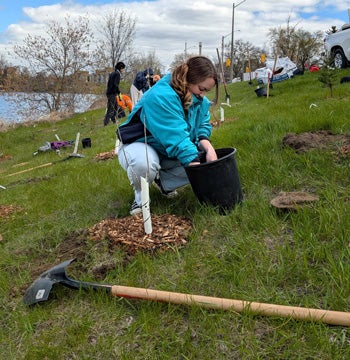
Many people think recreation is simply about sports, fitness, or leisure activities. Through Waterloo's Recreation and Leisure Studies program, Abbie learned that recreation plays a much bigger role in people's lives.
"RLS has shaped my understanding of recreation by changing the way I think about the communities I build," she explains.
She came to understand recreation as an essential tool for connection, belonging, and community participation.
"Recreation is key to how people access public spaces, connect to each other, and get involved in their wider community."
Working inside a community centre as part of her professional role today, she sees firsthand how recreation impacts everyday life.
"I see daily the way that access to social recreation or youth sport opportunities can shift the way a community thrives."
Whether it's access to youth sports, social programs, community events, or shared public spaces, recreation helps create healthier, more connected communities.
Learning to listen to diverse communities
One of the most influential courses in Abbie's Waterloo experience was REC 201: Introduction to Leisure, Equity, Diversity, and Inclusion for Just Communities.
The course helped her understand how recreation intersects with social issues and how different communities experience public spaces in different ways.
"When I think about my coursework, I am always quoting readings from REC 201," she says.
The course challenged her to think critically about equity, inclusion, and access, lessons that continue to shape how she approaches community engagement today.
Every day in her current role, she gathers feedback from residents and helps public servants make decisions about programs, services, and community spaces.
"Not all communities engage with recreation in the same way, and there is no one-size-fits-all approach to community space."
The Recreation and Leisure Studies program provided her with a framework for understanding communities, asking thoughtful questions, and supporting informed decision-making.
Developing skills that matter every day
As someone who works with the public on a daily basis, Abbie relies heavily on the communication and relationship-building skills she developed at Waterloo.
"Every day, I work with the public," she says. "This requires me to exercise clear communication and empathy in every single conversation."
One of the most valuable lessons she learned through Recreation and Leisure Studies was the importance of understanding people's perspectives before attempting to solve problems.
"When you work with the public, it's important to start by seeking to understand their perspective."
RLS taught her how to ask meaningful questions, listen actively, and consider both individual and community needs.
These skills have become essential in helping residents navigate systems, access services, and engage with their communities.
Becoming a leader through campus involvement
Abbie believes some of her most important learning happened outside the classroom.
"Once you get onto campus, you will notice that RLS creates strong leaders. RLS students are everywhere on campus."
Throughout her time at Waterloo, she became involved in clubs, Orientation activities, and student governance.
Her most transformative experience was serving with the student association, first on the Board of Directors and later as President and CEO.
Those leadership roles immersed her in organizational decision-making, advocacy, and community engagement.
"They threw me head-first into navigating systems and understanding the ways that these systems support or deter positive change."
Working with students and identifying ways to improve their university experience gave her opportunities to directly apply concepts from her RLS courses to real-world challenges.
The experience also provided a safe environment to experiment, make mistakes, and develop as a leader.
"I had opportunities to make mistakes, learn, and grow into a better leader and community member."
Those lessons continue to influence how she approaches complex issues and community concerns in her professional career.
Why Recreation and Leisure Studies matters
For students considering Recreation and Leisure Studies, Abbie wants them to understand that careers in recreation are fundamentally about people.
Whether working in municipalities, nonprofits, community centres, recreation departments, advocacy organizations, or public service, success comes from building relationships and helping communities thrive.
"Working with people is not a skill you develop overnight," she says.
The Recreation and Leisure Studies program creates opportunities for students to engage directly with communities, collaborate with peers, and gain practical experience solving real-world challenges.
While group projects may sometimes feel frustrating, Abbie sees them as some of the most valuable learning experiences students can have.
"These opportunities to make mistakes, apply your knowledge, and learn from the people around you are some of the most impactful parts of your degree."
She encourages students to embrace opportunities to collaborate, connect with others, and learn from different perspectives.
"Any opportunity to practice building connections, strengthen your collaboration skills, and learn from your missteps will not only set you up for success in public-facing roles, but will ensure you are a successful member of your community."
Creating impact through community connection
Abbie's journey demonstrates the power of a Waterloo Recreation and Leisure Studies education.
By combining Recreation and Leisure Studies with Social Development Studies, she developed an understanding of how community spaces, recreation opportunities, and public systems shape people's experiences and quality of life.
Today, she uses those skills to build stronger relationships between communities and public institutions while helping create spaces where people can connect, participate, and belong.
Her story highlights a key lesson for future students: recreation is about far more than activities. It's about creating opportunities for connection, inclusion, leadership, and community impact.
For students who are passionate about people, community engagement, and making a difference, Recreation and Leisure Studies can be the beginning of a career dedicated to helping communities thrive.
Next steps
- Learn how co-op can help you explore career paths and gain work experience.
- Take our quiz to find the Health program that's right for you.
- Sign up for our monthly newsletter to get program updates, tips and event invitations.