The prestigious Queen Elizabeth II Graduate Scholarship in Science and Technology (QEII-GSST) has been awarded to seven graduate students at the Cheriton School of Computer Science.
In 1998, the Ontario government established the QEII-GSST to encourage graduate excellence. Recipients who demonstrate strong academic performance, exceptional research ability or potential, and strong leadership can receive up to $15,000. This amount is funded jointly by the Ontario government and their home university.
Applications for the QEII-GSST are processed in the same round as the Ontario Graduate Scholarship (OGS), and applicants are considered for either award. This year, six graduate students also received OGS funding.
Our scholarship recipients are transforming the world of computer science, from enhancing AI safety and reliability to strengthening cybersecurity and privacy.
Ashu Adhikari
Supervisor: Professor Jian Zhao

Ashu Adhikari is designing interfaces based on progressive disclosure, a new way to understand long and intricate information more effectively. Unlike technologies that summarize information to the point of stripping critical nuances and complex details, progressive disclosure provides a high-level summary up front while allowing users to expand on details on the side. As Ashu puts it, this approach “lets people take in information at a pace they're comfortable with, avoiding overload without sacrificing accuracy.” By diving into the world of interfaces, Ashu is exploring new and exciting technology that can enhance human cognition, particularly reading comprehension, attention and information retention.
Amin Bigdeli
Co-supervisors: Professors Charles Clarke and Ebrahim Bagheri
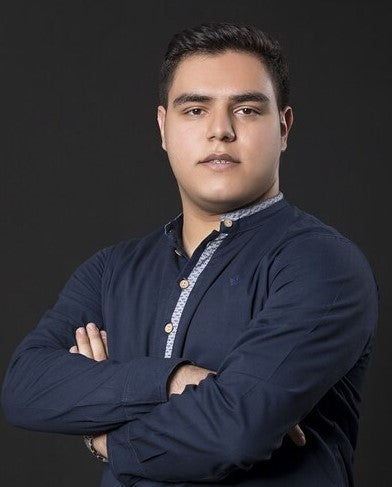
Amin Bigdeli is an innovative information retrieval and natural language processing researcher. While at Toronto Metropolitan University, he investigated gender biases in search engines, earning the Canadian Artificial Intelligence Association's Best Master's Thesis award and a Best Paper award at the European Conference on Information Retrieval (ECIR). This work also culminated in a book published by Foundations and Trends in Information Retrieval.
His doctoral research at Waterloo examines how adversarial attacks through content manipulation can deceive search engines into surfacing unreliable information. With the emergence of AI tools like ChatGPT, fake and misleading content can be produced and manipulated at an unprecedented scale, posing a serious threat to both search engines and AI-powered systems that people rely on for information. His doctoral work has been recognized at prestigious information retrieval conferences, including a Best Paper award at ECIR and a Best Paper Runner-Up Award at SIGIR-AP.
Anudeep Das
Co-supervisors: Professors N. Asokan and Florian Kerschbaum

As an up-and-coming cybersecurity researcher, Anudeep Das focuses on the safety, privacy, and fairness of generative AI systems. Last year, he co-won the Best Paper Award at CODASPY 2025, the 15th ACM Conference on Data and Application Security and Privacy. His team was recognized for Espresso, a new technique that can improve the effectiveness, robustness, and reliability of protections in generative AI systems that produce images from natural-language text prompts. He also co-received a $58,100 USD grant from Open Philanthropy to support his work in large language model safety.
Disen Liao
Supervisor: Professor Yaoliang Yu
Brandon Lit
Co-supervisors: Professors Daniel Vogel (University of Waterloo) and Hassan Khan (University of Guelph)
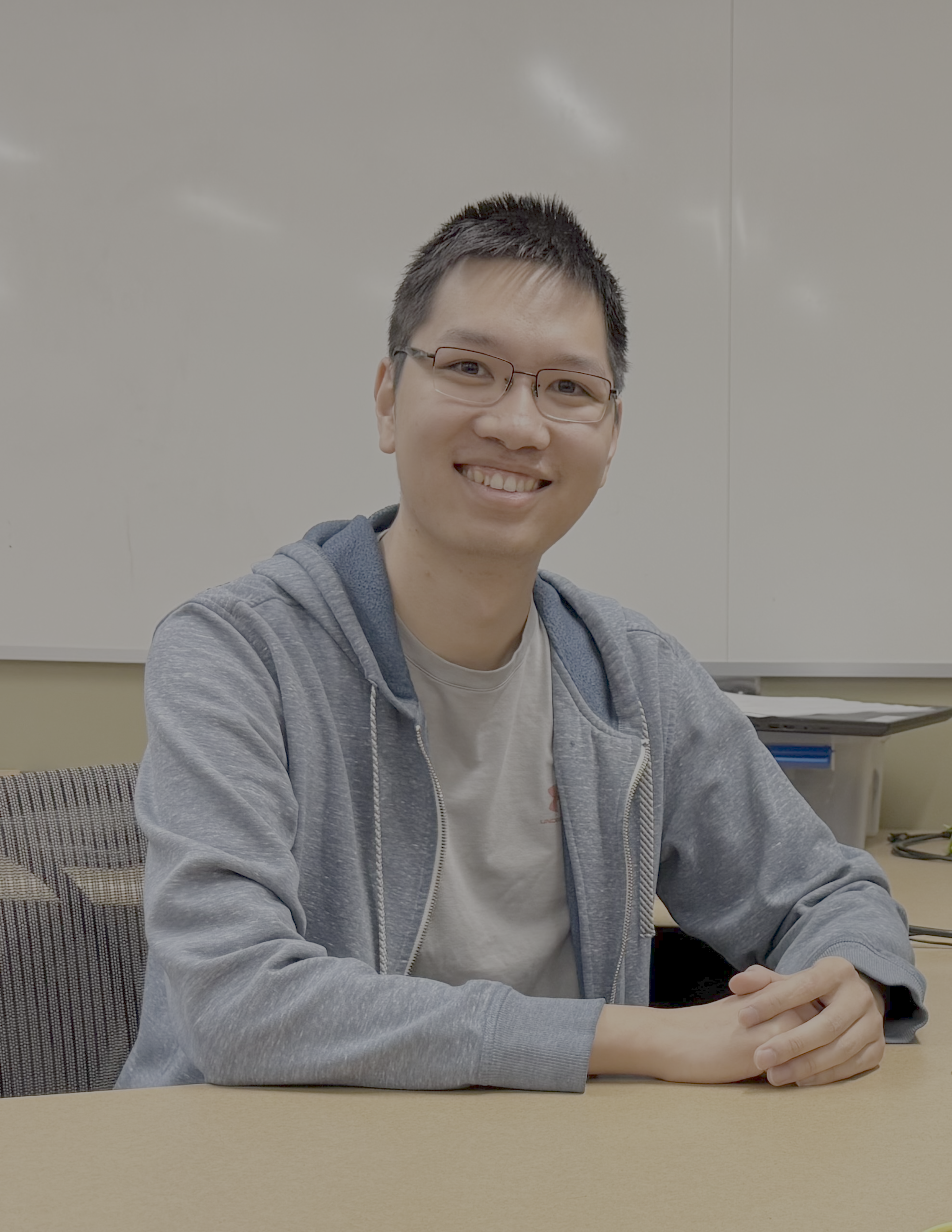
While a master’s student at the University of Guelph, Brandon Lit’s research was featured by CBC Marketplace, one of Canada’s top consumer affairs programs. As part of the research team, he examined how technicians handle customers’ personal data during device repairs. The team installed monitoring software on laptops and smartphones before taking them to 20 repair shops across Ontario, from small businesses to large national chains. The investigation found that many technicians accessed customers’ private photos and personal information, highlighting significant consumer privacy risks.
Continuing this direction, Brandon is focusing on the intersection of human–computer interaction and cybersecurity, an area known as usable security. He is exploring how users react to cyberthreats and how technology can better support them, whether by helping organizations reduce the risk of data breaches or improving cybersecurity for everyday users. Last year, Brandon led a first-of-its-kind study that examined people’s strategies in identifying malware, producing unexpectedly encouraging results.
Alfred Mikhael
Supervisor: Professor Lap Chi Lau
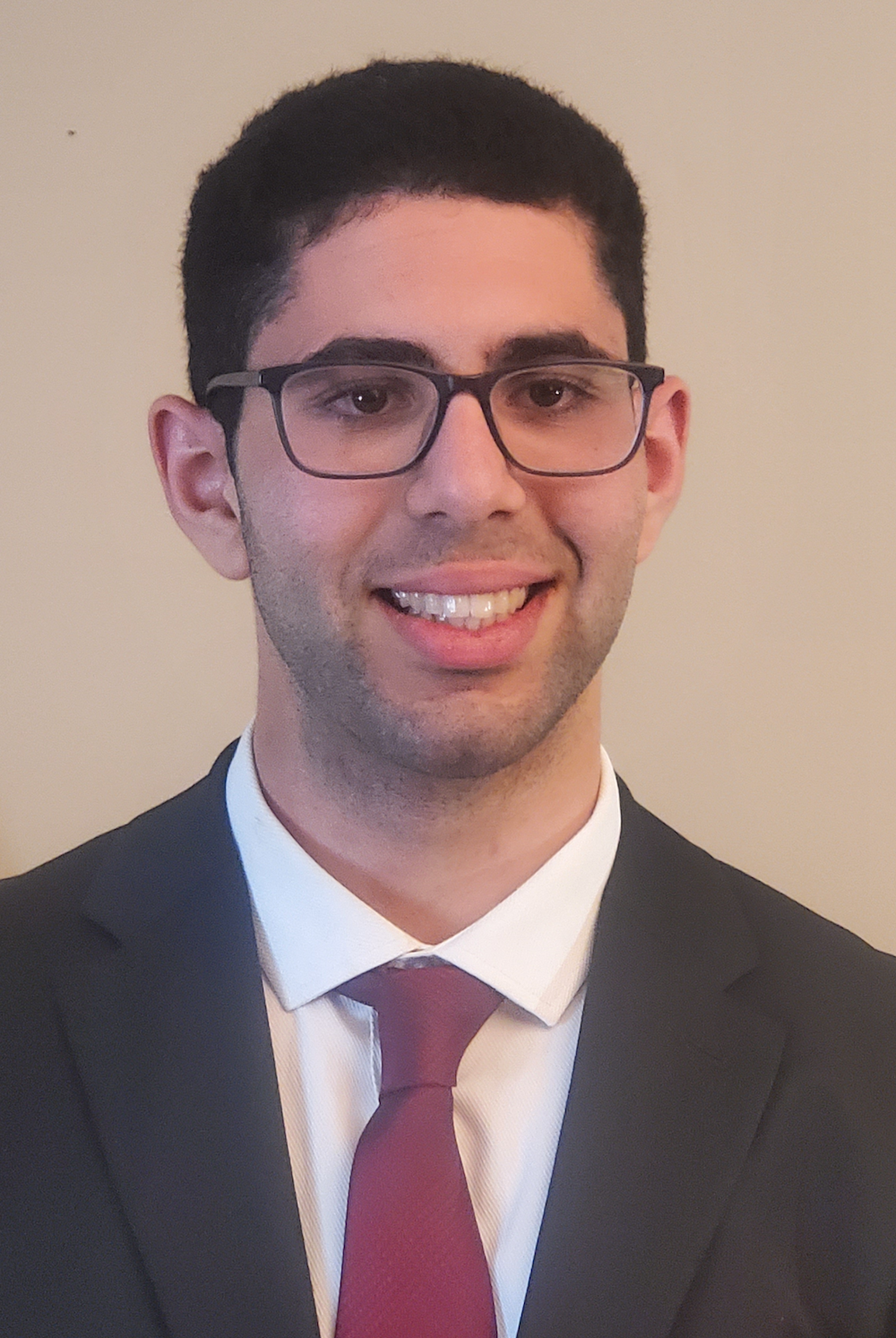
One of Alfred Mikhael’s primary research areas is lower bounds in coding theory, the study of detecting and correcting errors introduced during transmission to ensure the code performs as intended. His research has wide-ranging applications, from enhancing 4G and 5G wireless technology to link-layer implementations.
Another research area is spectral graph theory, the study of a graph’s properties in relation to its matrices’ eigenvalues and eigenvectors. Some practical applications of his work include Markov chain analysis, a model that can predict the probability of a sequence of events unfolding, and the PageRank algorithm, commonly used by search engines like Google. The theoretical applications have ties to complexity theory and cryptography.
He is also interested in pseudo-randomness, which can enhance approximation algorithms. Finally, he is focusing on combinatorics, the mathematical field of counting. This research interest has ties to networks, which are core to everyday functions, from the World Wide Web to transit lines. Overall, Alfred’s research is tackling the foundations of computing, from algorithms to networks.
Robert Wang
Supervisor: Professor Lap Chi Lau
As an algorithmic researcher, Robert Wang is paving the way for practical algorithms and machine-learning architectures. Currently, he is analyzing and designing algorithms that uncover structure in large datasets, represented as networks and matrices. For example, how can we build a well-connected network with only a few connections? His work draws on mathematical and physics fields that may be under explored by computer scientists, bringing the community new frameworks and insights.
Robert also studies the role of randomness in computation, for example, whether random sampling can improve the efficiency of algorithms. What are the kinds of predictable structures that emerge once randomness is spread out over a large dataset? By understanding how randomness can reshape a dataset’s structure, Robert’s research helps develop more efficient methods to identify and extract meaningful information.