
Issue XXVII | October 2026
Coéditrices / co-editors : Cynthia Mills, Tara Colliington et / and Valérie Dusaillant-Fernandes
Dans cette édition/ In this issue


Keep in touch!
Follow French Studies on LinkedIn and stay connected with our growing community. Our page features career and research opportunities, alumni news, and upcoming events that celebrate our shared commitment to language, culture, and learning.
Not on LinkedIn? We'd love to know what you are up to, so please send us an email.
Entrevue avec Kanstantsin Tsedryk, FR 192A/B manuel en ligne
Pourriez-vous décrire brièvement le projet que vous venez de mener à bien ?
Nous venons de publier la première édition de FR 192 A/B – cours de langue intermédiaire : Le français dans le monde, un manuel numérique libre d’accès destiné à la séquence intermédiaire de français. J’ai assuré la direction éditoriale de ce projet, développé de l’automne 2024 au printemps 2026 et conçu collectivement avec Catherine Dubeau, Nicolas Hebbinckuys, Svetlana Kaminskaïa, Mikalai Kliashchuk, Cynthia Mills et Rocky Penate. Le manuel propose un parcours en dix modules qui accompagne progressivement les étudiant.e.s dans le développement de leurs compétences linguistiques et culturelles.
Chaque module met en relation le vocabulaire, la grammaire, la découverte de la francophonie et la lecture guidée de textes variés, afin de travailler la langue dans des contextes concrets tout en ouvrant l’apprentissage sur la diversité du monde francophone. Le manuel intègre des vidéos explicatives, des textes et des reportages authentiques, des documents de soutien et de nombreuses activités interactives portant sur le vocabulaire, la grammaire, la compréhension et le réemploi des notions étudiées.
Qu'est-ce qui a motivé ce projet ? Avez-vous rencontré des difficultés techniques particulières en cours de route ?
Le projet est né d’un besoin pédagogique concret : offrir aux étudiant.e.s une ressource ouverte, gratuite, interactive et formative, mieux adaptée à la séquence FR 192A/B qu’une plateforme commerciale. Il s’inscrit dans la continuité directe du « Projet Cahier », dont proviennent les exercices interactifs grammaticaux intégrés au manuel. L’équipe souhaitait aussi créer un manuel plus cohérent, plus flexible et mieux intégré aux pratiques d’enseignement en ligne et en classe.

Les principales difficultés ont été d’ordre technique et éditorial : harmoniser les contributions, assurer une structure stable d’un module à l’autre, intégrer les activités interactives, vérifier les liens et rendre l’ensemble clair et facile à utiliser. Il a aussi fallu adapter tous les contenus aux normes d’accessibilité numérique requises par la réglementation ontarienne. Tout ce travail a demandé beaucoup de coordination, de révision et d’ajustements collectifs.
Quel est le public cible parmi les étudiants, et pouvez-vous nous parler du processus de conception ?
Le manuel s’adresse aux étudiant.e.s inscrits aux FR 192A et FR 192B, une séquence de premiers cours universitaires pensée pour les personnes qui poursuivent leur apprentissage du français au niveau intermédiaire. Le manuel a été conçu pour soutenir des profils variés : personnes qui apprennent en ligne, en classe ou dans un format hybride, avec des besoins différents en matière de révision, de pratique grammaticale, de vocabulaire et de compréhension culturelle.
Le processus de conception a été collaboratif dès le départ. L’équipe a défini une progression thématique, développé les contenus et harmonisé les sections afin que chaque partie du manuel fonctionne à la fois de manière autonome et dans un ensemble cohérent. Une attention particulière a été accordée à la clarté, à l’accessibilité et à la réutilisation pédagogique.
Comment voyez-vous l’évolution du manuel au fil du temps?
Je vois ce manuel comme une ressource évolutive. Comme il s’agit d’un manuel numérique ouvert, il pourra être ajusté au fil des utilisations, des commentaires des étudiant.e.s et des besoins pédagogiques du programme. L’équipe pourra enrichir certaines sections, ajouter de nouvelles activités, actualiser des contenus culturels ou intégrer d’autres ressources multimédias.
À long terme, l’objectif est que le manuel demeure une ressource vivante et actuelle : un outil commun, adaptable et durable, capable d’accompagner l’évolution des cours intermédiaires tout en continuant à refléter la diversité des voix et des réalités francophones.
Interview with Kanstantsin Tsedryk, FR 192A/B Online Textbook
Can you briefly describe the project you have just completed?
We have just published the first edition of FR 192 A/B – Intermediate Language Course: French Around the World, an open access digital textbook designed for intermediate-level French courses. I served as the editorial director for this project, which was developed over a two-year period, from fall 2024 to spring 2026, and designed collaboratively with Catherine Dubeau, Nicolas Hebbinckuys, Svetlana Kaminskaïa, Mikalai Kliashchuk, Cynthia Mills, and Rocky Penate. The textbook offers a ten-module curriculum that progressively guides students in developing their linguistic and cultural skills.
Each module integrates vocabulary, grammar, an exploration of the Francophone world, and guided reading of varied texts, allowing students to practise the language in real-world contexts while broadening their understanding of the diversity of French-speaking regions around the world. The textbook includes explanatory videos, authentic texts and news reports, supporting materials, and numerous interactive activities focused on vocabulary, grammar, comprehension, and the application of the concepts studied.
What was the impetus for the project? Did you encounter any particular technical challenges along the way?
The project arose from a specific educational need: to provide students with an open, free, interactive, and educational resource that is better suited to the FR 192A/B course than a commercial platform. It is a direct continuation of the Cahier Project, which provided the interactive grammar exercises included in the textbook. The team also wanted to create a textbook that was more coherent, more flexible, and better integrated with both online and in-class teaching practices.
The main challenges were technical and editorial in nature: harmonizing contributions, ensuring a consistent structure across modules, integrating interactive activities, verifying links, and making the entire resource clear and easy to use. It was also necessary to adapt all content to the digital accessibility standards required by Ontario regulations. All of this work required a great deal of coordination, revision, and collective adjustments.
Who is the target student audience, and can you talk about the design process?
This textbook is intended for students enrolled in FR 192A and FR 192B, a series of introductory university courses designed for those continuing their study of French at the intermediate level. The textbook was designed to support a variety of learning styles: students learning online, in a classroom, or in a hybrid format, each with different needs in terms of review, grammar practice, vocabulary, and cultural understanding.
The design process was collaborative from the outset. The team defined a thematic progression, developed the content, and harmonized the sections so that each part of the textbook functions both independently and as part of a coherent whole. Particular attention was paid to clarity, accessibility, and pedagogical reusability.
How do you see the textbook evolving over time?
I see this textbook as an evolving resource. Since it is an open digital textbook, it can be adapted based on its use, student feedback, and the program’s pedagogical needs. The team will be able to expand certain sections, add new activities, update cultural content, or incorporate other multimedia resources.
In the long term, the goal is for the textbook to remain a dynamic and up-to-date resource: a shared, adaptable, and sustainable tool capable of keeping pace with the evolution of intermediate-level courses while continuing to reflect the diversity of Francophone voices and realities.
Entretien avec Nourane Abdelshafy
Quel est votre parcours de formation académique ?
En 2014, j’ai déménagé de l’Égypte au Canada afin de poursuivre mes études universitaires de premier cycle à l’Université de Waterloo où j’ai choisi d’étudier la langue et la littérature françaises. Mon intérêt pour cette langue et pour tout ce qui l’entoure remonte à mon enfance, puisque j’avais complété l’ensemble de ma scolarité en Égypte dans un système francophone, du primaire jusqu’au secondaire. Cette formation a suscité chez moi le désir d’approfondir davantage mes connaissances de la langue, de la littérature et des cultures francophones. Après avoir obtenu mon baccalauréat en études françaises, avec une mineure en études appliquées des langues (APPLS), j’ai décidé de continuer mes études à l’Université de Waterloo en entreprenant une maîtrise en études françaises. Actuellement, je poursuis une maîtrise en sciences de l’information à la Faculté de l’Information de l’Université de Toronto pour que je puisse travailler dans le domaine de l’archivistique et devenir archiviste.
En quoi votre maîtrise a-t-elle contribué à votre développement personnel (ex. autonomie, persévérance, gestion du stress) ?
Mon parcours à la maîtrise n’a pas été linéaire, bien au contraire. En 2019, j’ai dû mettre mes études en pause pour des raisons personnelles. Au cours des années qui ont suivi cette pause, je ressentais toujours le désir de retourner à l’université pour terminer ce que j’avais commencé. Reprendre mes études après plusieurs années d’interruption n’était pas du tout facile. En fait, c’était une période marquée autant par des réussites que par des échecs. J’ai dû réévaluer mes objectifs, changer de voie à certains moments (opter pour suivre des cours au lieu de rédiger une thèse, par exemple). Cette période de reprise était très formative, car elle m’a demandé beaucoup de détermination et de résilience. Finalement, cette maîtrise a représenté bien plus qu’un diplôme, car la terminer m’a prouvé que j’étais capable de revenir à un projet que j’avais dû mettre de côté et de le mener à terme.
Quelles trois compétences acquises à l’université vous sont particulièrement utiles dans vos stages ?

La première compétence qui m’a été utile dans mes stages était ma capacité à effectuer la recherche, l’analyse et la synthèse de l’information. Durant ma maîtrise en études françaises, j’ai appris à faire de la recherche et à travailler avec des données venant de sources variées, à évaluer ces dernières de manière critique et à présenter mes analyses et conclusions de façon claire et structurée à des publics divers. Ces compétences m’ont beaucoup aidée durant mon emploi en tant qu’assistante de bibliothèque aux archives de l’Université de Toronto, dans le traitement de fonds d’archives personnels et institutionnels.
J’ai dû créer des descriptions qui facilitent l’accès aux documents et aident les chercheurs à mieux comprendre les documents et les contextes qui les entourent. Plus particulièrement, il m’a fallu rédiger des descriptions qui allaient finalement constituer des instruments de recherche que les chercheurs pourraient consulter. Par conséquent, j’ai souvent dû effectuer des recherches sur les personnes, les organismes, les événements ou les sujets représentés dans les fonds d’archives que je traitais. Cela pouvait inclure l’examen de documents des fonds eux-mêmes, la consultation de publications, de ressources institutionnelles ou d’autres fonds d’archives afin de repérer les éléments contextuels les plus importants à comprendre et à représenter dans les instruments de recherche (la biographie du créateur des documents, ses activités, ses publications et ses engagements, par exemple).
Deuxièmement, la communication écrite et orale était une autre compétence très importante dans mon parcours professionnel. Mon expérience comme chargée de cours et assistante au Département d’études françaises m’a permis de développer ma capacité à expliquer des concepts ou des sujets complexes, à animer des discussions et à communiquer avec des publics variés dans des contextes quasi gouvernementaux, universitaires et culturels. Cette compétence était particulièrement importante dans mes postes d’assistante de bibliothèque à l’Université de Toronto et d’évaluatrice linguistique auprès des services d’immigration du YMCA, où je répondais aux questions des chercheurs et des clients, préparais des communications écrites et collaborais avec de nombreuses personnes.
Dernièrement, les cours et les séminaires que j’ai suivis, ainsi que le stage que j’ai effectué en tant qu’assistante de recherche sur le projet Rez-de-chaussée mené par Nicolas Gauthier durant mes études ici au Département, m’ont appris à lire attentivement et à travailler avec beaucoup de souci du détail, ce qui s’est avéré essentiel dans mes expériences en gestion de l’information et en archivistique. Aux Laboratoires nucléaires canadiens et à la TIFF Reference Library, cette compétence m’a aidée à cataloguer, à réviser et à corriger les métadonnées afin d’améliorer l’accessibilité des ressources.
Pouvez-vous nous parler de votre parcours professionnel après votre maîtrise et surtout de vos stages ou contrats passés ou actuels ?
Après avoir obtenu ma maîtrise en études françaises en 2023, j’ai orienté ma carrière vers le domaine de la gestion de l’information, des archives et des bibliothèques, en poursuivant une deuxième maîtrise à l’Université de Toronto.
Mon premier poste durant les derniers mois de ma première maîtrise a été celui d’évaluatrice linguistique en français au YMCA Greater Toronto Area, où j’ai travaillé de juin 2023 à novembre 2024. Dans ce rôle, j’évaluais les compétences linguistiques de nouveaux arrivants selon les Niveaux de compétence linguistique canadiens, je les renseignais sur les programmes de formation disponibles et les orientais vers les ressources appropriées.
Puis, j’ai quitté ce poste lorsque j’ai commencé mes études à Toronto, où j’ai occupé plusieurs postes dans le milieu des archives et des bibliothèques. J’ai d’abord travaillé comme aide-bibliothécaire à la bibliothèque de University College, où j’assurais le service aux usagers et la gestion des collections. Puis, en tant qu’assistante de bibliothèque à UTARMS, j’ai traité, décrit et organisé des fonds d’archives privés, répondu aux demandes des chercheurs et participé à des projets de préservation et d’accès à l’information. Parmi les fonds que je catalogue actuellement figure celui de l’historienne Natalie Zemon Davis. Dans quelques semaines, j’aurai également le privilège de présenter ce fonds à Lyon et de partager le travail archivistique réalisé autour de cette collection.
Cette expérience n’aurait pas été possible sans le soutien, les conseils et la confiance de ma superviseure et mentore, Daniela Ansovini, à qui je suis profondément reconnaissante.
Cet hiver, j’ai effectué un stage en gestion des actifs numériques à la bibliothèque de référence de TIFF. J’ai catalogué de grandes collections audiovisuelles et géré leurs métadonnées dans un système de gestion des actifs numériques (SGAN). Étant depuis longtemps une grande admiratrice de TIFF et fréquentant régulièrement son festival international, j’ai été particulièrement heureuse de découvrir les coulisses de cette organisation que j’apprécie tant et de contribuer à son important travail culturel dans la ville de Toronto et au Canada.
Plus récemment, j’ai effectué un stage comme étudiante en gestion et gouvernance de l’information aux Laboratoires nucléaires canadiens (LNC), à distance. Dans ce poste, j’ai travaillé avec des actifs informationnels. J’ai dû assurer la qualité des métadonnées dans leur système de gestion de l’information, effectuer des recherches sur les meilleures pratiques en matière de gestion des documents physiques et rédiger des rapports portant notamment sur la conservation et l’archivage des documents.
Quels sont les conseils que vous aimeriez donner aux étudiant.e.s qui finissent leurs études et qui entrent dans la vie active ?
Je crois que le conseil le plus important que je pourrais donner aux étudiant·e·s de garder l’esprit ouvert aux possibilités et de ne pas sous-estimer la valeur de leur formation. Quand on est à l’université, il est parfois difficile de voir comment nos cours se traduiront concrètement dans le monde professionnel/non-académique. Pourtant, mes études m’ont préparée à bien plus que je ne l’aurais imaginé.
Au cours des dernières années, j’ai eu la chance d’occuper des postes très différents, notamment dans le milieu des archives et de la gestion de l’information, où j’ai pu mettre en pratique des compétences recherchées dans de nombreux domaines que j’ai développées grâce à mes études en études francaises : la recherche, l’analyse, la rédaction, la communication, l’attention aux détails, etc.
Je dirais aussi qu’il est important de ne pas avoir peur d’explorer des chemins qui ne semblent pas évidents au départ. Certaines des expériences qui ont marqué mon parcours professionnel le plus sont nées d’occasions inattendues ou de sujets que je connaissais peu.
Enfin, je recommande aussi de trouver des façons de maintenir son lien avec la langue française après l’université. Pour ma part, j’essaie de continuer à lire des livres en français et à regarder des films.
Quels souvenirs de votre passage au département d’études françaises de l’Université de Waterloo souhaiteriez-vous partager ?
L’un de mes souvenirs préférés au département d’études françaises, c’était la possibilité d’aller voir les professeurs dans leur bureau et de discuter avec eux de toutes sortes de sujets, que ce soit à propos des cours, de mes intérêts ou simplement pour demander du soutien. Les professeurs gardaient toujours leur porte ouverte et étaient très accueillants et généreux de leur temps.
J’aimais aussi beaucoup passer du temps dans la salle Pierre-Dubé. C’était un peu comme un espace sécurisant, à l’écart, au cœur de notre petit département, où je pouvais croiser des gens, faire de nouvelles rencontres, travailler sur mes études ou simplement prendre une pause. C’était vraiment un refuge.
Un autre souvenir marquant est celui des soirées annuelles de la Nuit en Rose. J’aimais pouvoir y amener mes amis, autant ceux que j’avais rencontrés dans mes cours de français que ceux venant de l’extérieur du programme. Je garde le souvenir d’un événement toujours animé, chaleureux et extrêmement agréable. C’était vraiment très amusant!
Interview with Nourane Abdelshafy
What is your academic background?
In 2014, I moved from Egypt to Canada so that I could complete my undergraduate studies here at the University of Waterloo, where I chose to study French. I was interested in the language and everything that surrounded it because of my childhood. I completed most of my education in Egypt within Francophone and French educational systems, from primary school all the way through high school. That education motivated me to continue learning more about the French language, literature, and Francophone cultures as a whole. After completing my bachelor's degree in French studies, with a minor in Applied Language Studies, I decided to pursue a master's degree in the same field at the University of Waterloo. Currently, I am pursuing a Master of Information at the Faculty of Information at the University of Toronto because I’d like to work in archives and, hopefully, become an archivist.
How did your master's degree in French contribute to your personal development (e.g., independence, perseverance, stress management)?
My experience with my master's degree at the University of Waterloo was not linear. Quite the opposite, in fact. In 2019, I decided to take a break from the program for personal reasons. In the years that followed, I really wanted to return and finish the degree because I was so close to completing it and I felt ready. However, resuming the program after being away for several years was not easy. It was a tumultuous period for me psychologically. I felt that there were as many successes as there were failures. I had to reevaluate my goals and change direction at certain points. For example, I was initially very eager to write a thesis, but I eventually switched to the coursework option instead.
During that period, I had to try, fail, try again, and start over. It was a very formative experience for me because it demanded a great deal of determination and resilience that I was not sure I had in me. Ultimately, completing that degree became about much more than earning the degree itself. It became proof to myself that I was capable of accomplishing a goal that I had once abandoned and of coming back to finish what I had started.
Which three skills acquired at university have been particularly useful during your internships?
One skill that proved especially useful during my internships was my ability to conduct research and to analyze and synthesize information. During my M.A. in French Studies, I learned how to work with large amounts of information and a variety of sources. I learned how to evaluate those sources critically and how to present my analysis and conclusions in a way that was structured, coherent, and clear for an audience. That skill was particularly valuable when I started working as a Library Assistant at the University of Toronto Archives, where I processed both personal and institutional collections. Part of my work involved drafting descriptions that facilitate access to records and help researchers better understand their context. Those descriptions ultimately became part of finding aids that researchers would consult. As a result, I had to conduct extensive research on the individuals, organizations, events, and subjects represented within the archival records I was processing. This often involved examining the records themselves, consulting publications and other resources available through the university, and comparing information across multiple sources to ensure that the contextual information was accurate and well represented.
Another skill that I developed at university was the ability to communicate effectively, both in writing and orally. My experience as a Sessional Lecturer in the French Department, as well as my work as a teaching assistant over several years, allowed me to strengthen that skill. I learned how to explain complex ideas, lead discussions, and communicate with a variety of audiences in different contexts, whether governmental, academic, or cultural. I found this skill especially important in my work as a Library Assistant at the University of Toronto and as a French Language Assessor with YMCA Immigration Services, as I regularly answered questions from researchers and clients, communicated with people in writing and in person, and worked with individuals from a wide variety of backgrounds/walks of life.
Lastly, the courses and seminars I took, along with the internship I completed for Nicolas Gauthier’s “Le Rez-de-chaussée” project, taught me to read attentively and to pay close attention to detail, which has been particularly useful in my internships and professional experiences over the past two years. For example, at Canadian Nuclear Laboratories and at the Toronto International Film Festival Reference Library, attention to detail allowed me to catalogue, review, and correct metadata accurately, helping to ensure that records and assets were properly described and accessible.
Could you tell us about your professional journey after completing your master’s degree, particularly your past or current internships and contract positions?
After completing my M.A. at Waterloo in 2023, I decided to make a career shift toward information studies, particularly into archives and records management. As a result, I chose to pursue a second M.A. at the University of Toronto and have since taken on a variety of roles.
During the final months of my first M.A., I worked as a French Language Assessor with YMCA Immigration Services in the Greater Toronto Area. In that role, I assessed the French-language proficiency of newcomers and immigrants according to the Canadian Language Benchmarks and referred them to publicly funded French language learning programs and resources so that they could continue developing their language skills.
After leaving that position and beginning my studies at the U of T, I worked in both libraries and archives. I initially worked as a Library Assistant at the University College Library, where I assisted users at the circulation desk and helped them navigate the library, the university, and its collections. I later worked as a Library Assistant at the U of T Archives, where my primary responsibilities involved processing archival records, arranging and describing them, and assisting researchers in the reading room. Most of the archival collections I worked on consisted of personal records, although I also processed organizational records.
One of the fonds I am currently working on is that of the renowned historian Natalie Zemon Davis. In a few weeks’ time, I will also be giving a presentation in Lyon about the work that went into processing a portion of that fonds, an opportunity that would not have been possible without the guidance and mentorship of my supervisor, Daniela Ansovini, to whom I am very grateful.
More recently, I completed an internship in Digital Asset Management at the TIFF Reference Library. In that role, I worked primarily with audiovisual materials, ensuring that they were ingested into TIFF’s digital asset management system and that the associated metadata was accurate and complete. As someone who has long admired TIFF, both for its international film festival and its year-round programming, I was especially excited to gain a behind-the-scenes perspective on the organization and contribute to work that serves not only Toronto and Canada, but also an international audience.
Most recently, I remotely completed a co-op placement in Information Management and Process Governance at Canadian Nuclear Laboratories. In that position, one of my main responsibilities was conducting quality assurance on metadata and ensuring that records’ metadata were complete, accurate, and consistent in their information system. I also researched workplace health and safety risks and developed a report focused on the handling and storage of physical information assets, including hazards associated with deteriorated or damaged records (e.g., mould in water-damaged documents).
What advice would you like to give students who are finishing their studies and entering the workforce?
I think the most important piece of advice I could give to students is to keep an open mind about the possibilities available to them and not to underestimate the value of their education. When you’re at university, it can sometimes be difficult to see how your courses will translate into the professional world or into careers outside of academia (especially if a teaching career isn’t on your mind). Yet my studies prepared me for much more than I could have imagined. Over the past few years, I’ve had the opportunity to work in a variety of roles, particularly in archives and information management, where I’ve been able to apply skills that are valued by employers across many different fields and that I developed through my education in French Studies: research, analysis, writing, communication, attention to detail, etc.
I would also say that it’s important not to be afraid to explore paths that may not seem obvious at first. Some of the experiences that have had the greatest impact on my professional journey came from unexpected opportunities or from subjects I knew very little about at the time.
Finally, I encourage graduating students to find ways to maintain their connection to the French language after university. Personally, I try to continue reading books in French and watching French-language films as much as possible.
What memories from your time in the Department of French Studies at the University of Waterloo would you like to share?
One of my favourite memories in the Department of French Studies was having the opportunity to visit professors in their offices and talk with them about all kinds of topics, whether it was about courses, my or their research interests, or simply seeking out support. The professors in this department always kept their doors open and were very welcoming and generous with their time.
I also really enjoyed spending time in the Salle Pierre-Dubé. It was somewhat of a safe space, tucked away within our small department. I could run into people, make new friends, work on my assignments, or simply take a quick break. It truly felt like a haven.
Another memorable experience was the annual Nuit en Rose ball. I loved being able to bring my friends, both those I had met through my French courses and those from outside the program. I remember the event as always being lively, interactive, and truly a lot of fun!
Nos finissant.e.s de 2026
Premier cycle / Undergraduate level
Comme chaque année, plusieurs étudiant·es du premier cycle ont obtenu et reçu leur diplôme en français lors de la cérémonie officielle de l’université du 18 juin 2026. Une réception s’est ensuite tenue dans le grand hall du bâtiment ML en l’honneur des diplômé·es et de leurs proches.
Nous sommes tous·tes fier·es de vos efforts et de votre succès !
The class of 2026 received their diplomas at the convocation ceremony held on June 18, 2026. A reception was then held in the main hall of the ML building in honor of the graduates and their families.
We are very proud of your efforts and your success!
Finissant.es / Graduates:
- Anuja Binning
- Emma Don
- Kaitlin Eberlin
- Blaire Fleury
- Jayni Leatham
- Justine Lehtinen
- Aliyyah Mahamoodally
- Sonja Markez
- Ashley Montero
- Natalia Poile
- Malia Rosales-Grant
- Mariam Sidaoui
- Samantha St. Amand
- Carla Stocco

Prix / Awards:
Herbert and Raymonde Dube Memorial Scholarship: Awarded to a fourth-year student registered in French Teaching Specialization in French Studies. The recipient will be selected on the basis of high academic achievement in French along with a demonstrable contribution to French life on campus.
- Kaitlin Eberlin
- Eryn Quenneville-Sveinson
Jacqueline Forster Prize in French: Awarded annually in honour of her FR 155/156 students by Jacqueline Forster, French language instructor at Waterloo from 1976-1989 and recipient of the Distinguished Teacher Award in 1989. This scholarship is awarded to the most promising on-campus student in a first-year French language course who intends to specialize in French.
- Ruby Brown
French Studies Memorial Scholarships: These scholarships honour deceased students, alumni, faculty, staff and friends of the French Studies. Scholarship are made to full-time undergraduate students at any level in French Studies in the Faculty of Arts on the basis of academic achievement.
- Clare Jacob
- Ava McCreedy
- Ruby Worden
Jeanne La France Scholarship: Award in honour of Professor Jeanne La France who taught French-Canadian literature at Waterloo from 1966-1979. Eligible for award are students entering their fourth year of a degree with French.
- Maia Gaskovski
Margaret A. Ryan Award: Awarded to a full-time student at any level in an undergraduate French Studies program in the Faculty of Arts on the basis of academic achievement in FR203.
- Clare Jacob
Janet and Robert Ryan French Studies Third Year Away Award: An award presented annually to an outstanding undergraduate student enrolled in Year Three of the French Teaching Specialization or Honours French program. The recipient must be participating in one of the approved French Immersion exchange programs.
- Clare Jacob
Ambassador of Switzerland Book Prize: This book prize is awarded annually to a promising student in second or third year French Studies.
- James Mason
Ramakrishnan Award: The awards are available annually to full-time undergraduate or graduate students enrolled in French Studies in the Faculty of Arts on the basis of academic performance while overcoming a significant personal challenge or crisis.
- Genevieve Surette
- Jewel Hankey-Telesford
Deuxième et troisième cycles / Graduate Level
Nous tenons aussi à applaudir le travail et les réussites des étudiant·es des deuxième et troisième cycles (MA and PhD) qui ont soit terminé leur diplôme soit reçu·es des bourses prestigieuses ou des prix en 2026. Bravo à tous·tes !
We would also like to applaud the hard work and accomplishments of the graduate students (MA and PhD) who either completed their degrees or received prestigious scholarships in 2026. Well done everyone!
Liste des étudiant·es qui ont fini leur diplôme cette année / List of students who finished their degree this year :
- Rebecca Agwu
Graduate Studies Award of Excellence in French Studies: Awarded to a student registered full time in their third term in either a master’s or doctoral program in French Studies in the Faculty of Arts.
- Grace Mercer
Graduate Engagement and Leadership Award in French Studies: Awarded to a student registered full-time in a master’s or doctoral program in French Studies in the Faculty of Arts.
- Anuja Binning
Bourses d’études supérieures en recherche du Canada au niveau de la maîtrise / Canada Graduate Research Scholarship—Master’s
- Anuja Binning
- Sarah Veniot
Bourses d’études supérieures en recherche du Canada au niveau du doctorat / Canada Graduate Research Scholarship—Doctoral
- Ko Eun Nancy Um
Félicitations à vous tous ! Congratulations to all of you!
Nouvelles brèves de nos professeur.e.s et étudiant.e.s
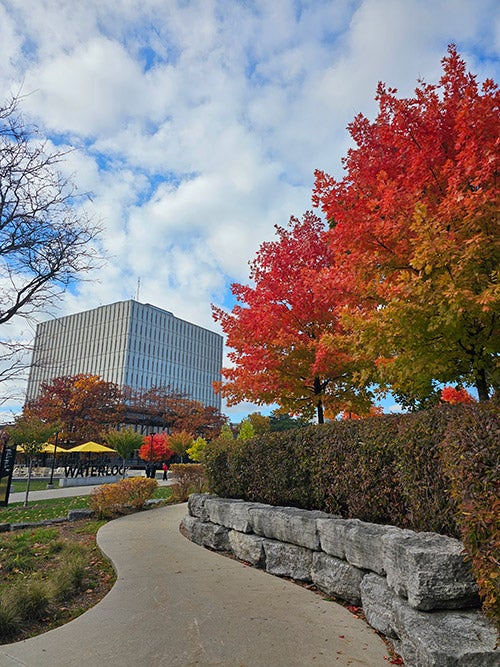
- À compter du 1er juillet 2026, au sein de la nouvelle School of Critical and Creative Humanities, les programmes d’études françaises sont placés sous la responsabilité de Tara Collington, qui occupe les fonctions de directrice et de responsable des études de premier cycle, tandis que Nicolas Gauthier continue d’assurer la fonction de responsable des études supérieures.
- Toute nos félicitations à Nicolas Hebbinckuys qui a obtenu sa permanence et sa promotion au rang de professeur agrégé !
- En mars, Catherine Dubeau a publié son premier roman, Quilt, au Éditions Leméac. Bravo à Catherine pour cette belle réalisation !
- Valérie Dusaillant-Fernandes a dirigé le numéro 8 du volume 3 de la revue Alternative francophone intitulé « Perspectives croisées sur des écrivain·e·s originaires d’Asie de l’Est et du Sud-Est : voix en résonance ». Avec les contributions de : Jia Xing, Mirei Seki, Kyeongmi Kim-Bernard, Xinyi Tan, Aurore Nicolas, Chiara Falangola, Philippe Basabose et Valérie Dusaillant-Fernandes.
- Nicolas Hebbinckhuys et Valérie Dusaillant-Fernandes ont organisé une demi-journée d’activités et d’information sur les programmes du département en avril. Ils ont accueilli 70 élèves accompagnés de leurs deux enseignantes, Hillary Millar, Christina Harnack et Amanda Bauz, des écoles secondaires Forest Heights Collegiate Institute, Bluevale Collegiate Institute et Eastwood College Institude. Ils tiennent à remercier Gnariko Hekimian (Président du Cercle français) et le professeur Mikalai Kliashchuk pour leur formidable participation aux activités durant cette visite.
- Du 22 au 28 juin 2026, les professeur.e.s Valérie Dusaillant-Fernandes, Nicole Nolette, Alexie Tcheuyap et l’étudiante au doctorat Ko-Eun Um ont présenté leurs recherches au colloque annuel du Conseil international d’études francophones (CIEF) qui se tenait cette année dans la ville de Alcala de Henares (Espagne), ville natale de Don Miguel de Cervantes.
- Choix du Goncourt du Canada: De septembre 2025 à mai 2026, le programme d’études françaises a participé pour la première fois, au Choix du Goncourt Canada organisé par L’Ambassade de France et l’Institut français du Canada. Le comité de lecture, composé de quatre étudiant.e.s supérieur.e.s (Maxime Batiot, Jocelyn van Leeuwen, Lisa Tournat et Ko-Eun Um) et de Valérie Dusaillant-Fernandes, s’est réuni plusieurs fois dans le cours de l’année pour échanger sur les quatre livres finalistes du Goncourt 2025-2026 [Nathacha Appanah, La Nuit au cœur (Gallimard) ; Emmanuel Carrère, Kolkhoze (P.O.L); Caroline Lamarche, Le Bel obscur (Seuil); Laurent Mauvignier, La Maison vide (Les Éditions de Minuit)]. Pour les quatre textes littéraires lus et étudiés, le comité a rempli une fiche de notation et de commentaires (avec des critères communs) fournie par l’Ambassade de France. Le 15 avril, une Master Class s’est tenue en ligne avec la marraine de l’édition, l’écrivaine Hélène Gaudy, dont le roman Archipels a fait partie de la sélection du prix Goncourt 2024. Lors du colloque Convergences, le 17 avril 2026, les étudiant.e.s de notre programme ont préparé une table ronde sur les romans analysés. Le 4 mai 2026, les étudiants délégués, représentants 84 étudiant.e.s de 11 universités anglophones canadiennes, ont décerné le Choix Goncourt Canada 2026 à Nathacha Appanah pour son roman La Nuit au cœur à l’Ambassade de France à Ottawa.
- Quatre collègues d’Études françaises, Kanstantsin Tsedryk, Nicolas Hebbinckuys, Mikalai Kliashchuk et Rocky Penate, participent, avec des collègues d’allemand et d’espagnol, à un projet financé par la Teaching and Learning AI Fellowship, consacré au développement et à l’évaluation d’agents conversationnels personnalisés pour l’apprentissage des langues. En savoir plus sur le projet.
- Nicole Nolette a reçu le Prix du meilleur ouvrage portant sur le théâtre québécois, ou canadien d’expression française, publié au cours des trois dernières années (2023, 2024, 2025) pour son livre Traverser Toronto : récits urbains et culture matérielle de la traduction théâtrale (2024). Toutes nos félicitations, Nicole!
Brief news from our faculty and students
- As of July 1, 2026, French Studies is a program within the new School of Critical and Creative Humanities. Tara Collington serves as Assistant Director and Undergraduate Officer, while Nicolas Gauthier continues to serve as Graduate Officer.
- Congratulations to Nicolas Hebbinckuys on receiving tenure and promotion to the rank of Associate Professor!
- This past March saw the publication of Catherine Dubeau’s first novel, Quilt (Éditions Leméac). Congratulations to Catherine on this wonderful achievement!
- Valérie Dusaillant-Fernandes edited a special issue (Vol. 3, no. 8) of the journal Alternative francophone, entitled “Perspectives croisées sur des écrivain·e·s originaires d’Asie de l’Est et du Sud-Est : voix en résonance.” Contributors include Jia Xing, Mirei Seki, Kyeongmi Kim-Bernard, Xinyi Tan, Aurore Nicolas, Chiara Falangola, Philippe Basabose, and Valérie Dusaillant-Fernandes.
- In April, Nicolas Hebbinckhuys and Valérie Dusaillant-Fernandes organized a half-day of activities and information about the department’s programs for high school students. They welcomed 70 students accompanied by their teachers, Hillary Millar, Christina Harnack, and Amanda Bauz, from Forest Heights Collegiate Institute, Bluevale Collegiate Institute, and Eastwood Collegiate Institute. Many thanks to Gnariko Hekimian (President of the Cercle français) and Prof. Mikalai Kliashchuk for their wonderful participation in the activities during this visit.
- From June 22 to 28, 2026, professors Valérie Dusaillant-Fernandes, Nicole Nolette, Alexie Tcheuyap, and doctoral student Ko-Eun Um presented their research at the annual conference of the Conseil international d’études francophones (CIEF), held this year in Alcalá de Henares, Spain, the birthplace of Don Miguel de Cervantes.
- Choix du Goncourt Canada: From September 2025 to May 2026, the French Studies program participated for the first time in the Choix du Goncourt Canada, organized by the Embassy of France and the Institut français du Canada. The committee, composed of four graduate students (Maxime Batiot, Jocelyn van Leeuwen, Lisa Tournat, and Ko-Eun Um) and Valérie Dusaillant-Fernandes, met several times throughout the year to discuss the four finalists for the 2025–2026 Goncourt Prize: Nathacha Appanah, La Nuit au cœur (Gallimard); Emmanuel Carrère, Kolkhoze (P.O.L); Caroline Lamarche, Le Bel obscur (Seuil); and Laurent Mauvignier, La Maison vide (Les Éditions de Minuit). For each of the four literary works read and studied, the committee completed a scoring and commentary form, using common criteria, provided by the Embassy of France. On April 15, an online Master Class was held with the writer Hélène Gaudy, whose novel Archipels was shortlisted for the 2024 Goncourt Prize. In April, our students organized a roundtable discussion on these novels as part of the annual Convergences student conference. On May 4, 2026, student delegates representing 84 students from 11 English-language Canadian universities awarded the 2026 Choix Goncourt Canada to Nathacha Appanah for her novel La Nuit au cœur at the Embassy of France in Ottawa.
- Four French Studies colleagues, Kanstantsin Tsedryk, Nicolas Hebbinckhuys, Mikalai Kliashchuk, and Rocky Penate, are participating, along with colleagues from German and Spanish, in a project funded by the Teaching and Learning AI Fellowship, focused on the development and evaluation of personalized conversational agents for language learning. Learn more about the project.
- Nicole Nolette was awarded the prize for best book on Québec theater or Canadian French-language theater published in the last three years (2023, 2024, 2025) for her book Traverser Toronto : récits urbains et culture matérielle de la traduction théâtrale (2024). Congratulations, Nicole!
Vos dons à l’œuvre !

Soutenir notre programme, c’est miser sur un enseignement supérieur de qualité en français dans la région de Kitchener-Waterloo et sur la formation de personnes capable de vivre et de travailler dans une des deux langues officielles du Canada.
Au cours de l’année dernière, les dons au fonds « French Studies Trust Fund » ont permis de financer plusieurs activités pour les étudiant·e·s : notre bal annuel, La Nuit en Rose, la soirée des talents, ainsi qu’une réception pour nos finissant·e·s après la cérémonie de remise de diplômes. Depuis 2020, nous offrons aussi à nos finissant·e·s un cadre photo avec la devise de l’université en souvenir de leurs années passées en études françaises. Au cours de l’année à venir, nous espérons subventionner encore plus d’activités qui seraient impossibles à envisager sans votre soutien.
Nous acceptons les dons personnels ou d’entreprises pour organiser des évènements culturels en français pour les étudiant·e·s, offrir des bourses d’excellence ou encore organiser des rencontres avec des membres de la communauté ou du milieu académique. Pour faire un don en ligne, sous Gift Designation, sélectionner « Other Fund » et indiquer « French Studies Trust Fund ». Nous vous remercions très chaleureusement de votre générosité !
Your Donations at Work!
Supporting our program means focusing on quality higher education in French in the Kitchener-Waterloo region and on the training of people capable of living and working in one of Canada’s two official languages.
Over the past year, donations to the French Studies Trust Fund have supported several activities for students, such as our annual ball, La Nuit en Rose, a talent show, and a graduation reception. Since 2020, we have also offered all graduating students a UW picture frame as a reminder of their years in French Studies. In the coming year, we hope to support even more activities that would be difficult to imagine without your continued support.
We accept personal or corporate donations to organize cultural events in French for students, to offer excellence scholarships, or even to organize scholarly talks or events with members of the community. To donate online, under Gift Designation: select “Other Fund” and enter the fund name “French Studies Trust Fund”. We are so grateful to our generous supporters!