Eight faculty members at the Cheriton School of Computer Science have received the 2025 Outstanding Performance Award. Established in 2005 by the University of Waterloo, this prestigious recognition honours faculty members who demonstrate excellence broadly.
“Congratulations to Samer, Jo, Jeff, Martin, Jimmy, Mei, Rafael and Meng on this well-deserved recognition,” said Raouf Boutaba, University Professor and Director of the Cheriton School of Computer Science.
“I am pleased to celebrate their achievements and the many ways they enrich computer science research, teaching and service at the Cheriton School of Computer Science and beyond.”
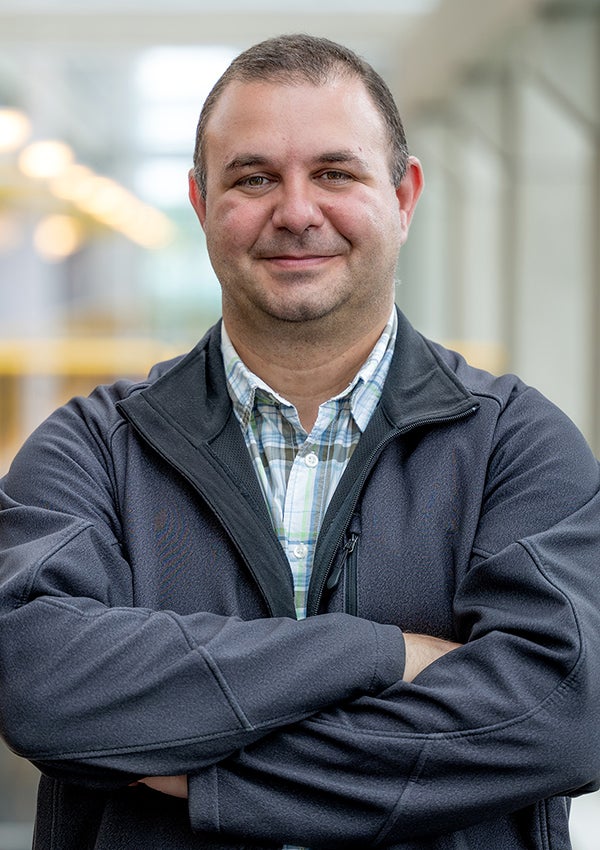
Samer Al-Kiswany
Associate Professor
Director of Infrastructure
Samer Al-Kiswany is an Associate Professor and the Director of Infrastructure at the Cheriton School of Computer Science. His research focuses on computing systems, with particular emphasis on distributed systems and operating systems. He develops highly efficient systems by leveraging advances in hardware technologies and applying domain-specific optimizations.
His current projects span several interconnected areas in systems research: accelerating data deduplication for secure storage systems; optimizing resource management for serverless platforms; designing network-accelerated systems for low-latency workloads; and exploring multi-access edge computing for next-generation mobile networks.
He directs the Waterloo Advanced Systems Lab, a vibrant research group that develops the next generation of high-performance, reliable, and scalable distributed systems.
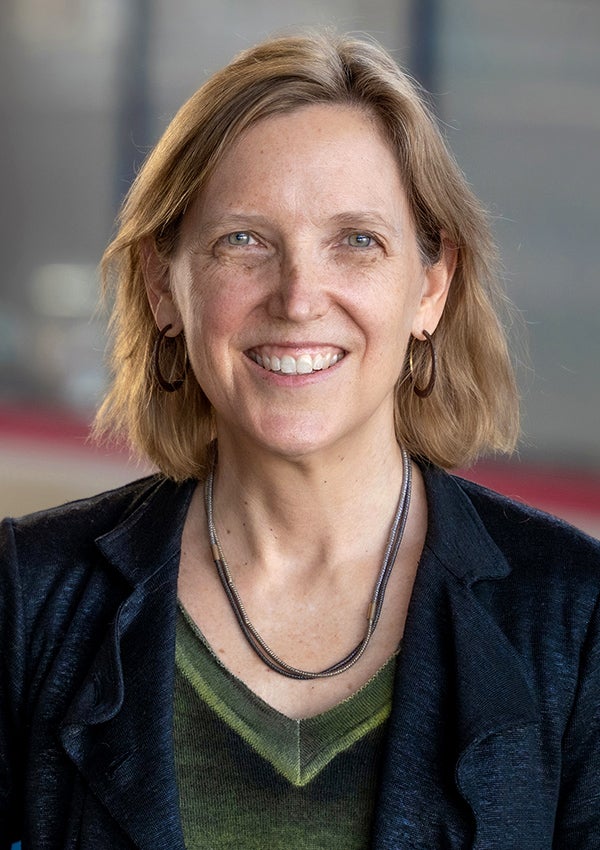
Jo Atlee
Professor
Director of Women in Computer Science
Professor Atlee’s research interests lie in software engineering, with a particular focus on improving software quality. Much of her work focuses on modelling software in its features and on detecting, resolving and managing feature interactions, where the goal is to support the rapid development of new features, services and modular components that are oblivious to each other yet interoperate well. With her students, she develops theories of composition, analyses to detect feature interactions, architectures to coordinate features and resolve interactions, and proof systems for interoperability.
Professor Atlee is also a tireless advocate for gender equity and has inspired countless women to pursue studies in computer science. In 2014, she chaired Waterloo’s Women in Computer Science committee and became the initiative’s Director in 2015. Since then, she has created and led many WiCS initiatives, including conferences, mentorship programs, orientation activities and career-development opportunities for undergraduate and graduate students. In 2018, she launched a local chapter of the Technovation Challenge, an outreach program that equips girls and gender-diverse youth from ages 8 to 18 with the skills to become tech entrepreneurs and leaders.
Professor Atlee was named an ACM Distinguished Scientist in 2016 and received the IEEE Computer Society Technical Council on Software Engineering Distinguished Women in Science and Engineering Leadership Award in 2020. In 2022, she received the ACM SIGSOFT Distinguished Service Award, and in 2023, she was honoured with the Lifetime Achievement Award from CS-Can | Info-Can and named one of Canada’s Most Powerful Women by the Women’s Executive Network.

Jeff Avery
Associate Professor
Jeff Avery is an Associate Professor in the Teaching Stream at the Cheriton School of Computer Science. He regularly teaches human–computer interaction, software engineering and programming courses, as well as serving as an undergraduate advisor.
His research interests span programming practices, software engineering, and human–computer interaction. His specific interests are in software architecture and design, the design of interactive systems, input and interaction technologies, multi-touch and gestural interaction, optimizing systems for everyday tasks, personal computing, and computer science education and pedagogy.

Martin Karsten
Professor
Associate Director, Cheriton School of Computer Science
Martin Karsten is a Professor in the Systems and Networking Group at the Cheriton School of Computer Science, where he also serves as Associate Director. His research focuses on computer and communication systems, particularly system-level software. He has collaborated with industry partners in the computer, telecommunications and financial sectors, contributing to projects ranging from Linux kernel development to multimedia streaming software.
Professor Karsten’s more recent work has explored computer runtime systems and the application of networking concepts to multi- and many-core computing environments. His research has also examined the efficiency and sustainability of computing infrastructure, including approaches to improving Linux network-traffic processing and reducing energy consumption in data centres.

Jimmy Lin
Professor
David R. Cheriton Chair in Software Systems
Jimmy Lin is a Professor at the Cheriton School of Computer Science, where he is the David R. Cheriton Chair in Software Systems, a rare and prestigious position he has held since 2015. He served as Co-Director of the Waterloo Data and Artificial Intelligence Institute from 2021 to 2025.
Professor Lin’s research aims to build tools that help users make sense of large amounts of data. He works at the intersection of information retrieval, natural language processing, and data management. He is a Fellow of the Association for Computing Machinery, a Fellow of the Association for Computational Linguistics, and a member of the SIGIR Academy.

Mei Nagappan
Associate Professor
Member, Software Engineering Group
Mei Nagappan is an Associate Professor at the Cheriton School of Computer Science. His research uses large-scale software engineering data to understand and improve how software is built, deployed, and maintained across a broad range of stakeholders, including developers, operators, build engineers, and project managers.
Professor Nagappan’s recent work has expanded into applying machine learning and large language models to core software engineering challenges. This includes automated test generation, bug localization, and vulnerability detection. A key theme is critically evaluating how well AI-powered developer tools actually perform in practice, for example, examining whether LLM-based test generators can reliably find real bugs or whether AI coding assistants introduce security vulnerabilities.
He has received numerous awards recognizing his research excellence, including the Outstanding Early Career Computer Science Researcher Award from CS-Can | Info-Can in 2020 and an appointment as the Ross & Muriel Cheriton Faculty Fellow from 2020 to 2023. He also received the Early Career Achievement Award at the 15th International Conference on Mining Software Repositories in 2018 in recognition of his outstanding contributions to the field.
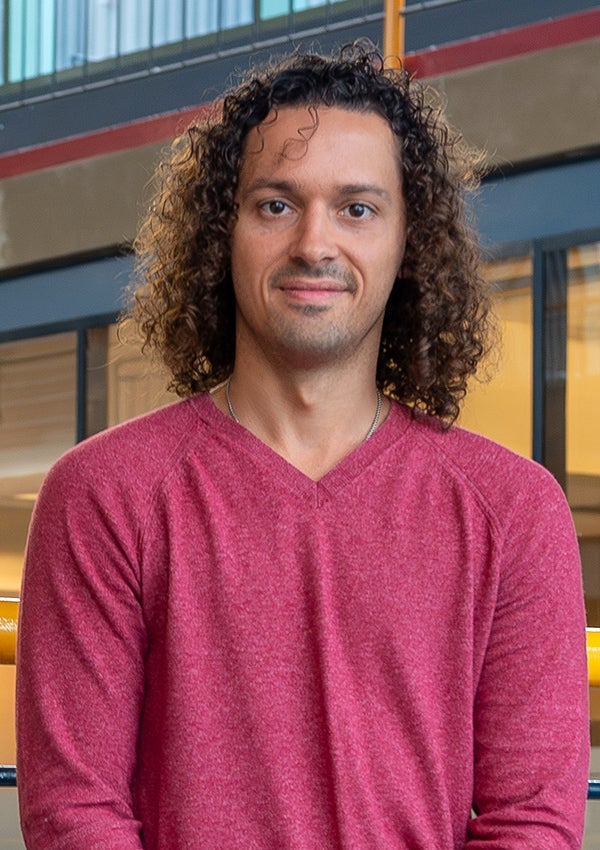
Rafael Oliveira
Associate Professor
Member, Algorithms and Complexity Group
Cross-appointed to the Department of Pure Mathematics
Professor Oliveira’s research explores the interplay between mathematics and computer science, particularly in how optimization and computational complexity interact with other areas of mathematics and science, such as algebra, invariant theory, quantum information theory and analysis. He uses these connections between optimization, complexity and invariant theory to provide novel algorithms for various computational problems arising in computer science.
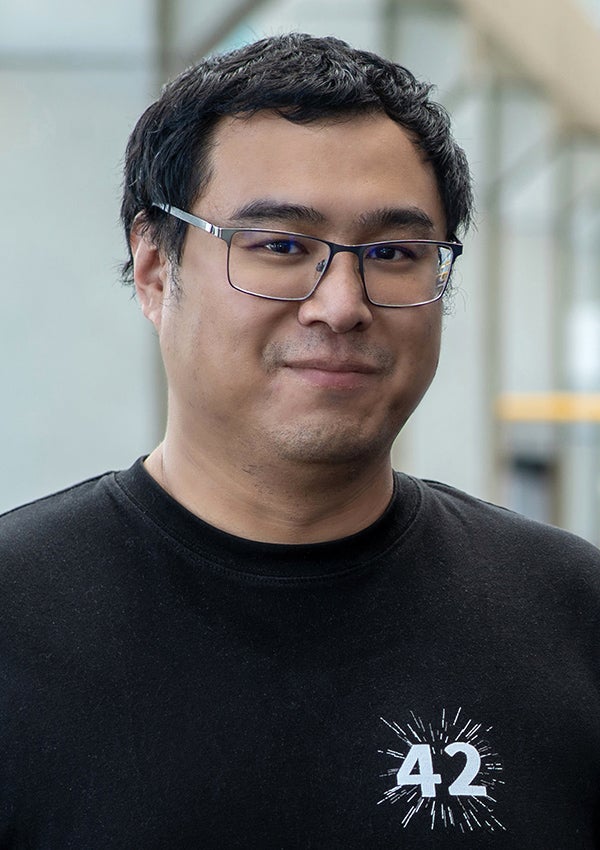
Meng Xu
Assistant Professor
Member, Cryptography, Security, and Privacy Group; Cybersecurity and Privacy Institute
Professor Xu’s research is in system and software security, with a focus on delivering high-quality solutions to practical security programs, especially in finding and patching vulnerabilities in critical computer systems. His work often involves the research and development of automated program analysis, testing and verification tools that facilitate the security reasoning of critical programs.
He believes security should be treated as a first-class consideration in programming rather than as an afterthought. Recognizing that this requires a wide range of security tools at every stage of software development, he focuses his efforts on secure-by-design languages, automated program analysis, and runtime defence techniques.