Professor Florian Kerschbaum has been named a 2026 Fellow of the Institute of Electrical and Electronics Engineers for his contributions to data security and privacy.
IEEE Fellowships are an elite distinction, and the grade of Fellow is the highest degree of IEEE membership. It is reserved for individuals with outstanding records of accomplishment whose work has advanced engineering, science and technology and delivered significant benefits to society.
“Congratulations to Florian on this well-deserved honour, the latest in a series of international, national and institutional awards,” said Raouf Boutaba, University Professor and Director of the Cheriton School of Computer Science. “His elevation to IEEE Fellow is a significant recognition of his outstanding research in data security and privacy, as well as his far-reaching contributions to industry.”
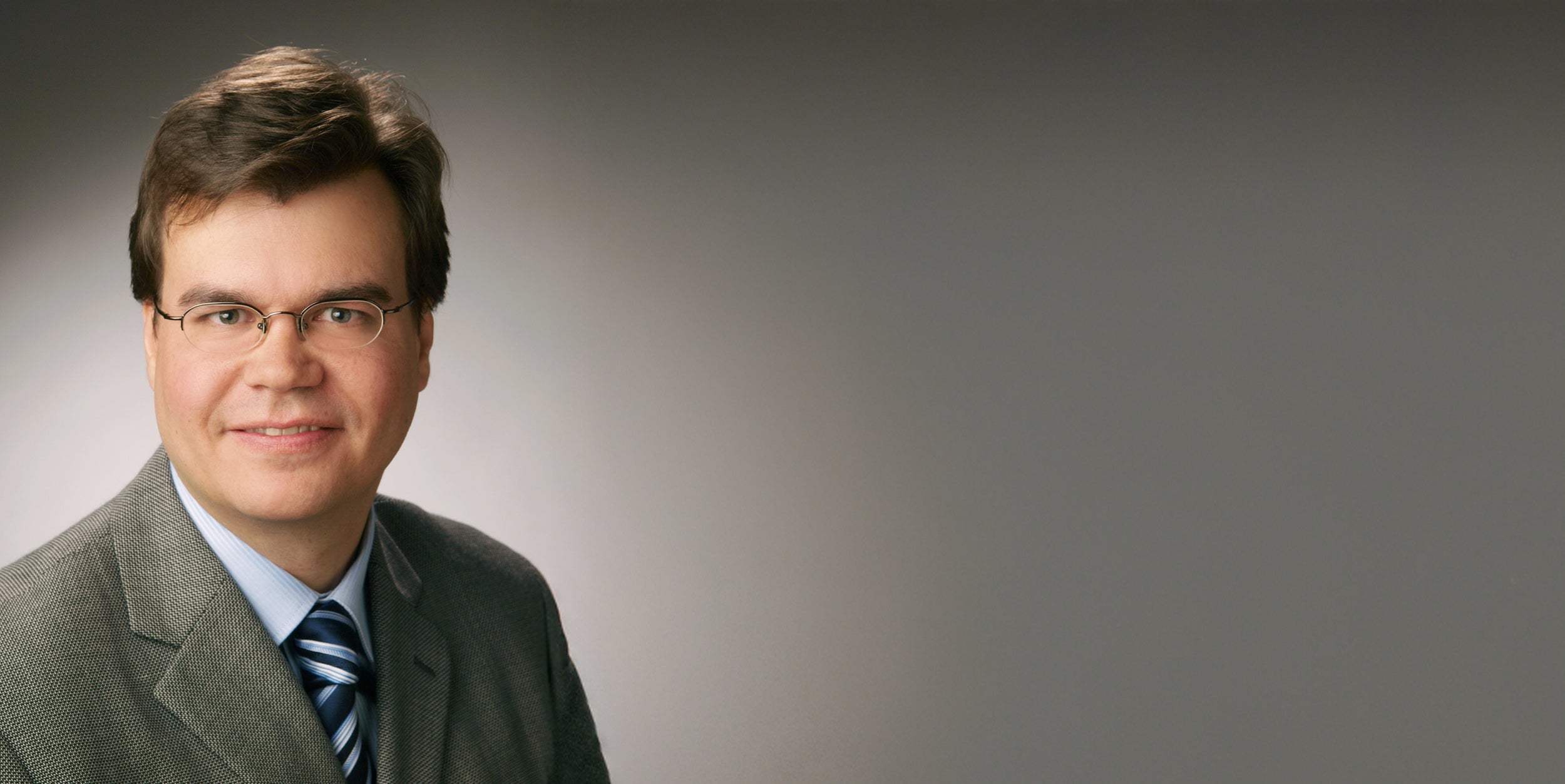
Before joining the Cheriton School of Computer Science in 2017, Professor Florian Kerschbaum was Chief Research Expert at SAP in Karlsruhe, Germany from 2005–16. His research explores security and privacy in the entire data science lifecycle and extends real-world systems with cryptographic mechanisms that have provable security guarantees. As of December 2025, his publications have been cited more than 9,800 times with an h-index of 58 according to Google Scholar.
Professor Kerschbaum’s professional recognitions include being named an ACM Distinguished Scientist in 2019, receiving the Outstanding Young Computer Science Researcher Award from CS-Can | Info-Can in 2019, and winning the Faculty of Mathematics Golden Jubilee Research Excellence Award in 2022. He was the NSERC/RBC Research Chair in Data Security, from 2019–25. He became a Fellow of the Balsillie School of International Affairs in 2020, and served as the inaugural Director of Waterloo’s Cybersecurity and Privacy Institute. Currently, he is a Cheriton Faculty Fellow for the 2024–27 term. He has twice received Waterloo’s Outstanding Performance Award, in 2021 and in 2024.
Professor Kerschbaum’s contributions to data security and privacy
In-memory database management systems
Professor Kerschbaum has made groundbreaking contributions to computer security and privacy through his innovative design of in-memory database management systems that can operate directly over encrypted data.
In-memory database management systems have strict CPU and memory limitations, while existing encryption technologies such as homomorphic encryption are either computationally prohibitive or lack the needed functionality for practical database use. Professor Kerschbaum addressed these limitations by developing custom encryption schemes that support database functionality on encrypted data with low computational overhead. In essence, his research has protected data while being able to use it.
His work strengthened security in high-leakage encryption schemes, such as order-preserving encryption, and significantly improved the efficiency of low-leakage schemes like searchable encryption. By enabling efficient updates and broadening functionality of SQL operators, he has pushed the boundaries of encrypted database performance. He was the first to use the inherent leakage of searchable encryption to increase efficiency and to delineate the trade-offs between non-interactivity, leakage and performance in secure database join operations.
Professor Kerschbaum’s innovations extend beyond theory, having practical applications in areas such as privacy-preserving smart metering. This work includes protocols for billing, spatial and temporal aggregation and demand-response verification that do not reveal a household’s consumption data, but are also secure against misreporting. His contributions have redefined the field of secure data management, demonstrating not only technical ingenuity but also profound impact on privacy-preserving computing in real-world scenarios.
Pioneering advances in AI security
Professor Kerschbaum has also made innovative contributions to AI security, particularly through AI watermarking. He pioneered watermarking for natural language text that embeds hidden markers to identify AI-generated content. It has become an essential tool to combat the misuse of AI-generated content, ensuring transparency and accountability in increasingly common AI-driven communication.
His research addresses growing challenges in AI security, such as preventing the spread of misinformation and creation of deepfakes. He identified critical vulnerabilities in existing watermarking methods and developed robust techniques far more resilient to tampering.
Professor Kerschbaum’s research has not only advanced academic understanding but also practice, including commercial image generation technology. By bridging academic rigour with practical application, he has developed tools to secure AI systems against misuse, enhancing trust in AI technologies. His contributions are an essential step to ensure the ethical and responsible use of AI systems.
IEEE Fellows at the Cheriton School of Computer Science
Professor Kerschbaum is the eighth faculty member at the Cheriton School of Computer Science to be named an IEEE Fellow. Previous recipients are N. Asokan, Raouf Boutaba, J. Alan George, Ihab Ilyas, Srinivasan Keshav, Ming Li and Tamer Özsu.