Which of the following might leave a University of Waterloo student trembling in fear?
(A) Sleeping in and missing a midterm
(B) Being at the tail end of the semester and not having a co-op placement yet
(C) Seeing a Canada goose on the way to class
Unsurprisingly, some students would pick (C).
The University of Waterloo is known for many things: its innovative spirit, the viral Watcard meme, and an abundance of Canada geese on campus. Students, staff and faculty have long recounted how frightening these creatures can be, from hissing if you cross their path to wandering into a store, causing patrons to panic. For first-year computer science student, Anirudh Dabas, the experience was a culture shock.
“Coming from Delhi, I had never dealt with anything like that before, so getting hissed at and suddenly realizing that a goose could completely change the way you move around campus was a very new experience,” says Dabas. “This was not just a random, one-off moment. People avoid certain paths, hesitate near entrances, take longer routes, and sometimes just feel on edge walking through places where they know geese tend to be aggressive. It started to feel less like a campus joke and more like a real quality-of-life problem.”
The problem intensifies in the spring as Canada geese build nests, lay eggs and raise their goslings, a time when they are most territorial, protective and aggressive.
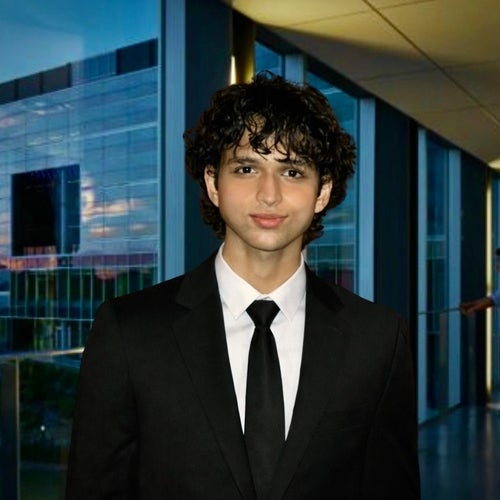
After realizing his friends and classmates were dodging geese sightings, Anirudh Dabas, set out on a mission to help the Waterloo community using AI.
Dabas decided to help people avoid Canada geese using AI. He built Waddleloo, a platform that allows students to report goose sightings. Users can upload a photo of a goose, and an AI model will detect and count the birds in the frame. It will also check for signs of aggressive behaviour, such as raised wings, open beaks, and protective posturing around nests or goslings.
The platform’s main feature is an interactive map that displays verified sightings, with colour-coded zones for hotspots and nesting areas. It also has a mapping tool called “safe route” that helps users navigate around high-risk areas.
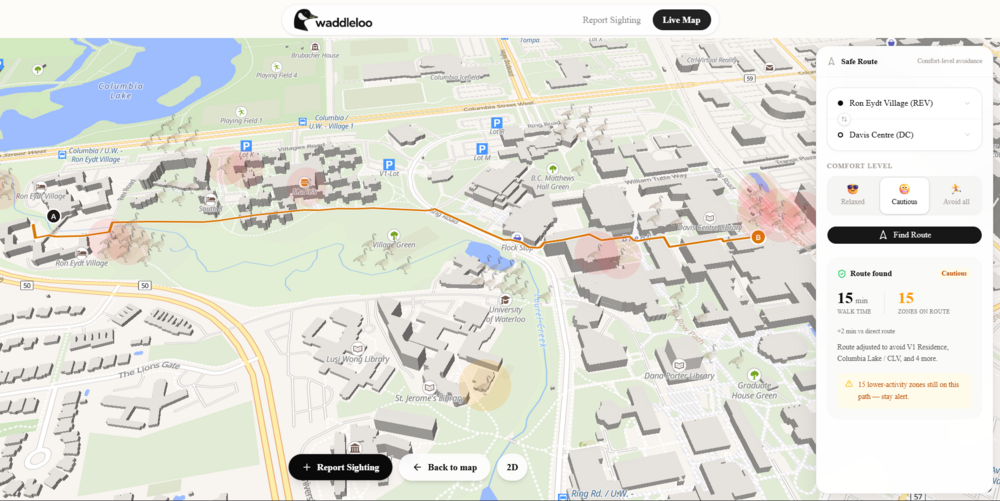
Like Google Maps, Waddleloo can help users navigate between geese zones on campus
According to Waddleloo, many of the hotspots are near university residences, such as Village 1 (V1) and Ron Eydt Village (REV).
The app is powered by YOLOv8 computer vision model and Google’s Gemini Vision API, which work together to detect and analyze goose behaviour. Waddleloo also leverages a cloud database to store and host sighting images.

Users can submit geese sightings on Waddleloo, alerting faculty, staff and students to the presence of our famously overconfident neighbours, Canada geese in nesting season.

Users can submit geese sightings on Waddleloo, alerting faculty, staff and students to the presence of our famously overconfident neighbours, Canada geese in nesting season.

Users can submit geese sightings on Waddleloo, alerting faculty, staff and students to the presence of our famously overconfident neighbours, Canada geese in nesting season.
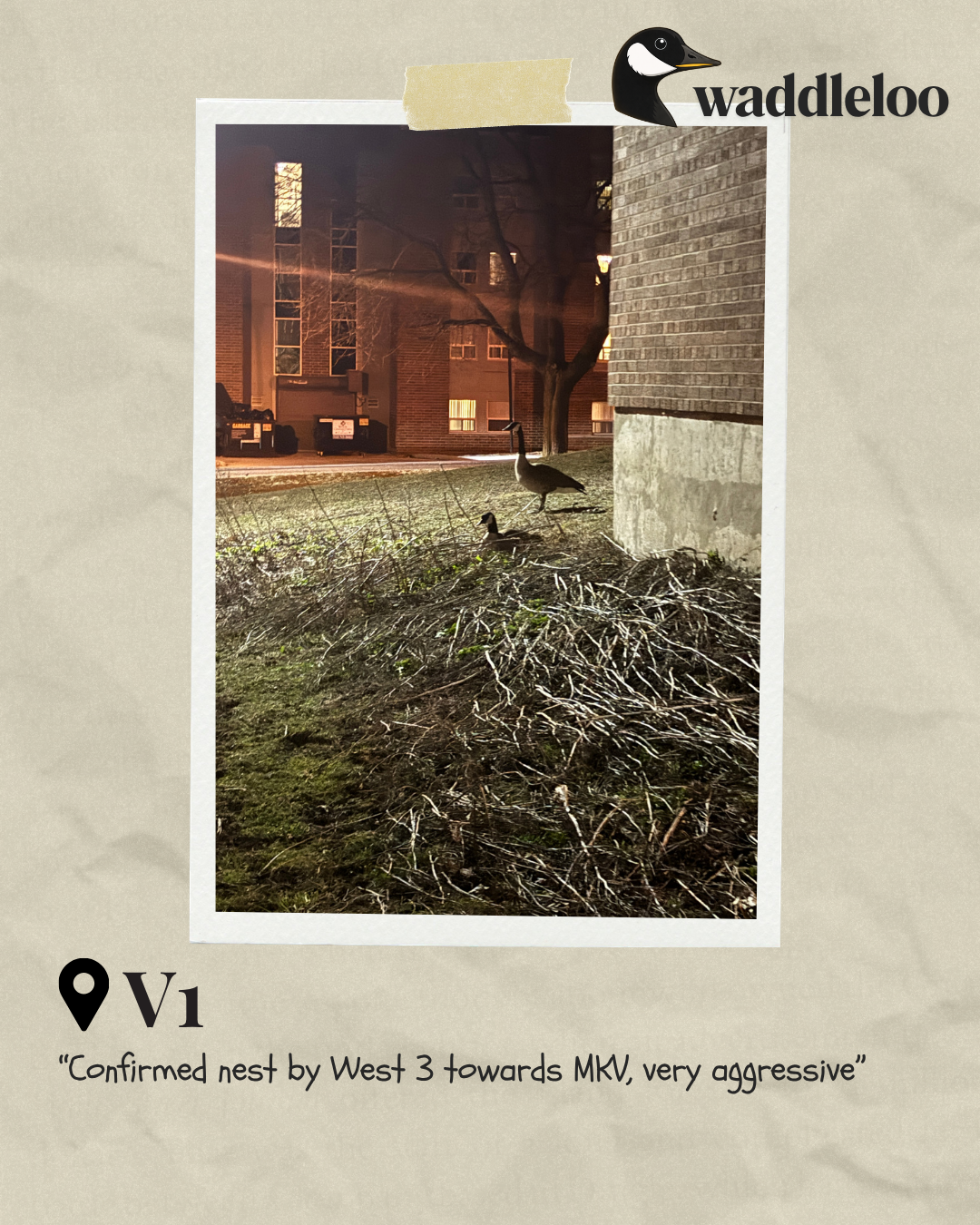
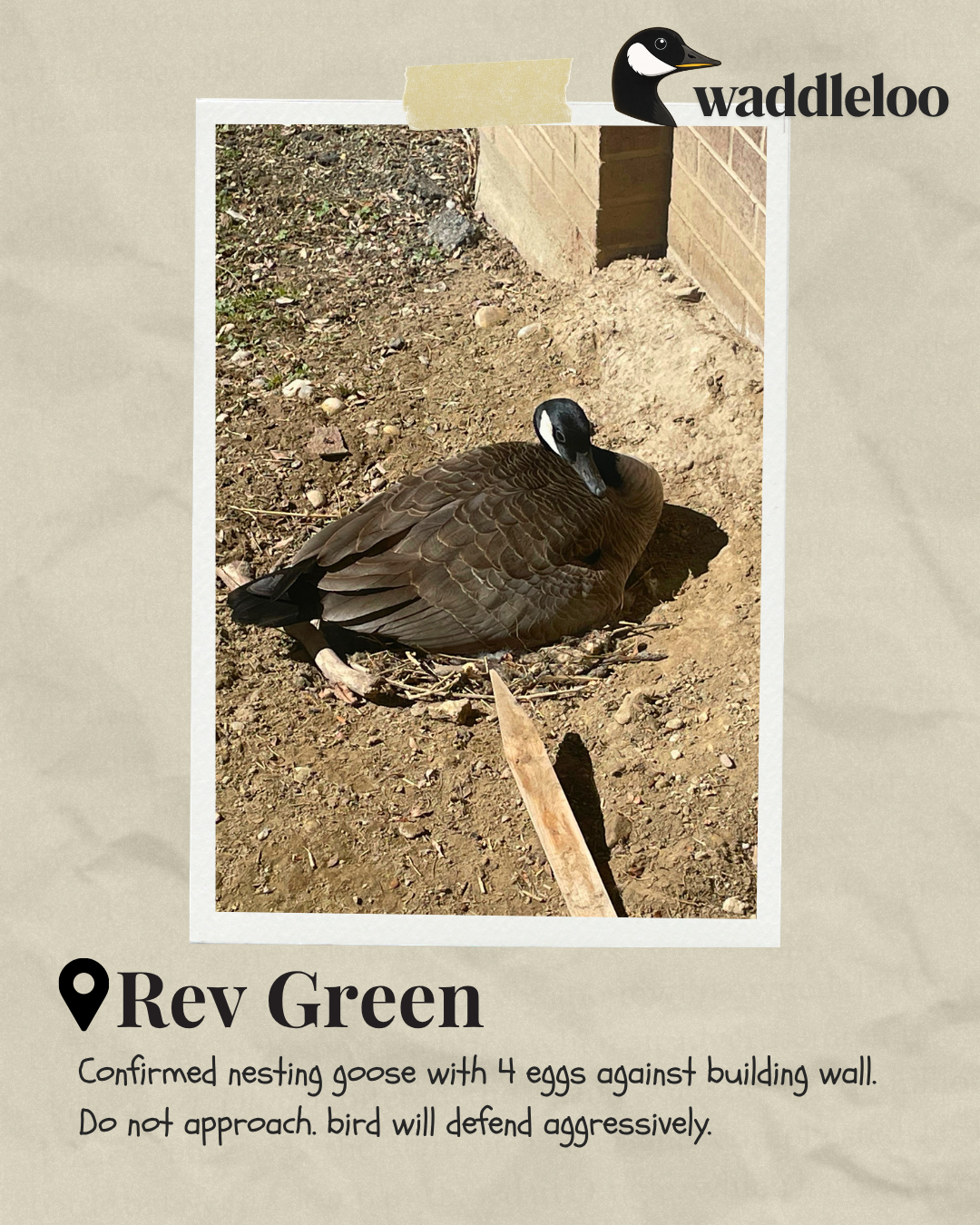
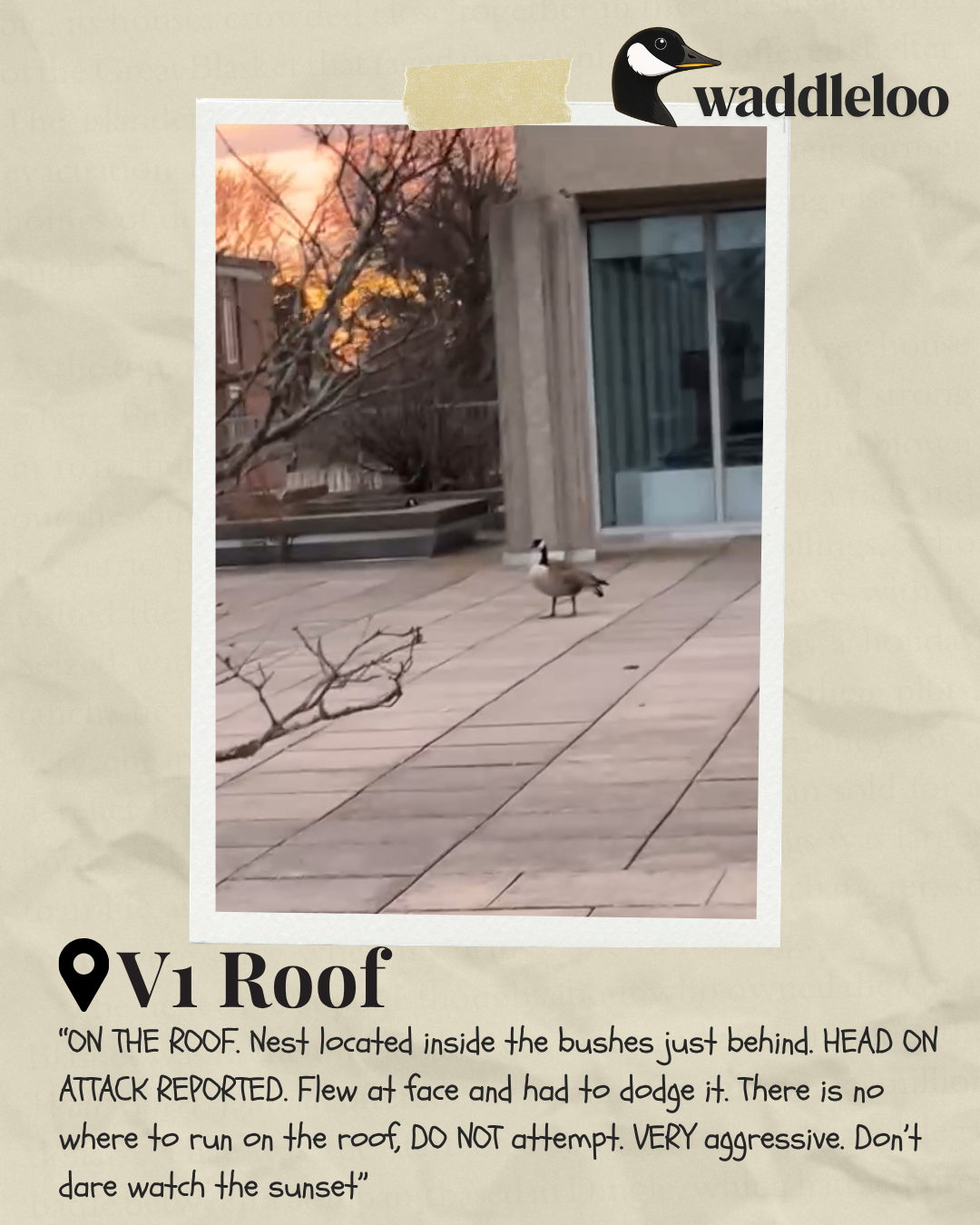
Since Waddleloo’s launch, the response has been swift. Within 10 days, the platform garnered 200,000 views across LinkedIn, Instagram, and TikTok, and hundreds of site visitors. Recently, Waddleloo expanded to the University of Waterloo’s neighbour, Wilfrid Laurier University.
For Dabas, he is proud that he created something that made “campus feel a little easier, safer, and less stressful.”
“For me, this project was really about paying attention to something that was affecting the people around me and deciding to do something about it,” says Dabas. “I think some of the best ideas start that way: not from trying to seem impressive, but from noticing what people are dealing with and caring enough to build something useful. I feel very grateful that other students were willing to contribute to Waddleloo and make it something bigger than just me. The community response has been the best part of the whole experience.”
He hopes that Waddleloo inspires students to leverage technology to tackle everyday problems, even the minor inconveniences.
“Meaningful projects do not always start from huge, dramatic ideas,” he says. “Sometimes they start from something small, local, and oddly specific. Sometimes they start from friends telling stories, students quietly dealing with the same frustration every day, or one moment when you realize, ‘someone should really make this better’.”
To stay informed about goose activity on campus, visit Waddleloo.