News

Filter by:

Limit to news where the title matches:
Limit to items where the date of the news item:
Date range
Limit to news items where the audience is one or more of:

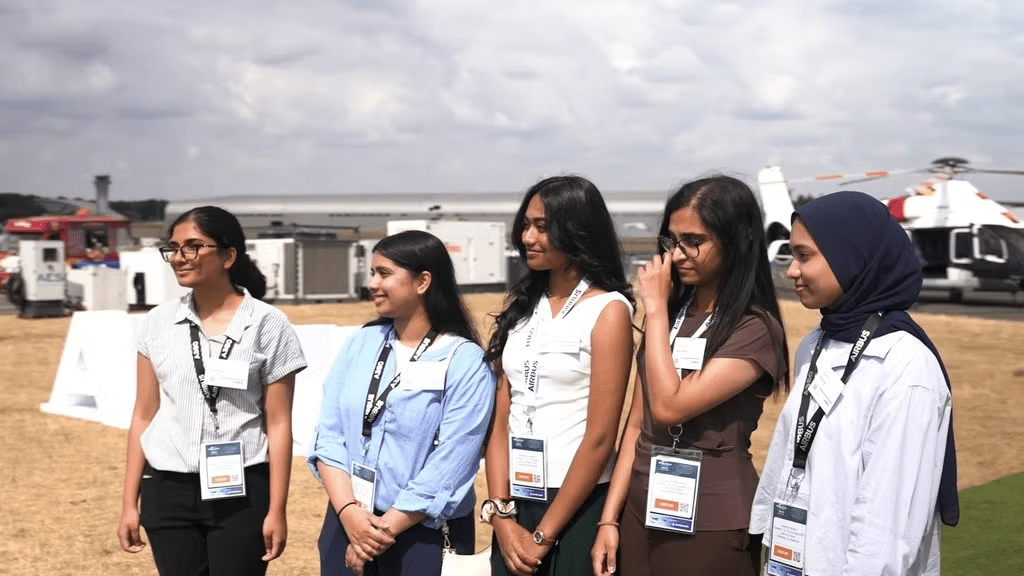
Waterloo Blockchain flew 18 students from the University of Waterloo and Wilfrid Laurier University to South America to compete at ETHGlobal Buenos Aires.

ETHGlobal is one of the largest developer-focused communities in Ethereum. It supports blockchain enthusiasts, regardless of their background, by providing guides, job opportunities, and hackathons. Since 2017, it has hosted more than 40 hackathons across the globe, from Tokyo to Paris to Waterloo.

PhD candidate Muhammad Sulaiman, former postdoctoral researcher Mahdieh Ahmadi, Assistant Research Professor Mohammad Salahuddin, Cheriton School of Computer Science Director Raouf Boutaba, and Aladdin Saleh from Rogers Communications Canada have received the 2025 CNOM Best Paper Award for their research presented at NOMS 2023.

Their paper, Generalizable Resource Scaling of 5G Slices Using Constrained Reinforcement Learning, was published in the proceedings of the 36th IEEE/IFIP Network Operations and Management Symposium.

The Association for Computing Machinery has named Professor Craig S. Kaplan a 2025 Distinguished Member in recognition of his pioneering contributions to the design and modelling of computational geometric patterns and non-photorealistic rendering.

He is among 61 individuals worldwide honoured this year for outstanding scientific achievements in computing.

Professor Freda Shi and her collaborators Changbing Yang, Franklin Ma and Jian Zhu from the University of British Columbia have received an Outstanding Paper Award at EMNLP 2025, the 30th Conference on Empirical Methods in Natural Language Processing.

Their paper, LingGym: How Far Are LLMs from Thinking Like Field Linguists?, introduced a new benchmark that evaluates how effectively large language models can perform meta-linguistic reasoning.

Professor Ian Goldberg and former Cheriton School of Computer Science doctoral students Aniket Kate and Gregory Zaverucha have received the 2025 Asiacrypt Test-of-Time Award. Their paper, Constant-Size Commitments to Polynomials and Their Applications, was presented originally at Asiacrypt 2010, the 16th International Conference on the Theory and Application of Cryptology and Information Security.

The Test-of-Time Award honours a paper presented 15 years earlier that has had a significant and lasting impact on the theory and practice of cryptography and information security.

Three Waterloo computer science professors are at the forefront of two new research initiatives that are developing cutting-edge, inclusive, and trustworthy AI systems.

The inaugural research initiatives — Solution Networks — are funded through the Canadian Institute for Advanced Research’s (CIFAR) Canadian AI Safety Institute (CAISI) Research Program. In 2024, the federal government launched the CAISI Research Program as part of its AI safety strategy.

Research from the Cheriton School of Computer Science is making inroads on one of the biggest problems in theoretical computer science. But the way to do it, according to Cameron Seth, a PhD candidate working in the field of algorithmic approximation, is by breaking the problem down into smaller pieces.

“Everyone working in computer science and mathematics knows about the ‘P vs. NP’ problem,” Cameron says. “It’s one of the notorious Millennium Prize Problems: so famous and so difficult that solving one will earn you a million dollars.”

Professors Meng Xu and Sihang Liu have received $254,116 in funding from the National Cybersecurity Consortium, a federally incorporated not-for-profit organization committed to advancing Canada’s cybersecurity ecosystem.

Their project, Securing LLM Agents Against Malicious or Vulnerable Tools, aims to identify and mitigate security risks in agentic systems — AI systems capable of making autonomous decisions and taking actions to achieve specific goals.