
Written by special contributor
Waterloo offers more than 100 programs, which means there's no shortage of possibilities when it comes to finding the right fit. But with so many options, it can be hard to know where to begin.
One good place to start? Looking at where the world is headed.


The careers of the future will require people who can analyze data, build sustainable solutions, design meaningful experiences, and tackle complex challenges from multiple perspectives. While you may already know about some of Waterloo's most popular programs, there are plenty of others that will prepare you for an impactful career in emerging and evolving fields.
From nanotechnology and data science to sustainability and sport management, these six programs are helping prepare the next generation of innovators, problem-solvers, and changemakers for an evolving world of work.

1. Global Business and Digital Arts
Design the digital experiences of tomorrow.
As technology becomes part of nearly every industry, organizations need people who can bridge the gap between business, design, and technology. Global Business and Digital Arts combines user experience design, digital media, programming, and business strategy, preparing you to create digital products, solve customer problems, and lead human-centred innovation in a technology-driven world. You’ll graduate with a portfolio of real projects and co-op experience that can lead to careers in UX/UI design, product management, digital marketing, and brand strategy.

2. Nanotechnology Engineering
Engineer the next generation of breakthrough technologies.
From advanced computing and artificial intelligence to renewable energy and health care, many of tomorrow's breakthrough technologies are being developed at the nanoscale. Working at the scale of billionths of a metre, Nanotechnology Engineering combines chemistry, materials science, biology, physics, and engineering to develop next-generation technologies. You'll learn how nanoscale materials and devices show up in everyday tech, from tougher smartphone screens to ultra-bright quantum-dot displays, stain-resistant fabrics, next-generation solar materials, and nanoparticles that help pharmaceuticals work faster and more precisely. Our program is Canada's first accredited nanotechnology engineering program and emphasizes hands-on laboratory and co-op experience. Once you graduate, you’ll be well positioned for careers in nanomaterials, semiconductor process engineering, research and development, and more.
3. Environment, Resources and Sustainability
Tackle sustainability’s biggest challenges.
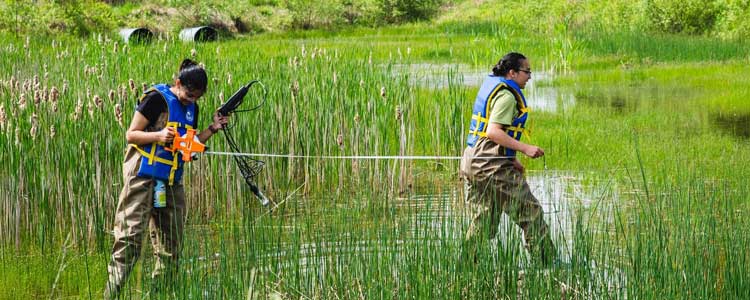
Climate change, biodiversity loss, and resource management are some of the defining challenges of our generation, and organizations across every sector are looking for people who can help address them. Environment, Resources and Sustainability takes an interdisciplinary approach, combining natural sciences, social sciences, environmental policy, and practical field skills to help you tackle complex environmental challenges from multiple angles. You’ll graduate with the interdisciplinary perspective and problem-solving skills employers are increasingly seeking and be prepared for careers in sustainability, environmental consulting, conservation, ecological restoration, policy, and more.

4. Sport and Recreation Management
Shape the future of sport, recreation, and wellness.
As organizations increasingly invest in health, wellness, community engagement, and live experiences, the sport and recreation industry continues to grow and evolve. It's a multi-billion-dollar field that extends far beyond professional athletics, encompassing community recreation, event management, tourism, wellness programming, and entrepreneurship. Sport and Recreation Management combines business fundamentals with sport and recreation expertise, helping you develop transferable skills in management, marketing, leadership, and event planning while building a professional network through co-op and real-world learning experiences. You'll graduate with a well-rounded business background that can take you into professional sport, municipal recreation, entrepreneurship, and a wide range of leadership roles across the sport and recreation sector.

5. Data Science
Turn data into insight.
From personalized recommendations and medical diagnoses to weather forecasting and business strategy, data is shaping decisions in nearly every industry. As organizations increasingly rely on data and artificial intelligence to solve problems and identify opportunities, demand for data science expertise continues to grow. By combining mathematics, statistics, computer science, and analytical thinking, Data Science will teach you how to uncover patterns, build predictive models, and transform raw information into meaningful insights. You'll graduate ready to help organizations make smarter decisions in fields ranging from health care and finance to technology, advertising, public health, and more.

6. Environmental Sciences
Use science to create a more sustainable future.
As communities around the world work to address challenges such as climate change, water security, pollution, and biodiversity loss, scientific expertise is more important than ever. Environmental Sciences provides a strong foundation in biology and Earth sciences alongside studies in ecology, geology, hydrology, and water systems. You can specialize in Ecology, Geoscience, or Water Science while developing the technical and scientific expertise needed to understand environmental change and develop evidence-based solutions. You'll graduate ready to help protect ecosystems, manage natural resources, improve water quality, advance environmental research, and support sustainability efforts around the world.
Not sure what to study?
Start by learning more about yourself. Do you like English, business, or math courses? Helping people lead healthy lives or developing the latest tech? Take our three-minute quiz to discover what drives you and how your strengths connect to Waterloo programs.
Related articles

How to choose a university program
Choosing a university program can be a daunting task. A big part of that challenge is not knowing what to look for. To make this process slightly easier, here are a few factors to consider when choosing a university program.

What to do when you can't decide
So, you don’t know what you want to do after graduation. The good news is, you’re not alone. If you know that you want to go to university, but you don’t know what you want program to apply to, don’t worry! We’ve got some tips that will help you to consider what your next steps could be.
10 factors to consider when choosing a university
So you’re thinking about going to university. With so many programs and universities, how do you pick? Here are 10 factors to consider.