Three computer science graduate students have received the 2026 Faculty of Mathematics Doctoral Prize.
Since 2019, the Faculty of Mathematics has recognized the achievements of its top graduating and graduated doctoral students. This year’s recipients are Nikhita Joshi, Ahmed Alquraan and Negar Arabzadeh, who have received prizes of $1,500, $1,000 and $500, respectively. Notably, this is the first time all recipients are from the Cheriton School of Computer Science.
As the first-place recipient, Nikhita has also been nominated for the University-wide Governor General’s Gold Medal, which is awarded at Spring convocation.
From streamlining information access and retrieval systems to advancing cloud computing systems, these students have demonstrated exceptional research and academic achievements throughout their graduate studies.
First Place: Nikhita Joshi

Traditionally, constraining user interface features is used for error prevention. Drawing on theories from psychology and human behaviour, Nikhita explored whether these constraints could instead unlock user potential. For example, her research found that restricting text highlighting can boost reading comprehension. She has also found that AI-assisted writing tools can increase feelings of ownership if the user is required to provide longer prompts.
“I’m incredibly honoured to have received this year’s Mathematics Doctoral Prize,” says Nikhita. “I’m excited to continue designing, building, and evaluating novel interfaces that purposely constrain user interactions when reading and writing, and to explore how these ideas can extend to other tasks. I'm so grateful to have been advised by Daniel Vogel, who provided me with invaluable guidance and support throughout my PhD.”
Her dissertation was widely lauded within the human–computer interaction (HCI) community for uncovering insights on digital reading, writing interfaces, and human–AI collaboration, findings that could shape future technology designs.
“Huge congratulations to Nikhita,” says her supervisor, Professor Daniel Vogel. “This recognition reflects an exceptional trajectory, marked not only by impactful research and an outstanding dissertation, but also her leadership in the HCI community and impressive record of academic honours.”
Nikhita is currently an NSERC Postdoctoral Fellow at Université Paris-Saclay, working in one of the world’s leading HCI research groups.
Second Place: Ahmed Alquraan
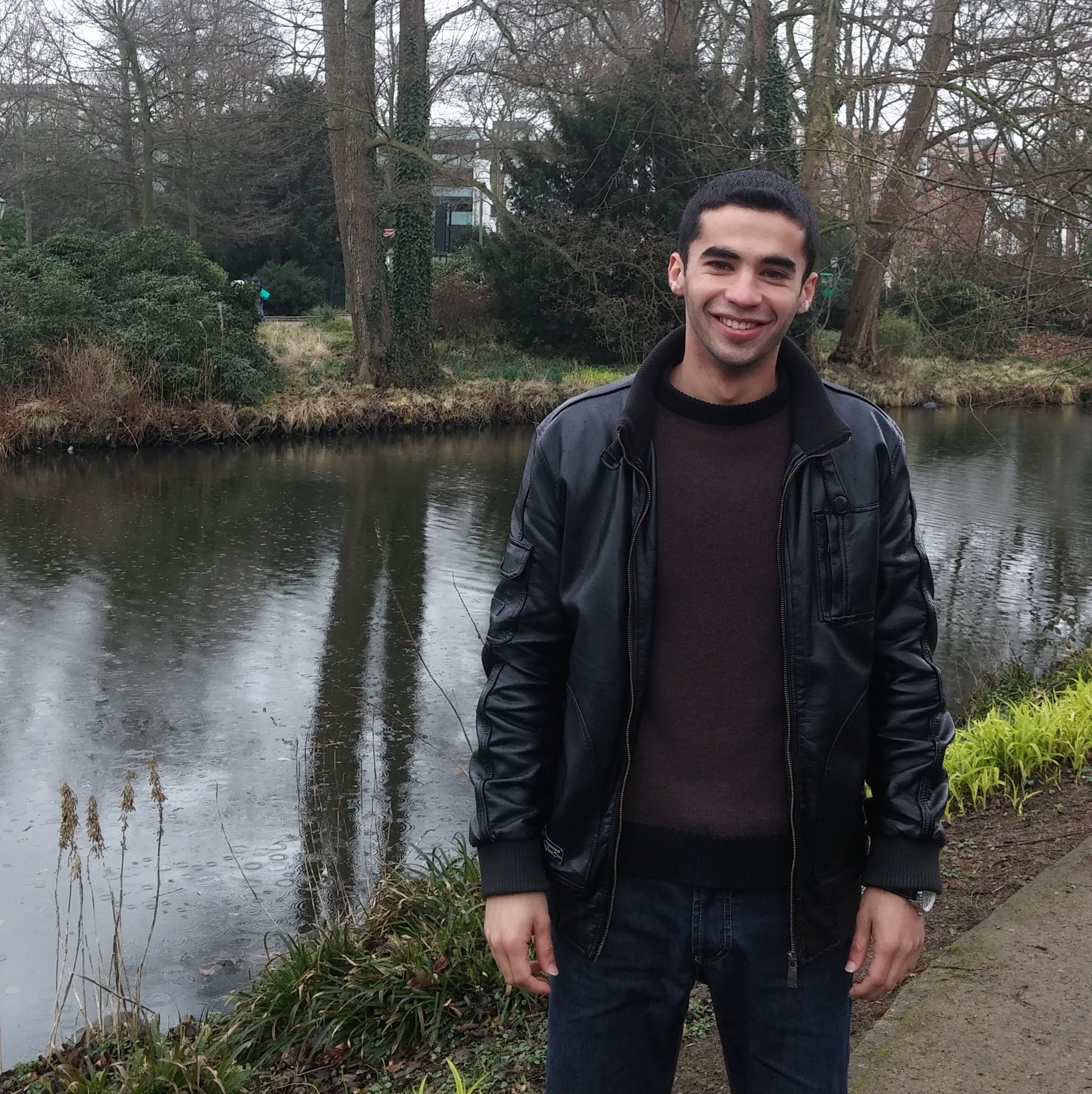
Distributed storage and resource management systems are cornerstones of modern cloud infrastructure. Ahmed’s research focuses on designing and building systems that meet the performance, reliability, and scalability requirements of today’s cloud applications.
“Ahmed is a brilliant, versatile, driven, and innovative researcher,” says his supervisor, Professor Samer Al-Kiswany. “His work has reshaped how the community understands network failures, proposed techniques to accelerate core consensus protocols, and brought new insights into cloud resource management. It has also influenced industry-scale production platforms, and his system, DROPS, has even been adopted at Microsoft.”
Ahmed’s research has culminated in the development of DROPS, a resource management system for serverless functions. DROPS uses a novel statistical analysis of historical execution traces to allocate resources efficiently while meeting performance requirements. Notably, DROPS has been adopted by Microsoft and deployed in production across all Azure regions, where it supports millions of user functions and has reduced infrastructure costs by tens of millions of dollars.
“I am honoured to receive the Mathematics Doctoral Prize,” says Ahmed. “My PhD focused on systems that power the cloud — the protocols that keep services running when networks fail, the consensus algorithms behind replicated databases, and the resource management techniques used by cloud providers. It was especially rewarding to see this work move from research into production systems and graduate classrooms. I am grateful to my advisor, Samer Al-Kiswany, for his guidance throughout this journey, and to my collaborators at Microsoft and Oracle for the chance to test these ideas in production.”
Ahmed is continuing his research as a postdoctoral fellow with Professors Al-Kiswany and Martin Karsten.
Third Place: Negar Arabzadeh

Whether a student searching Google for sources for an essay or a doctor consulting a database for patient inquiries, information access systems are the foundation of today’s digital society. These systems empower informed decision-making, especially in healthcare and education, while satisfying our curiosity. As a result, there’s a growing need for relevant, accurate and diverse information access and retrieval systems that align with modern-day advancements in AI.
These ideas formed the foundation of Negar’s dissertation. For example, she found that models that retrieve highly relevant documents are underestimated by current metrics, because these documents are only sparsely labelled. To address this issue, she developed a fairer and more robust evaluation system that leverages Fréchet Distance, a method used to measure similarity between two probability distributions — in this case, the distributions of known relevant items and retrieved results.
She also developed and standardized a toolkit that enables large language models (LLMs) to generate graded and relevant labels, helping establish best practices for LLM-assisted and automated judgements. Overall, her work introduced novel evaluation methods that pave the way for modern, efficient and accurate information retrieval and access systems, including search engines and databases.
“I have rarely met a more accomplished researcher at the PhD level,” says her supervisor, Professor Charles Clarke. “Negar is both brilliantly original and highly collaborative. Since the start of her PhD studies, her research has been cited more than 1,700 times.”
In May 2025, Negar continued her research as a postdoctoral fellow at the University of California, Berkeley’s Department of Electrical Engineering & Computer Sciences.