PhD candidate Vasisht Duddu has been selected as one of 39 outstanding early-career researchers from institutions across the globe to be named a 2026 MLCommons Rising Star, an honour recognizing his contributions to machine learning and systems research.
The MLCommons Rising Stars program supports talented young researchers working at the intersection of machine learning and systems by providing opportunities to connect with a vibrant research community, engage with industry and academic experts, and further their skills. MLCommons is an artificial intelligence engineering consortium, built on a philosophy of open collaboration to improve AI systems. This marks the fourth year the organization has selected a cohort of rising stars.
“This recognition reflects Vasisht’s hard work and the strong track record he has built, including two paper awards and a competitive IBM PhD fellowship,” said University Professor N. Asokan, his doctoral advisor. “It comes at a pivotal moment, as he prepares to defend his thesis this spring and transition to the next stage of his career.”
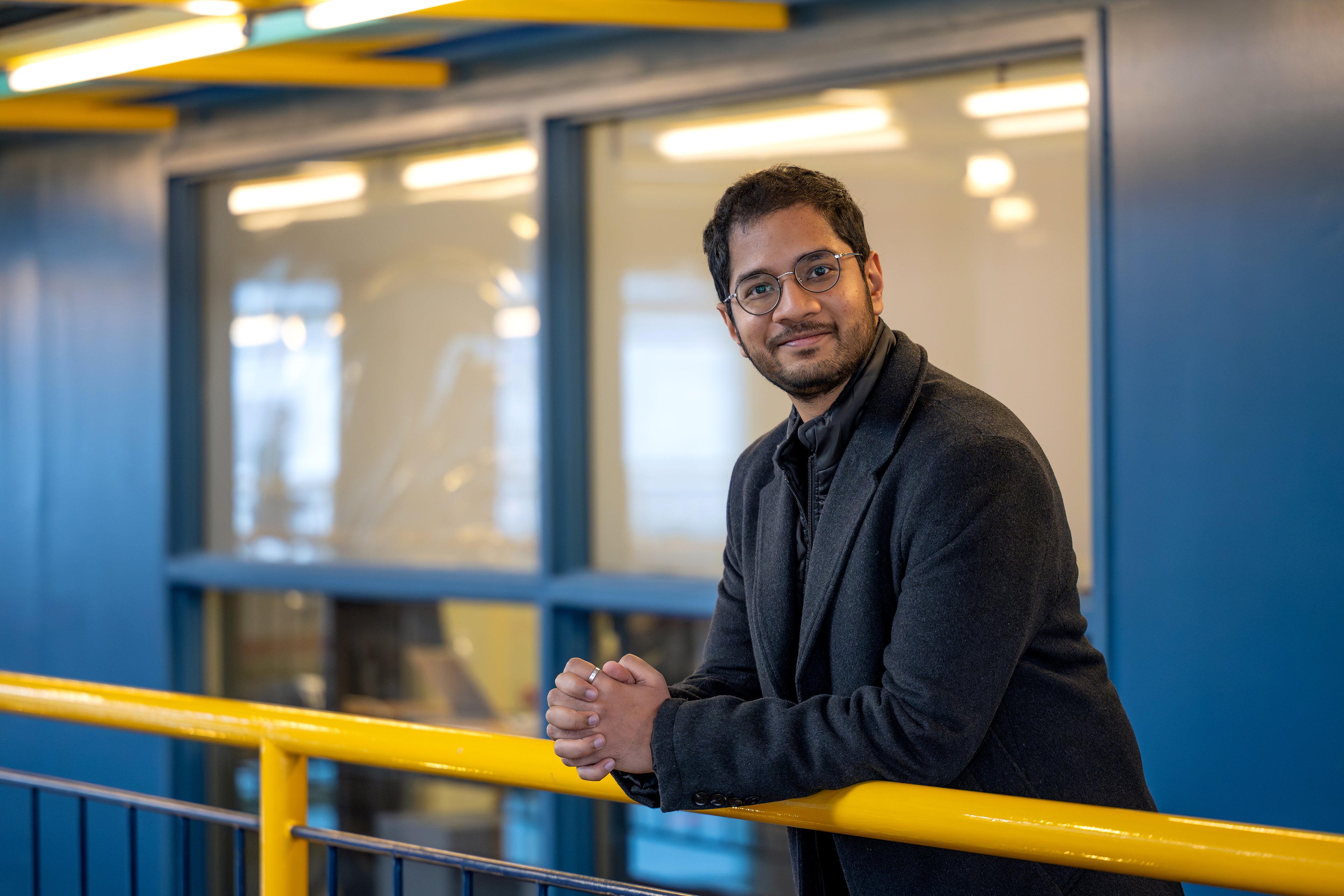
Vasisht Duddu is a PhD candidate at the Cheriton School of Computer Science whose research focuses on building trustworthy machine learning systems grounded in systems security principles.
During his doctoral studies, he received multiple awards, fellowships and scholarships. Notable honours include a Best Paper Award at CODASPY 2025, a Distinguished Paper Award at the 45th IEEE Symposium on Security and Privacy, an IBM PhD Fellowship, a MasterCard Cybersecurity and Privacy Excellence Graduate Scholarship, and a Cheriton Graduate Scholarship.
About Vasisht’s research
Vasisht’s research applies a systems security approach to trustworthy deployment of machine learning systems. His work focuses on identifying and mitigating adversarial risks to machine learning models through precise threat modelling, while emphasizing that studying risks in isolation is insufficient for real-world deployment, where systems must be protected against multiple risks simultaneously.
Vasisht’s research treats machine learning models as components within larger socio-technical systems, requiring holistic analysis that accounts for interactions between different risks and defences. A notable example is his work on unintended interactions between machine learning defences and risks, which received a Distinguished Paper Award at a leading conference on computer security and privacy. He has also contributed to research on combining defences that avoid conflicts while addressing threats.
Vasisht’s research highlights the importance of governance in machine learning systems. This includes his work on machine learning property attestations: technical mechanisms for accountability that allow practitioners to verifiably attest to claims about training data, training procedures, and inference-time properties of deployed models.