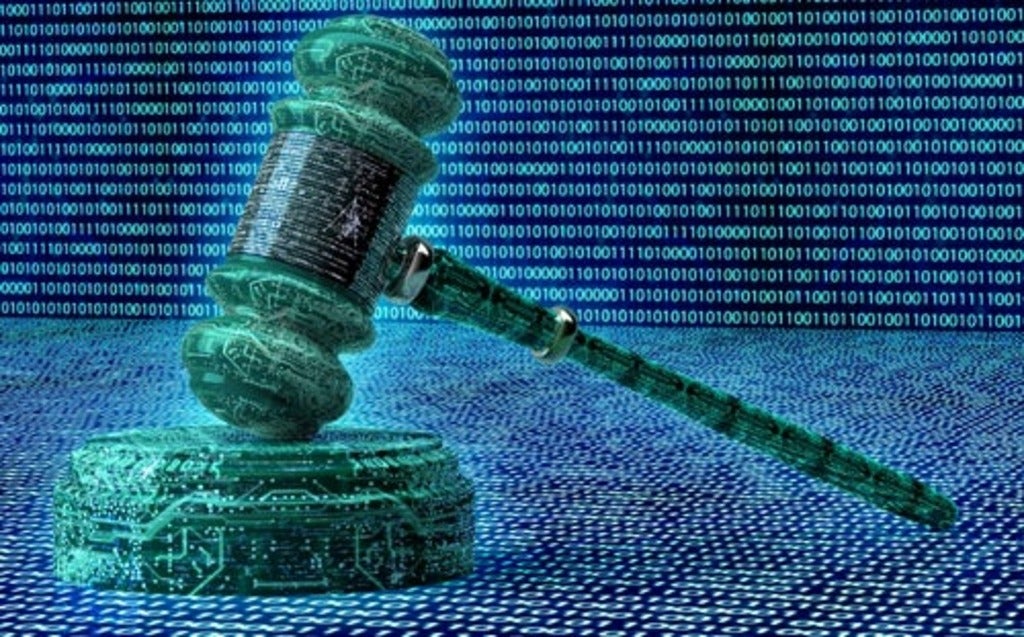
Meet the lawyer disrupting her profession
Maura Grossman, a Cheriton School of Computer Science Research Professor, is using AI to make legal document review more effective and efficient

The following excerpt is from “GitHub Releases New Tools to Report Vulnerabilities,” an article by Rina Diane Caballar published on June 21, 2019 in IEEE Spectrum, the magazine and website of the Institute of Electrical and Electronics Engineers.
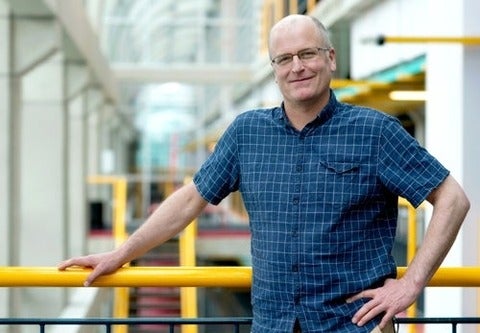
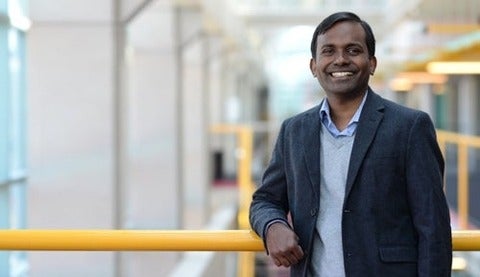
The article reports recent research conducted by Mei Nagappan, an assistant professor in the Cheriton School of Computer Science, and his colleagues on the lack of security vulnerability reporting processes in open-source software projects.
The following excerpt is from “The quest for high-quality data: Machine learning solutions for data integration, cleaning, and data generation are beginning to emerge,” a blog post written by Cheriton School of Computer Science Professor Ihab Ilyas and Ben Lorica, Chief Data Scientist at O’Reilly Media.
Researchers at the Cheriton School of Computer Science have found that individuals may be more motivated to do work for their favourite charity than for money.
In a study reviewing the efficacy of a new online work-sharing platform designed to put money into the hands of charities, the researchers discovered that people providing their skills and labour toward a specific task tended to do a better job if they knew their favourite charity rather than themselves would be paid for it.
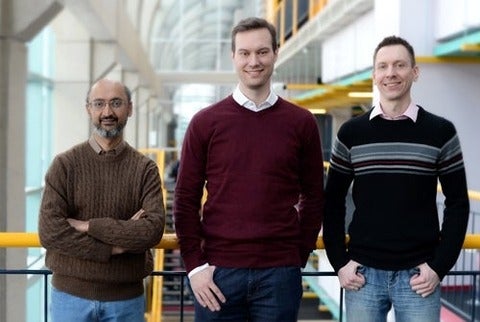
The key to people trusting and co-operating with artificially intelligent agents lies in their ability to display human-like emotions, according to a new study by Postdoctoral Fellow Moojan Ghafurian, Master’s candidate Neil Budnarain and Professor Jesse Hoey at the Cheriton School of Computer Science.
Cheriton School of Computer Science Professor Jesse Hoey has teamed up with Professor Robert Freeland, a sociologist at Wake Forest University, to conduct novel research at the intersection of computer science and social psychology.
Cheriton School of Computer Science PhD candidate Chang Ge, Professors Ihab Ilyas and Xi He, and their colleague Professor Ashwin Machanavajjhala at Duke University
Blockchain technology creates digital ledgers that record sequential exchanges of information, commonly called transactions. To improve performance, transactions are batched into blocks before they are added to the ledger. Each new block contains a hash value which, like a mugshot, acts as an identifier and proof of the previous state of the ledger.
Kevin Hyun, a computer science major at the University of Waterloo, has been awarded a 2019 Jessie W.H. Zou Memorial Award for Excellence in Undergraduate Research.
PhD student Alireza Heidari and Professor Ihab Ilyas at the Cheriton School of Computer Science along with international colleagues have developed a novel tool to manage the quality of your data. Called HoloClean, this revolutionary tool is the first to use artificial intelligence to sift out dirty data and correct errors before processing it.