Once upon a time, the sugar cube looked more like a layer cake, there was plenty of parking and green space on campus, and Waterloo didn't have a website let alone all the digital systems we use today. We've seen a lot in the past 65 years, and Arts has always been a crucial part of Waterloo's story.
Along with marking the 65th anniversary of the Faculty of Arts, this fall term marked the launch of a significant transformation for one of the university’s largest faculties.
Looking back
Arts was founded as the third faculty at the three-year old University of Waterloo in the fall of 1960 – joining the faculties of Engineering and Science. The university’s Quarterly Report that September quoted President J. G. Hagey speaking about the new Faculty:
“… the provision of arts courses fulfills an urgent need in this progressive section of the province. In addition, we are in a unique position as a new University to plan curricula in keeping with the challenge of living in a changing world."
In those early years, the Faculty of Arts included classical studies, English, French, history, German and Russian, math, philosophy, and Spanish (all of which exist and thrive today). Math was the largest department until it left Arts to become North America’s first Faculty of Mathematics in 1967.
The first decade of Arts at Waterloo saw the addition of social sciences and studio arts. Psychology was established by 1963 and would go on to specialize in six major subdivisions of psychology and become a research and teaching powerhouse. At the same time, the first courses in Fine Arts were introduced, eventually growing into a widely subscribed department by creative students from across the university.
Circa 1965, Political Science became a department whose future members played a lead role in the launch of the Balsillie School of International Affairs in 2007. By 1969 the brand new PAS building provided a brain-inspired home for Psychology, Anthropology (globally noted in the last decade for Franklin Expedition discoveries), Sociology (expanding significantly in the 2010s with Legal Studies), as well as Religious Studies (a department enriched with the faculty from across the creek).
The Faculty’s 10th anniversary saw the birth of Economics as a department – renowned today, along with Political Science, for public policy contributions. A late 70s English breakaway group formed what is today’s dynamic and interdisciplinary Department of Communication Arts.
At 20 years old, Accounting was established and steadily grew into the School of Accounting and Finance, Canada’s leading school for burgeoning accounting and finance professionals. Last, but not least, in 2018, the already booming Stratford Campus became the Stratford School of Interaction Design and Business, which is bursting at the seams today with 690 students.
At sixty five years old, Arts has graduated a total of 72,169 students!
Looking forward
We’ve come a long way, and we’re still moving forward. Echoing President Hagey’s 1960 sentiment, Arts is restructuring to meet the challenges of today’s changing world. The recently approved Faculty of Arts Reorganization into six schools will enable more opportunities for interdisciplinary collaborations to support new programming and research that respond to emerging and future educational, societal and economic priorities.
“I am inspired by the tremendous commitment and work toward the reorganization and I’m confident in our collective capacity to meet the future as a revitalized, energized and vigorous Faculty of Arts,” says Dr. Alexie Tcheuyap, dean of Arts.
A lot has changed in the past 65 years, but one of the things that remains constant in Waterloo Arts is the commitment of students, alumni, faculty and staff to making the world a better place for all.
Arts through the years
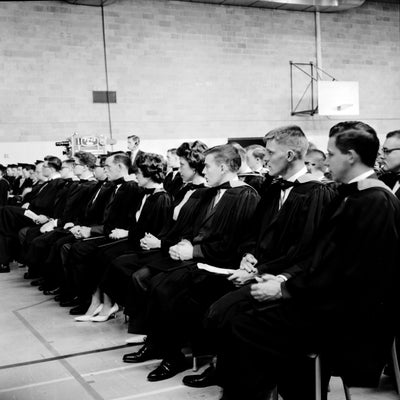
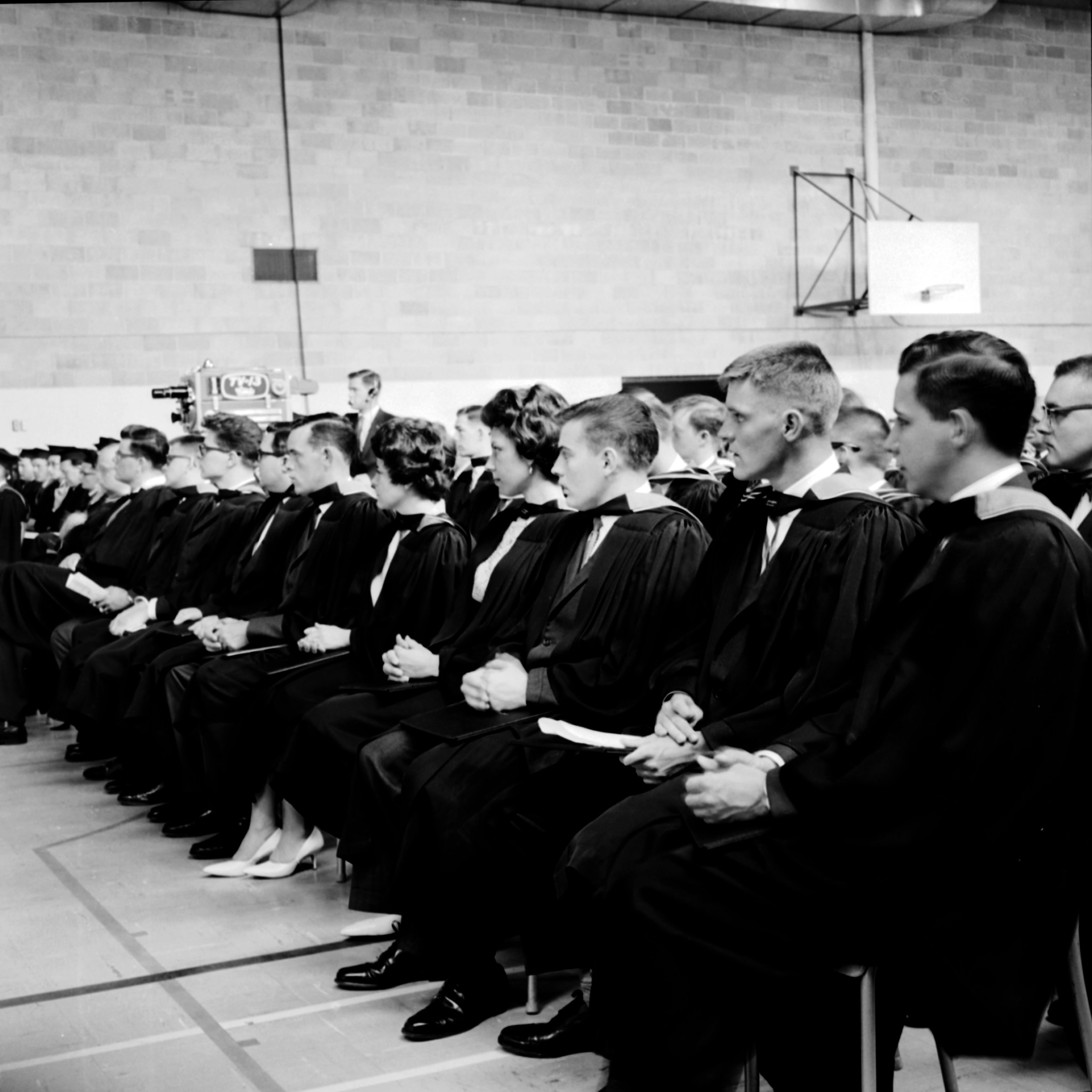
First graduates 1962
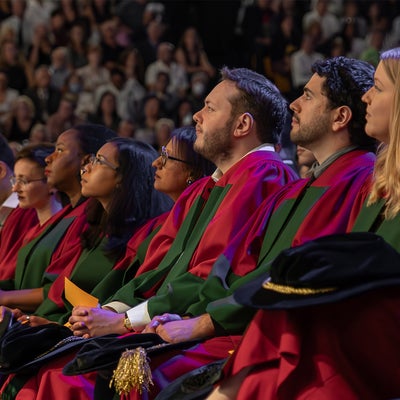
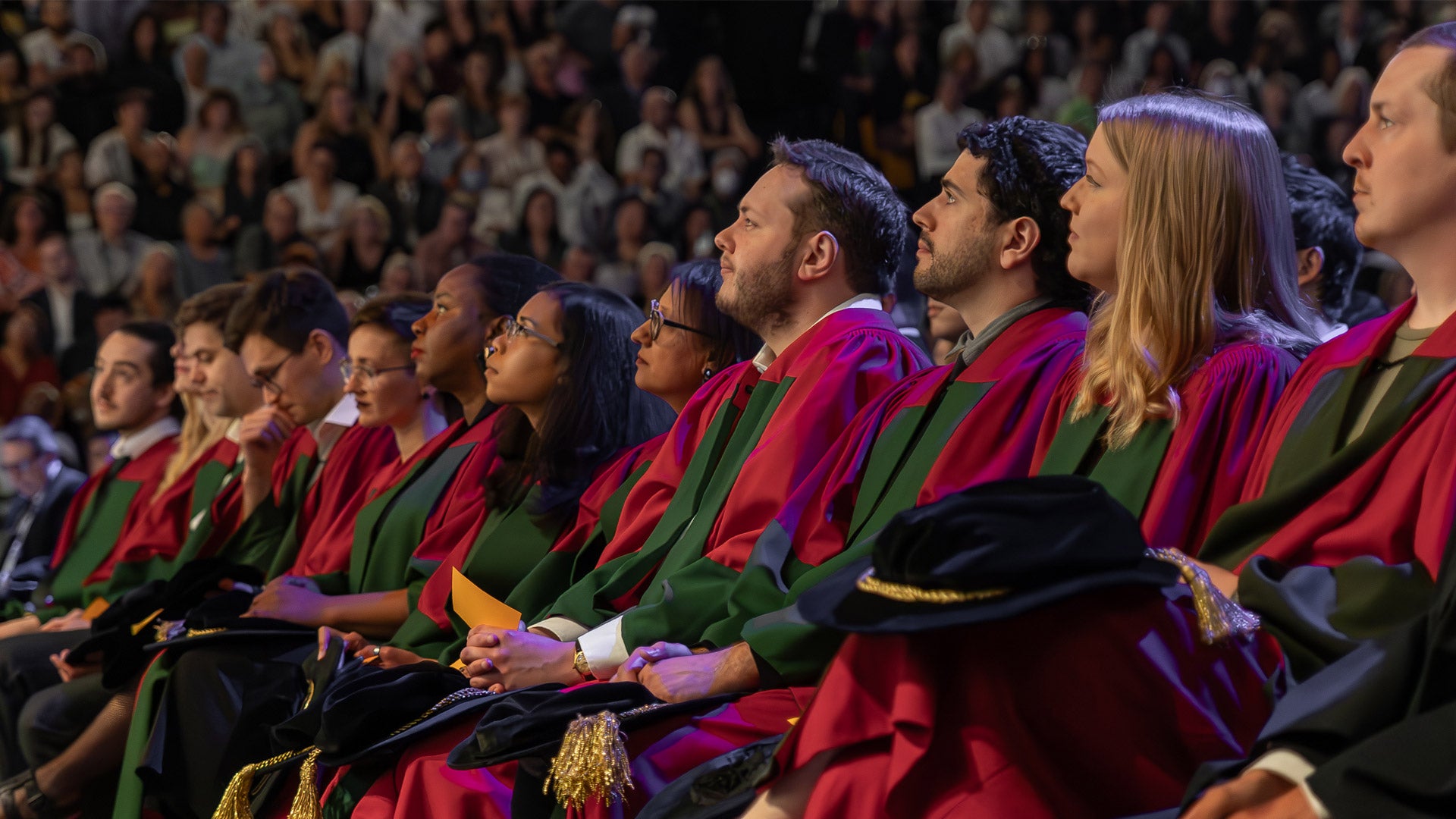
Arts PhD graduates 2023
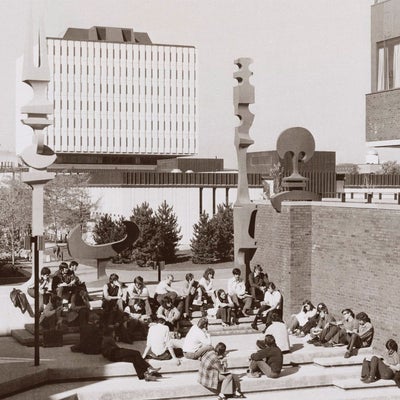
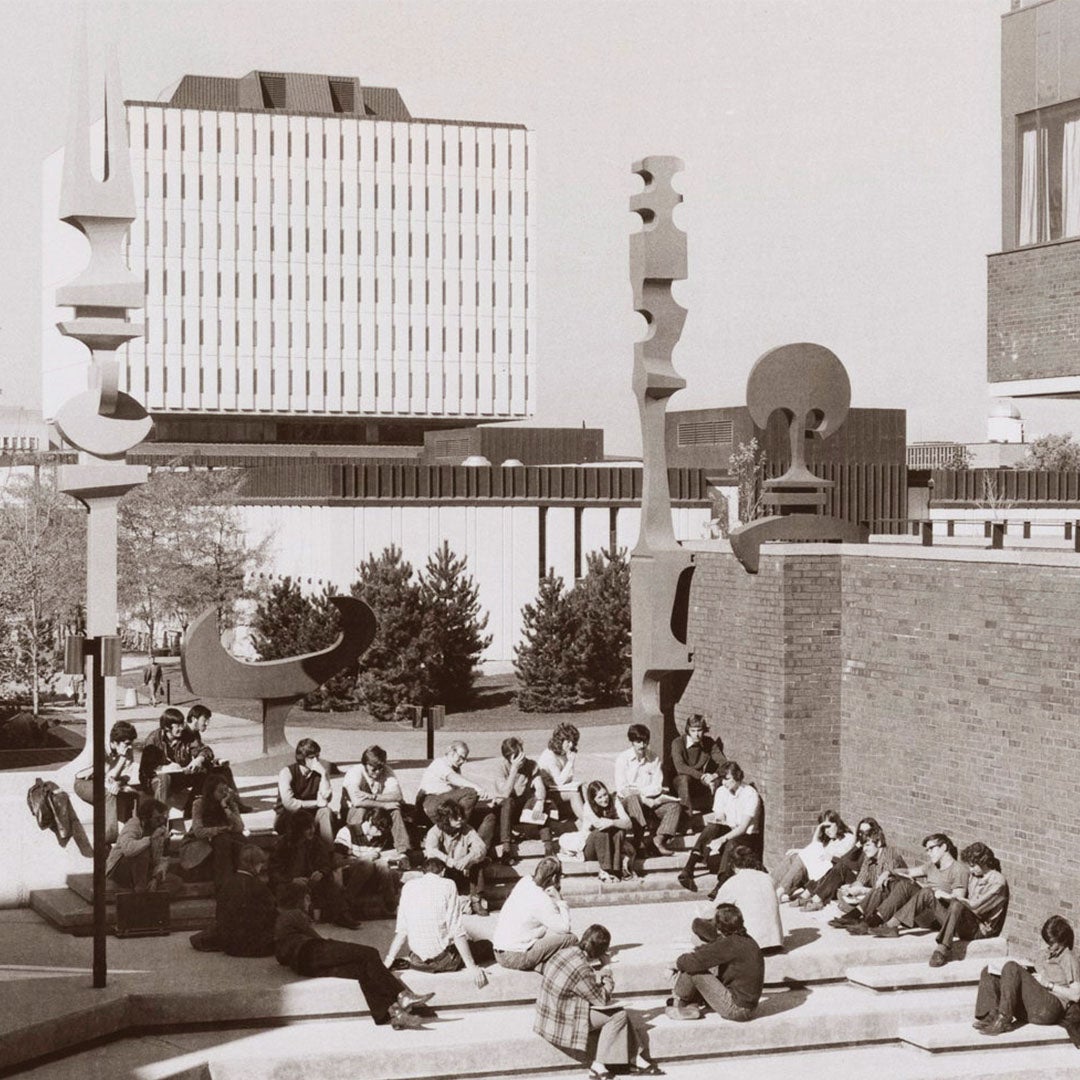
An alumni reunion in the Hagey Hall courtyard in the 1970s
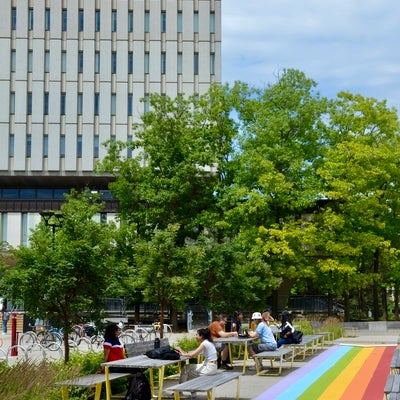
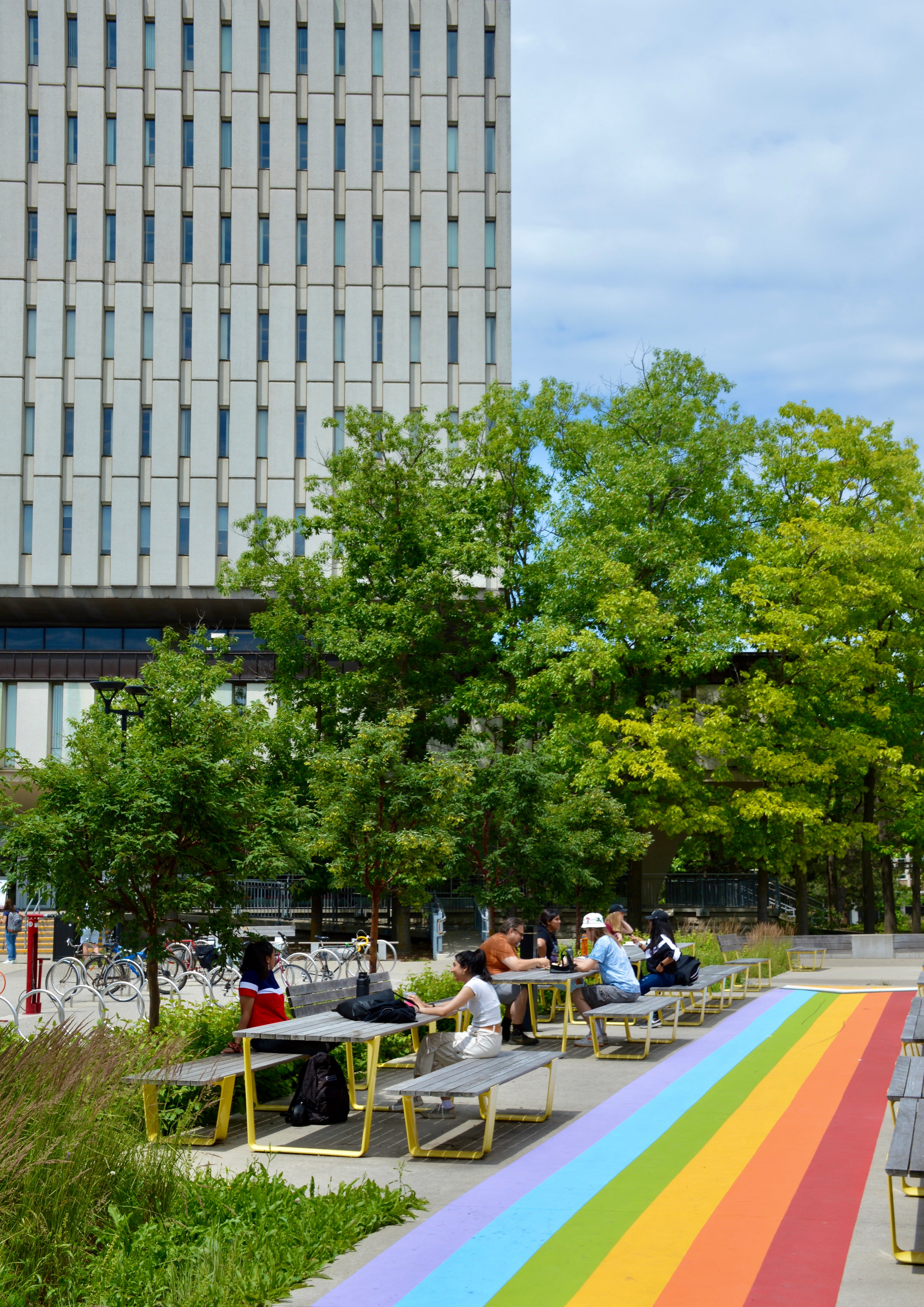
Pride rainbow in the Arts Quad
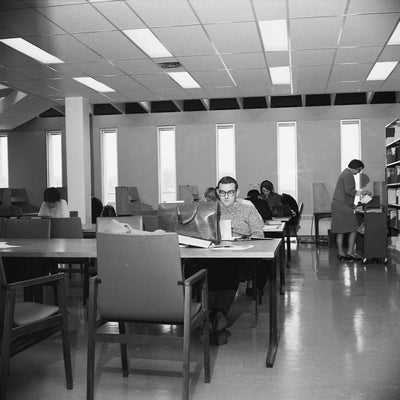
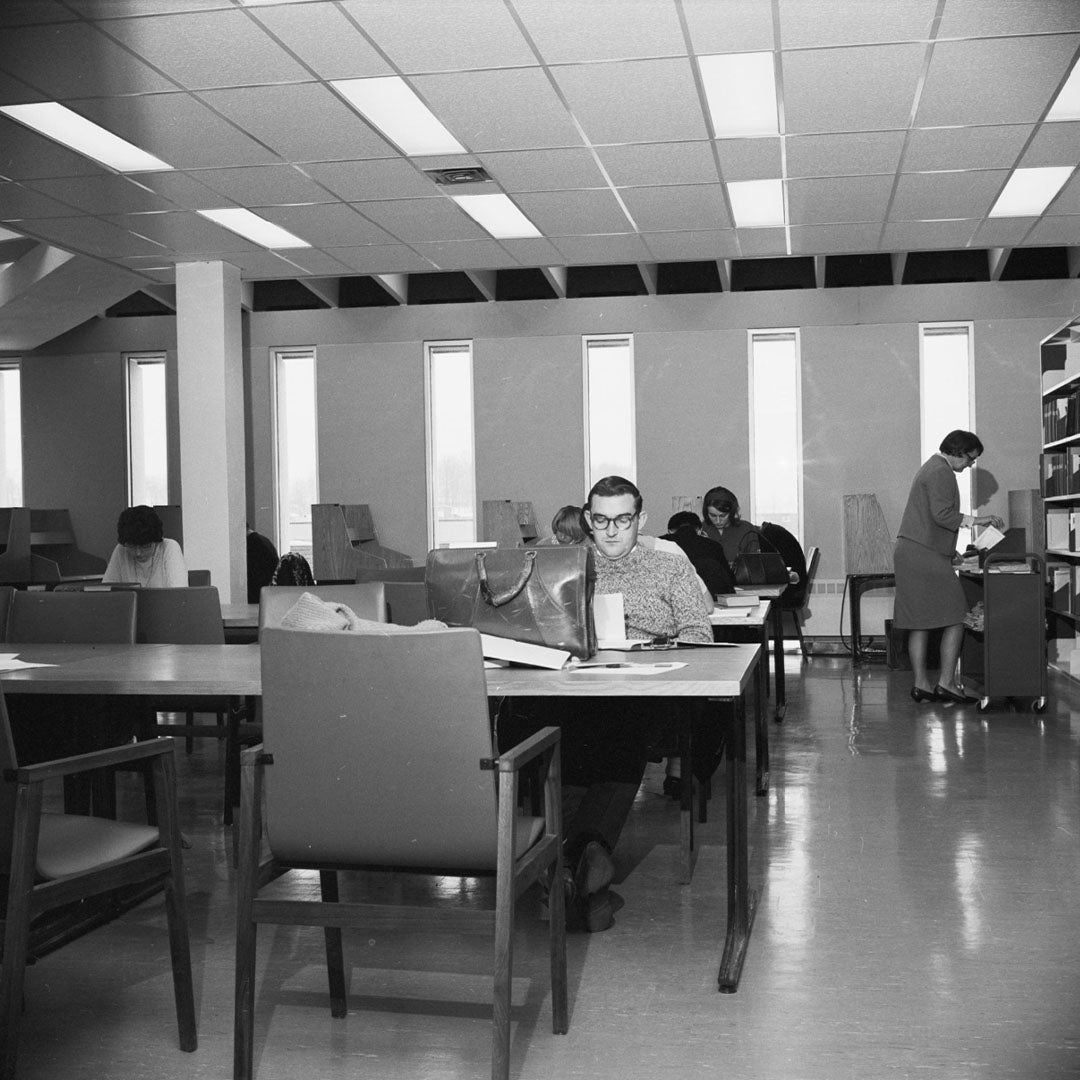
A student studies in Dana Porter in 1966
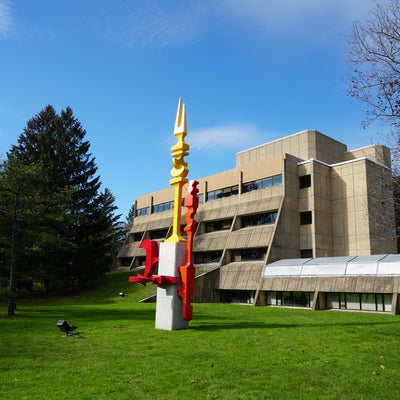
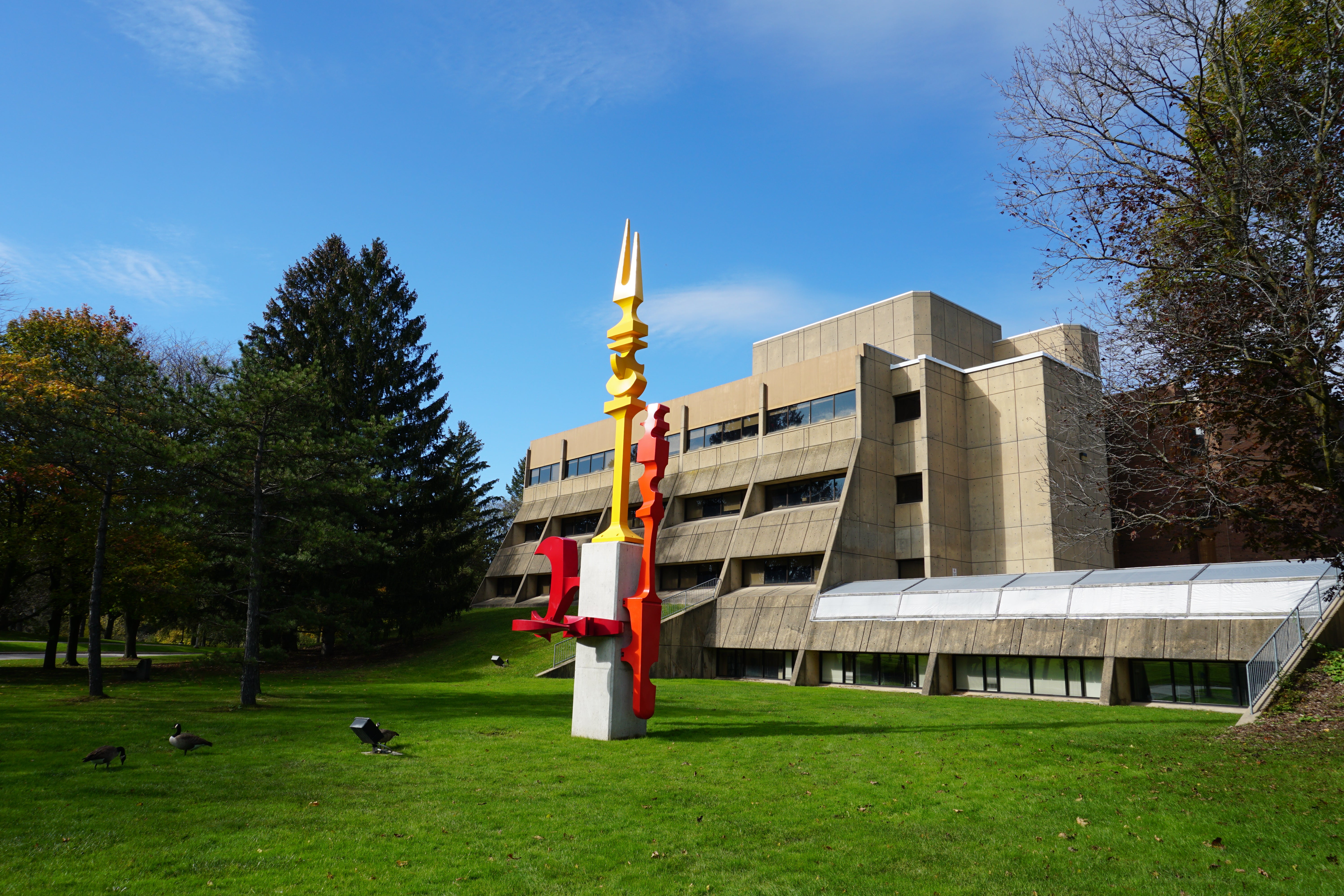
The "Pickle Forks" were moved to the PAS lawn in 2019
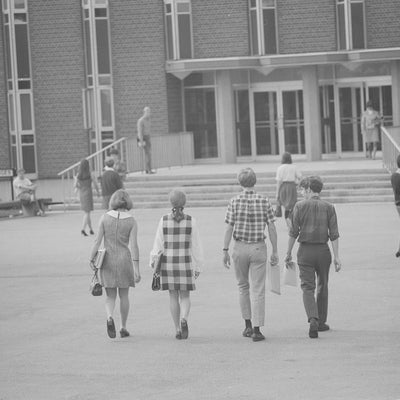
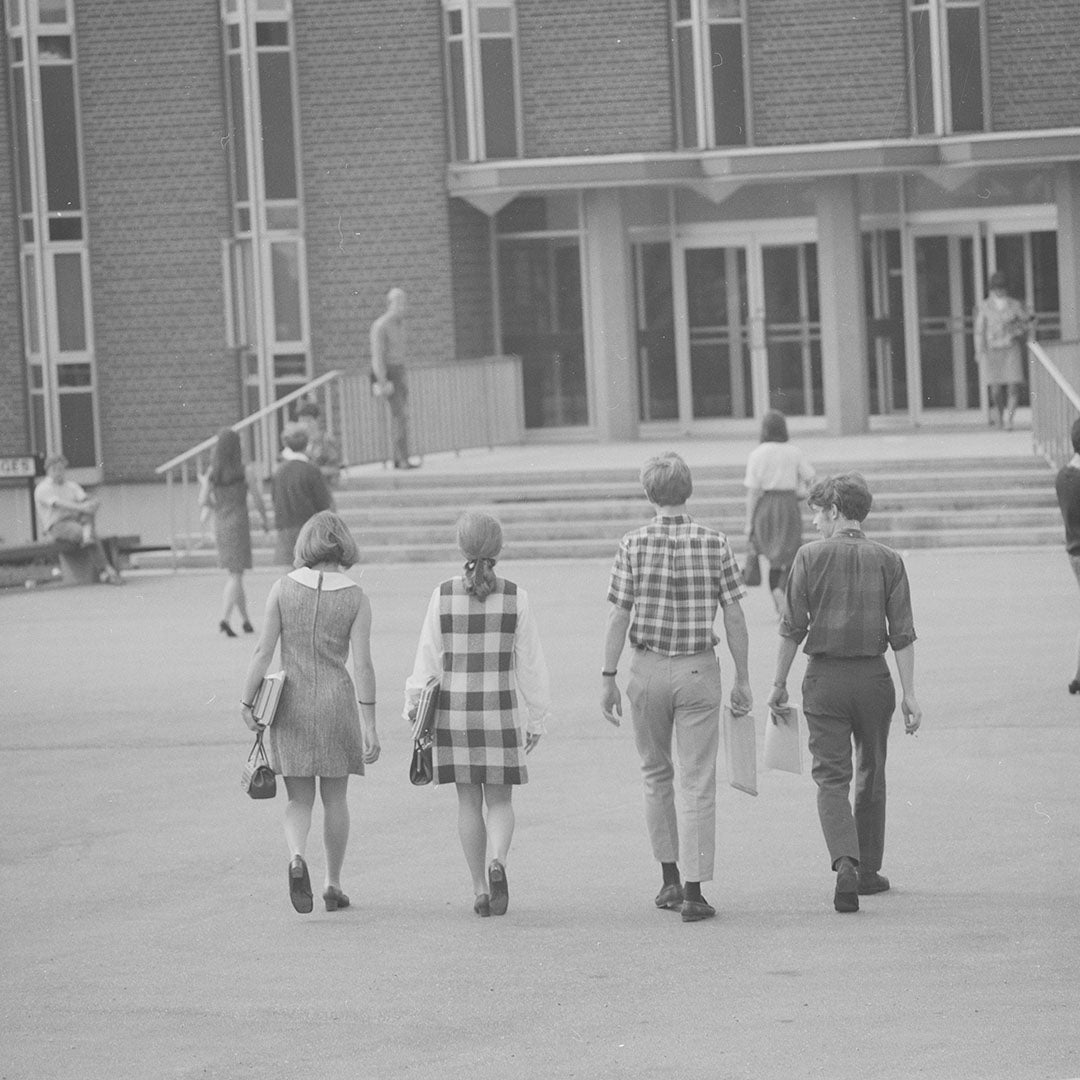
Students walk toward Modern Language in 1968
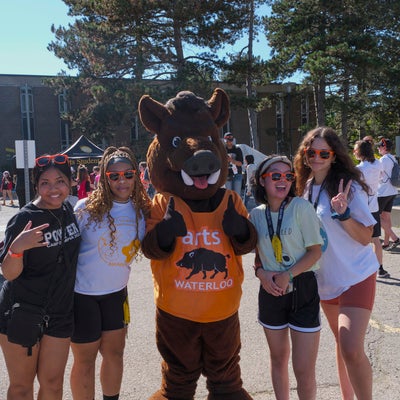
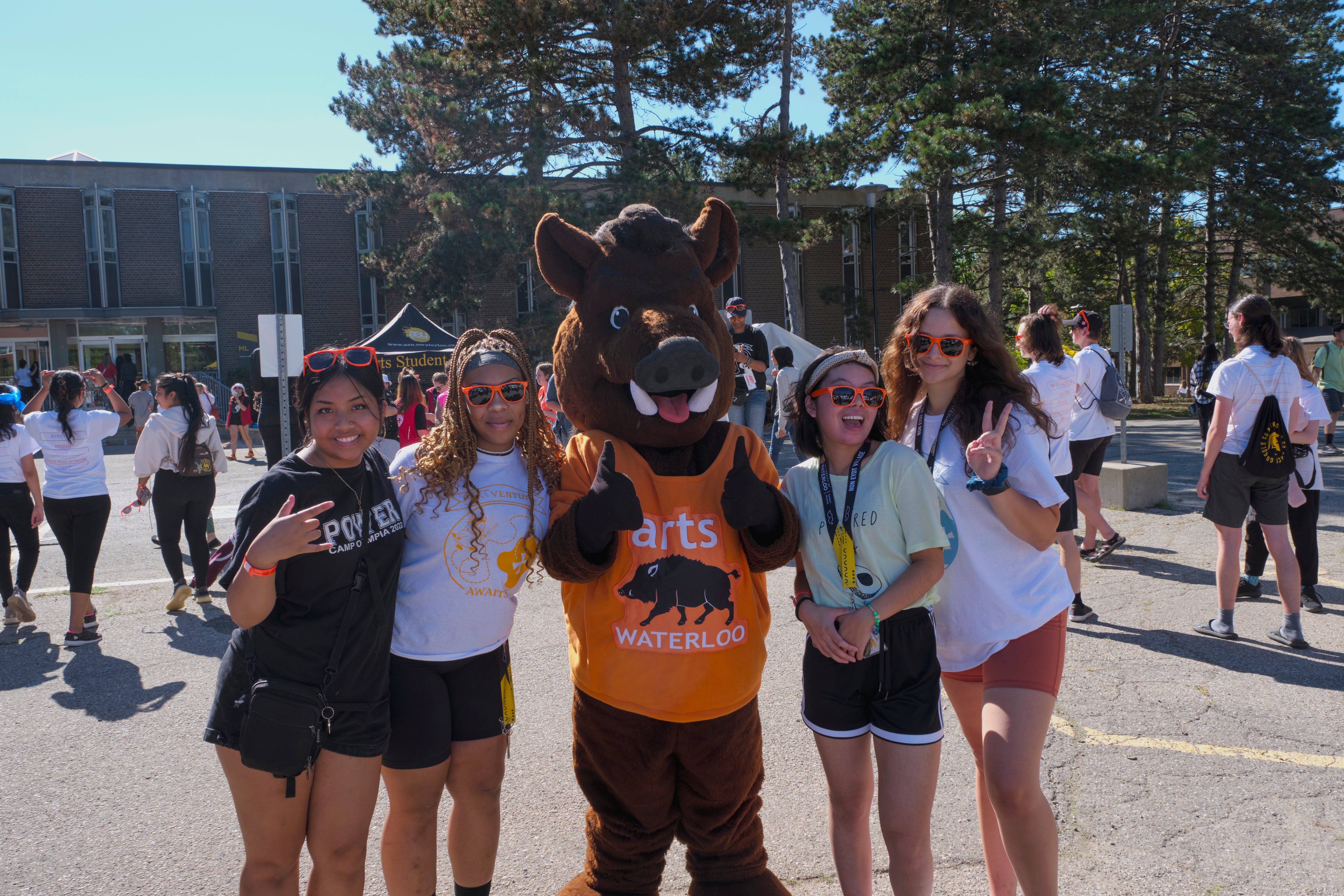
Arts Orientation 2023
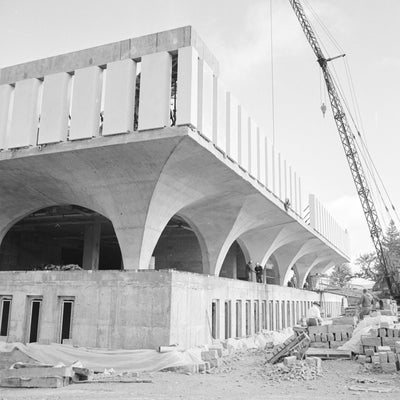
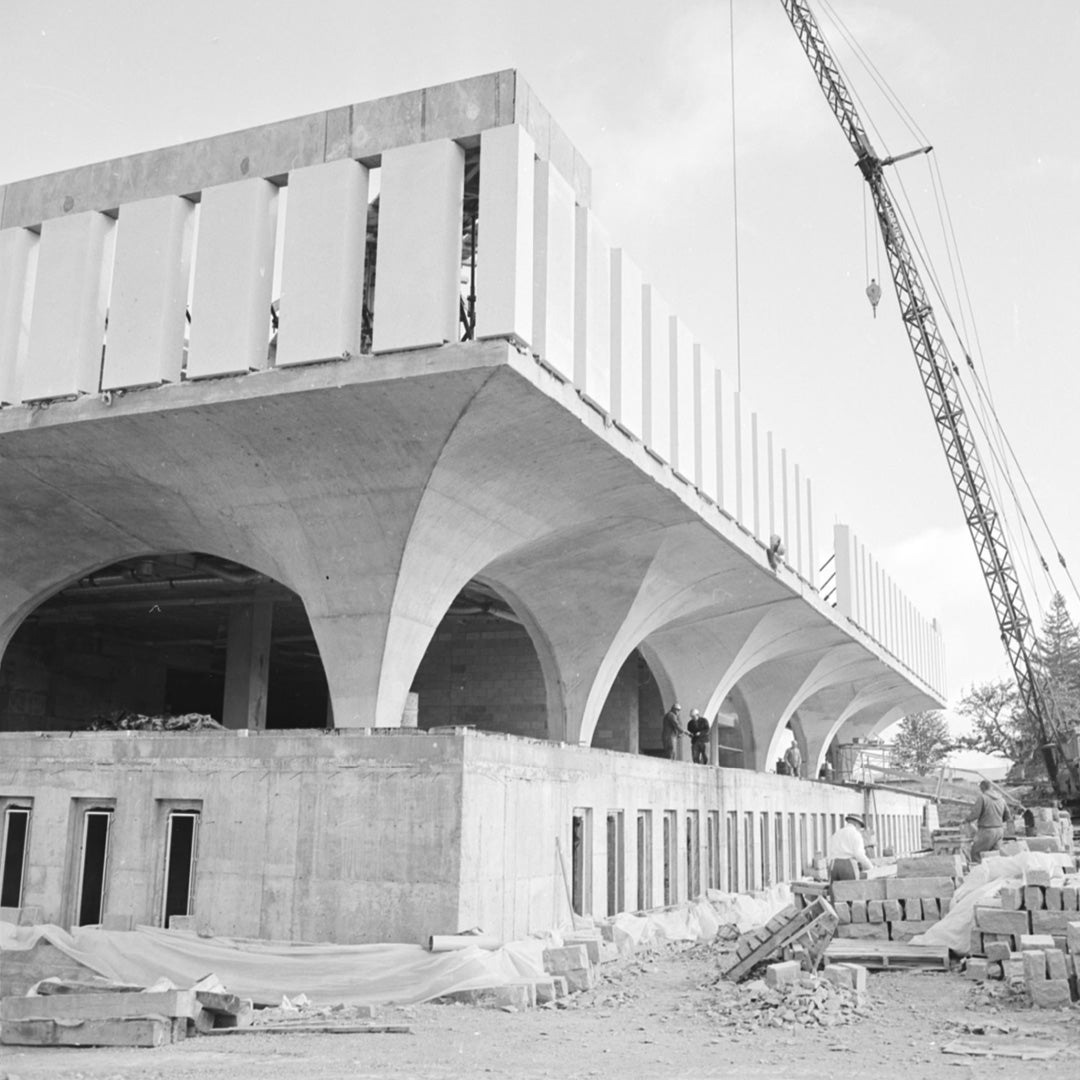
Dana Porter Library partially-constructed in 1964
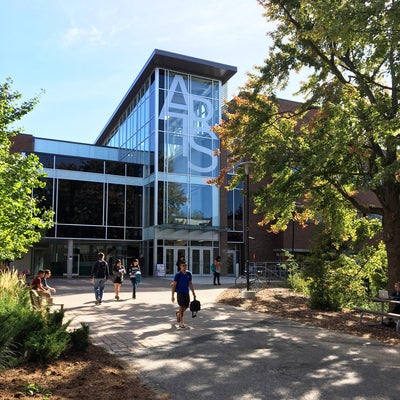
Since 2016, the Hagey Hall Hub offers more student space
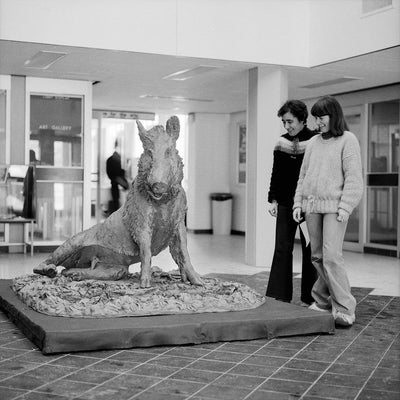
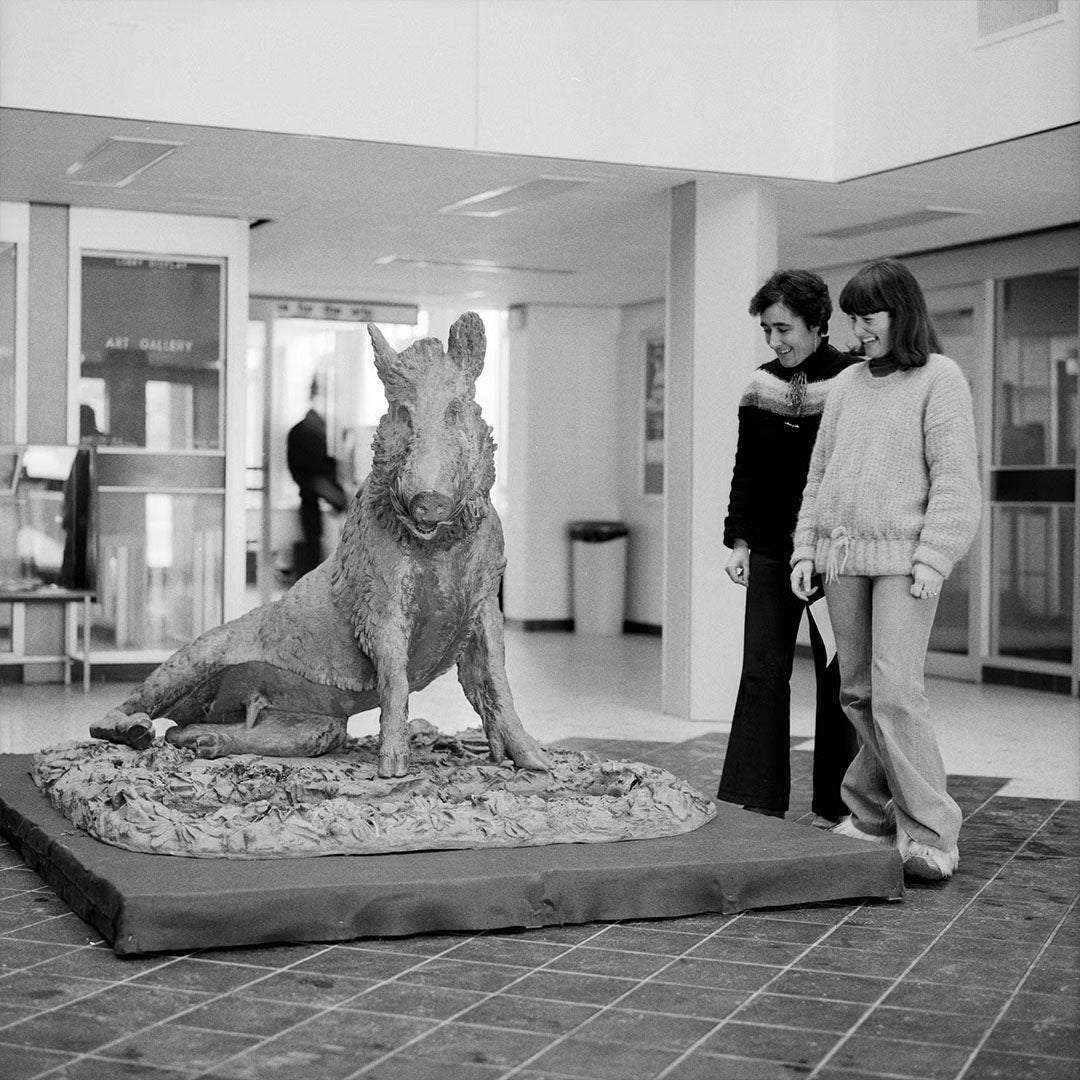
Porcellino sits inside Modern Languages in 1979
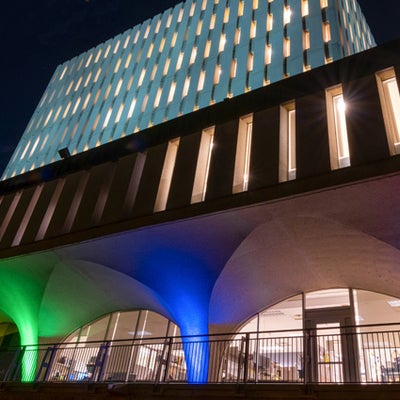
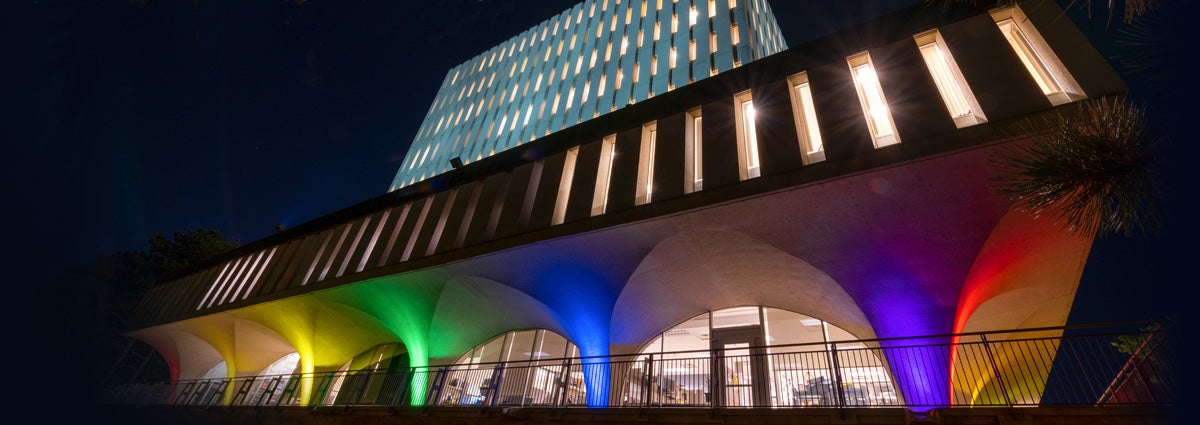
DP Library illuminated with Pride