Saving millions as a woman in STEAM
Catherine Mulcaster drove million‑dollar production gains, prevented massive landfill wastes and found her voice as a woman in male dominated fields.
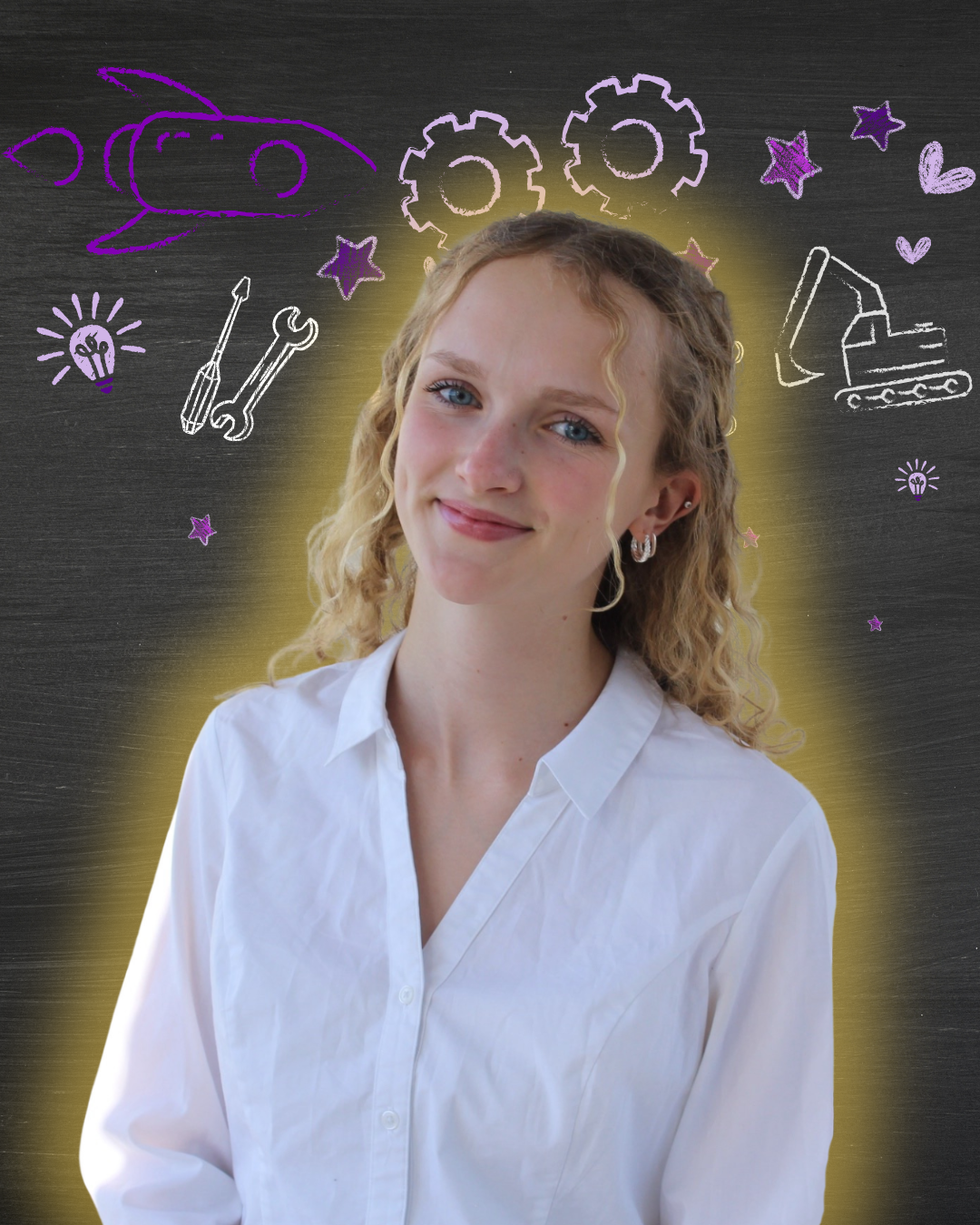
By exploring different engineering sectors, Catherine Mulcaster, a third‑year Biomedical Engineering student, strengthened her confidence as a woman in science, technology, engineering, arts and mathematics (STEAM), realizing she thrives in fast‑paced, problem‑solving roles.
Catherine’s co-op journey
Biomedical engineer, Cheelcare, Richmond Hill, ON
Catherine worked on attachment product designs for wheelchairs. She also made sure documents were approved by the Food and Drug Administration (FDA) standards to support Cheelcare’s biomedical health-care system.
Undergraduate research assistant, University of Waterloo Neural and Rehabilitation Engineering Lab, Waterloo, ON
She researched and developed sensors that sit inside prosthetic sockets that detect limb fluctuations. Catherine executed tests on these sensors to mitigate conditions, such as open sores in the stomach.
Mechanical engineering co-op, Cosa Medical, Toronto, ON
At this startup company specializing in developing silicone devices to help treat pelvic organ prolapse, Catherine worked on the production side to develop some jigs and templates for their production systems. She also helped run clinical trials and contributed to the design of injection molds.
Manufacturing engineering analyst, Pliteq, Vaughan, ON
Catherine performed cycle time studies by analyzing the processes Pliteq had on their floor plant, assessing the duration of every step and total production times. She identified areas that could be improved, allowing the company to increase its production outputs.
Engineering analyst, Toyota Motor Manufacturing Canada, Cambridge, ON
Currently working in their weld department, Catherine is completing quality improvements and cycle time studies of big metal components of Lexus and Toyota vehicles.
Q&A with Catherine
What’s unique about your co-op experience?
“I mainly worked in male-dominated companies and teams which has its own challenges, but also the fact that my co-op experience has been so diverse makes my experience unique. I get the best of both worlds as I started out in a medical device startup and I'm now at one of the biggest car manufacturing companies in the world, doing very different work than in my first co-ops. It’s cool that I've got to try so much stuff.”
How did you make an impact during your co-op terms?

“By reducing the cycle time in Pliteq’s floor plant, production was able to increase, allowing the company to produce $1.8 million in additional flooring products. With 96 per cent of the company's raw materials being sourced from recycled tires, my work prevented an additional 300,000 tires from ending up in landfills annually.”
“Even though I'm only there for four months, getting to make an impact on a business and doing interesting work that I never envisioned being able to do has been rewarding. Plus, I’m 22 years old working with guys who've been here for 35 years and I still get to play a key role in work that makes a difference in the real-world such as landfills and production lines.”
What has been the most challenging part of working in biomedical engineering?
“When I was in my first co-op, I was the only girl working for the small start-up which definitely made it intimidating and challenging to speak up. Especially being a co-op student, it becomes easy to have doubts because you don't see yourself represented anywhere.”
“Looking back, I’m very proud to see how far my self-confidence has come. I lead meetings every day and manage projects where I'm not afraid to ask for people's help, which wasn't the case when I first started.”
Has co-op helped you advance your career goals?
“Co-op helps you so much in deciding what you want to do in the future. When I started, I was set on doing mechanical engineering for medical devices and had three co-ops in that field. At the end of my third co-op, I realized it wasn’t a great fit for me. I like fast-paced work, so the design process that goes into mechanical work in general wasn't my favorite. Hence, on my fourth co-op term, I transitioned to manufacturing, doing more engineering analysis work and I fell in love with its problem solving and fast-paced nature. I realized I really love working with numbers, people and different problems every day.”


How have you dealt with stress over the course of your co-op terms?
“I felt very stressed when I was a first-year student, so I started running. It was a way to de-stress and I still resort to running or working out to mitigate my stress. I even founded a run club for Waterloo Engineering students called ‘UW Engineers Can Run?’. We have partnered with local cafes and Canadian companies that we run to in exchange for a discount or free products. What started as a way to manage my stress grew into an involved community that shares a love for running.”
What's next for you?
“I'm going to be working in business consulting at EY Parthenon on their Strategy and Execution team. I’m interested in pursuing business consulting because I want to solve big business problems in fast-paced environments, similar to my manufacturing experience. I'm grateful that co-op helped me to find an avenue I’m excited to work in.”