UWaterloo Giving Day pop-up: Games, Grub and Gratitude
Stop by to grab some food, play the new Giving Day video game, and write a thank‑you card to alumni who support Arts students.
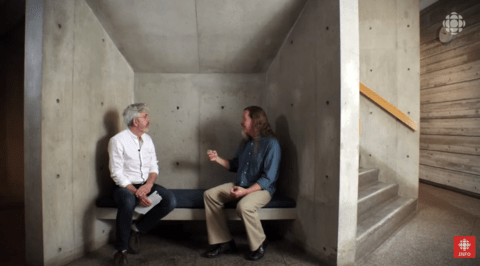

Research findings on the meaning and purpose of boredom from Psychology's Danckert Lab are made accessible for broad audiences in a documentary film produced by Radio-Canada’s popular television program Découverte.
Congratulations to doctoral student Amy Barron, recipient of this year's Warren Ober Award for Outstanding Teaching by Graduate Students!
The annual Psychology Discovery Conference continues to grow with the 2026 edition featuring more than 80 research presentations by undergraduate and graduate students — highlighting the breadth of psychological science at Waterloo while creating space for students to present, connect, and learn across disciplines.
Neve Gordon introduces the “Gaza Doctrine,” a concept he uses to describe a pattern of modern warfare characterized by mass civilian displacement, significant civilian casualties, and extensive destruction of civilian infrastructure.
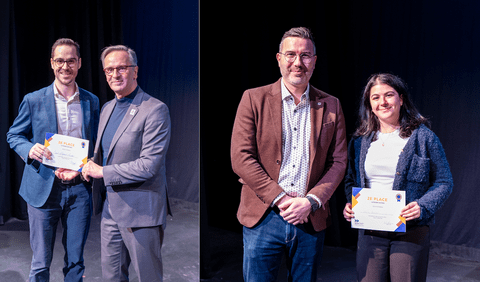
Congratulations to Jacob Legault-Leclair, a PhD candidate in Sociology and Legal Studies, and Emily Mashaal, a Master’s candidate in cognitive neuroscience in the Department of Psychology, on earning second place in their respective categories.
Join us in the lobby of Dana Porter Library for a showcase of ongoing graduate student political science research. This poster session highlights emerging scholarship from the PSCI 601 class (Research and Writing in Political Science) and leverages the Library as a hub for research connections
Madeleine Kenyon, a PhD candidate in Applied Philosophy, earned third place at the University of Waterloo’s 2026 GRADflix showcase for her one-minute video explaining her research. She was one of five Faculty of Arts graduate students selected as finalists in the university-wide competition.
In this talk, Dr. Macfarlane will speak on to the relationship between specific governments and the judiciary. Extending a previous study of the records of the Mulroney, Chrétien, and Harper governments before the Supreme Court of Canada, and applying a conception of political regimes adapted from American scholarship, this paper analyzes the impact of judicial review on the Trudeau governments’ legislative agenda.
Technological innovation increasingly shapes how we live, care, decide, and relate to one another. Yet conversations about these futures often revolve around regulations, technical feasibility, or business models. What happens if we create spaces where these futures can be felt, questioned, and collectively imagined?