Accounting & Financial Management 131. Instructor: Robert Sproule
Introduction to Business
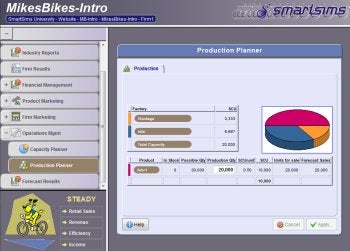
This is an introductory capstone course in business which explores the basic functional areas of: accounting, finance, marketing, operations; along with a look at teamwork, leadership, ethics, human resource management, globalization and the role of government. Class time is used for mini lectures interspersed with engaging students in small group discussions and confirming broad based understanding of core course concepts. In teams, over 6 weeks, students play a computer based business strategy simulation game which supports their learning about the inter-relationship of the various functional elements of a business and allows students to experience the benefits of teamwork.
Lectures are recorded and are available as online podcasts. Team based interactive on-line discussions allow students to re-enforce difficult concepts covered in the course, providing the opportunity to each student to be involved in course-related topics and support their individual learning through having to support and explain their understanding while being coached by a teaching assistant. After completion of the simulation game, each team uses their experiences to complete a major reflection on what they have learned. Students can use team wikis to assemble material during the playing of the game, for use in the preparation of their reflection.
Biology 239. Instructor: Christine Dupont
Genetics

This course introduces students to the basics of heredity. Students learn how traits are transmitted and become familiar with the fundamentals of gene expression, regulation and mutation in prokaryotes and eukaryotes. DNA, chromosome and genomic structure and organization are also central topics.
Problem solving is an important aspect of the course and face-to-face tutorials provide students with opportunities work on problems in a smaller group with the guidance of a teaching assistant. In addition, online “mini-tasks” and video tutorials help students engage in some aspects of the problem solving independently. There are 3 lectures a week and enhanced podcasts of these lectures are available online to help students review difficult concepts and reinforce the in-class experience.
Pharmacy 220. Instructor: Andrea Edginton
Integrated Patient Focused Care
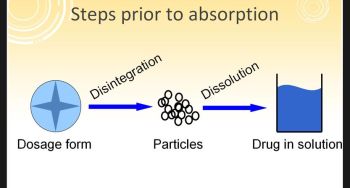
Integrated Patient Focused Care (IPFC) 1 is an integrated course focusing on pharmacokinetics and foundational material that are key to the comprehension of case studies in subsequent IPFC courses. The pharmacokinetics component of IPFC1 examines how the fate of drugs in the body is influenced by physiological and biochemical processes using a mathematical description of the events which transpire following drug administration.
The Pharmacokinetics component of IPFC1 is almost completely delivered online and represents 7 hours of “class time” per week within the IPFC1 schedule. Students access online presentations, do activities online, and receive problem-sets and assignments in the LEARN environment. Once a week there is a 1-hour face-to-face tutorial where the instructor works through an assigned problem set and answers questions. An online discussion board is also provided as a forum to ask questions of peers and the course instructor. In 2011 the clinical biochemistry module in this course was also transformed into an online learning module that culminates with an in-class case discussion.
Earth Sciences 235. Instructor: Mario Coniglio
Stratigraphy
This course, a core course for earth sciences programs and for geological engineering, focuses on the nature, origin and interpretation of Earth materials used in deciphering geological history from a stratigraphic viewpoint. Labs involve the construction and/or interpretation of various types of geologic maps and cross‐sections and correlation of geological and geophysical data. Both labs and online course modules rely on examples drawn from real situations, especially from Canadian geology.
Students access narrated online presentations that are rich with geological field photos and geological maps. Students can meet with their instructor on a weekly basis to clarify concepts and pose questions. Several small group discussions are scheduled throughout the term and allow students to interact with each other as they work through individual assignments. Lab periods are led by teaching assistants and provide further opportunities for student collaboration. An online discussion board is also provided as a forum to ask questions of peers and the course instructor.
Civil Engineering/Environment Engineering 292. Instructor: Bruce Hellinga
Engineering Economics

Narrated online presentations that follow the sequence and format of the textbook have been prepared by the instructor. The instructor meets with the class once a week to introduce new concepts and work through more complex problems with the class. Students solve practice problems individually in advance of tutorial time where teaching assistants help them understand the process of solving economics problems. Online discussion forums and office hours with the instructor and teaching assistants are also used to field student’s questions about content, assignments and problem solving.