
Written by Olivia (she/her)
From switching programs to taking the controls, Daniel’s GEM Aviation journey shows how passion opens doors in the aviation industry.
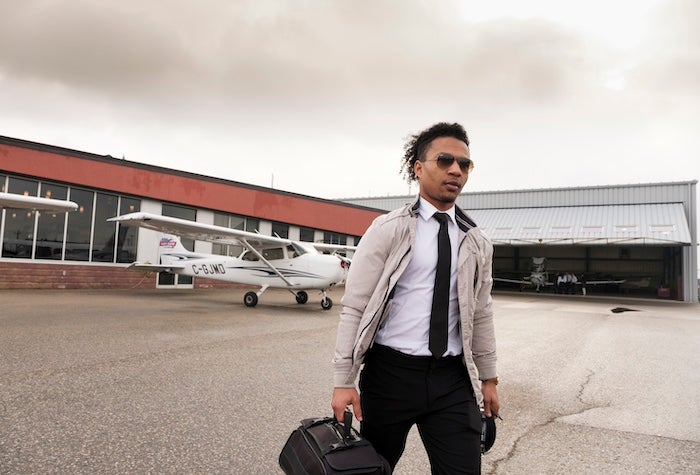
Daniel is a student in the Geography and Environmental Management (GEM) co-op program, with an Aviation specialization. He’s pursuing private flight training through the Waterloo Wellington Flight Centre. We caught up with him to ask about his unorthodox journey, what the pros and cons are of independent flight training, and the benefits the specialization offers to students considering aviation careers outside the cockpit.


What's one thing you wish you knew before starting university?
I wish I knew exactly what to focus on. I originally wanted to go into engineering as a backup and I wanted to fly as my main career, but I wish I knew that I should just focus on one thing. Although it is possible to focus on two things — you can definitely join clubs and all that — flying and engineering together are two very big commitments, and I wanted to focus on what I love most.
What made you decide to switch from Mechanical Engineering to GEM with an Aviation specialization?
I realized after starting my second academic semester a couple of weeks in, that my true passion was flying and becoming a pilot. That's when I realized I should be more committed to what makes me the happiest and when I made the decision to switch programs.
What was the hardest part about switching programs? How did you do it? What was involved?
The hardest part was leaving the memories and friends I made behind. I knew that I had to make sacrifices, but some are certainly harder than others. I made some close friends in engineering, and it felt like I was leaving a part of myself behind. It was a bit like the sunk cost fallacy; I put in a lot of work in my first semester and a half of engineering, so initially I was nervous about switching programs. But I took that leap of faith, and I do not regret it one bit. I’m pursuing what I love the most, and today, I still talk with my engineering friends, so that turned out to not be the problem I was worried it would be. My advice to anyone reading this is to steadfastly follow your dreams. There will certainly be times when you question your decisions, times when you feel you are lost at sea. But every time you hesitate, remember why you started this journey in the first place.

What drew you specifically to GEM and how has the Aviation specialization helped you support your goals of being a pilot?
The reason why I was drawn to GEM, especially with an Aviation specialization instead of a more integrated Aviation program, was because of the co-op program and the flexibility that it gave me. I found out that your flight training and the courses you could take are much more flexible in the Aviation specialization with GEM. Not only that, but I was talking with some of my friends in the Integrated Aviation program who told me that their style of training is more prescriptive, and that I might have more flexibility by doing my flight training privately.
I was also really drawn to co-op, especially because I wanted to develop more connections in the aviation industry and get a foot in the door with these co-ops. I found that has been greatly helping with my aviation career so far. Plus, I was able to put my earnings toward advancing my flight training progress.
You chose to do your flight training privately. What has that experience been like balancing flying with your studies and with your co-op terms?
I have a lot more flexibility by flying privately, which aligns perfectly with my extracurriculars and commitments. When you do the integrated approach with the University, they require you to make at least three or four bookings a week during the fall and winter terms, and four or five days in the spring term. For me, that just wasn't compatible with scheduling in terms of pursuing other professional development goals. By flying privately, I was able to set my own schedule, and I could also adjust that schedule to suit demands as they came up. What further motivated that decision was that I was going to do co-op as well, so when I’m working, I can't really be flying 9 to 5. Overall, the experience has been wonderful. I’ve earned my Private Pilot's License and I am working toward my Commercial Pilot's License right now. Training privately has really helped accelerate that process for me.

What's one thing people often misunderstand about the GEM program on its own and then especially with the Aviation program or specialization?
I think the one thing people misunderstand the most for the GEM program is that you should only get into GEM if you want to get into geography. With geography and environmental management, it's not like you must go to become a meteorologist or a physical geographer or study geology. There are a lot of minors and specializations and diplomas that you can pursue that can increase the breadth of your experience to suit your specific goals.
What do people misunderstand about the Aviation specialization?
I think people think that to be a pilot you must go into one of the two integrated programs, but you can also complete your flight training privately. While the integrated programs focus on flying, I believe that the GEM program with the Aviation specialization offers me experience in geography, aviation, and the co-op system as well. It gives me hands-on, real-life work experience that is transferable to anywhere from the office workplace to the field work that we do in our courses, to even the flight deck.
People believe that going into aviation is just about being a pilot. However, there's more to the Aviation specialization. For example, at the co-op I worked at previously, I was an airport planner consultant, and this is a relatively niche job. The work that we specialize in is the foundation of the air transportation infrastructure system that we have in Canada today. There are also many other jobs in the aviation industry, which the Aviation specialization has exposed me to through the co-op system. You can be a NAVCAN meteorologist who works in aviation weather systems. You can be a radar operator. There are many opportunities out there.

Do you have any fun flight training stories that you'd like to share with people?
There's nothing that really beats the view of flying, right? There's no other job in the world that has an office 35,000 feet in the air. For my case, I guess right now, 4,000 feet in the air! One of the best stories I had was during my time-building. It's a mandatory component of your CPL, where we must build 100 hours of pilot-in-command time. I had recently earned my PPL at this point, so I took my parents and brother up and we flew to Owen Sound. During the stop, we grabbed burgers and got a stamp on my logbook that certifies that I’ve been at the airport. Most people will just drive to get a burger, but flying to get food is an amazing, beautiful experience. It's an interesting little thing you can do once you have your license!
How do you feel your degree and experiences so far have prepared you for the aviation industry, and would you change the path that you took?
The things I've learned through the Aviation specialization have helped me in understanding how the industry works behind the scenes. In addition to my flight training, that adds another level of experience that employers look for. On top of that, I feel that the extracurriculars and volunteer work I’ve been doing allow me to help out like-minded communities while also preparing me for the industry.
You’re heading to Beijing to study Mandarin. Why did you make this choice, and how do you hope that it benefits your career?
The reason why I want to pursue learning Mandarin is because I'm ethnically Chinese. However, I was born in and grew up in Canada, so I've never had the opportunity to immerse myself in the Chinese language. Despite being Chinese, my Chinese language, especially Mandarin, is not the best. So, as a part of my time here at the University of Waterloo, I believe that it will be a good decision for me to learn Mandarin while I can do so in a classroom setting. If I can become fluent in Mandarin, at least conversationally, then I can have an advantage in finding employment as a pilot in China, though knowing more than one language is going to benefit me no matter what job I apply to.

Have you considered other careers in aviation besides becoming a pilot?
Honestly, no. I've always wanted to be a pilot, and this was a dream I've had since I was 10 years old. Despite the answer being no, I believe that if you commit yourself to your passions you can work toward a very rewarding and prosperous career.
Since you've begun your flight training, has there been anything that was totally different from what you expected?
One thing that really surprised me was the number of exercises and lessons that you have to do. From the dozens of hours of practice, flying by yourself, and with the instructor, you will be able to perfect those manoeuvres and those exercises by the end of your training.
Another thing I didn’t really expect going into flight training was the weather that we have in southern Ontario. Here, winds are much stronger up in the air, it's much colder, and there could be more clouds. There was a part of my training where I didn’t fly for like a month and a half straight because it would get cancelled every time due to bad weather. It was frustrating, but it's something that you have to accept once you begin flight training.

What advice would you give to students who are considering a career in aviation?
Commit yourself. Flying is a big commitment. There will be very frustrating parts where you don't fly for a month at a time because of the weather. There will be times when you want to give up because you just feel that you won't be able to get the manoeuvres to flight test standards. And there will be times when you think, oh my gosh, I've spent like so much money on this. Every student pilot will go through those feelings, including myself. Again, every time you hesitate, remember why you started this journey in the first place.
If a student is not sure they want to be a pilot, is the Aviation specialization still worth it?
Yes, 100%. I believe that if a student is not sure if they want to be a pilot, the Aviation Specialization is more than worth it because it exposes you to dozens of careers in the aviation industry. I was an airport planner and consultant, and I didn't even know this job existed until I applied for it.
A great example comes from my manager at my previous co-op. She had begun her flight training, but she didn't complete it. Once she got into the airport planning industry, she began to fall in love with it, and she found out that this was where her passion truly was. Putting your foot in the door in the aviation industry really leads you to so many wonderful places that many people don't even know about, and I think that's exactly what the Aviation specialization can do.
Related articles
Sky's the limit
From her first solo flight to advocating for a greener aviation industry, Urooj is charting a bold path through the skies. Discover how a passion for flying, climate science and community is shaping her journey at Waterloo and beyond.

How to choose a program in the Faculty of Environment
From climate action to sustainable cities, there’s more opportunity than ever to embark on a career that’s all about making positive change.

Careers in the environment, sustainability, and climate change
Are you interested in a career in the environmental sector? There may be more opportunities than you think.