Disruption and Uncertainty as Drivers for Change
April 30 & May 1, 2025
For our 16th annual University of Waterloo Teaching and Learning Conference, we explored engagement and its myriad facets. Engagement is a buzzword in academia ... but it’s also what can make or break a lecture, a course, or a full semester for our students. Without the dynamic interactions between students and faculty members, without those moments that spark curiosity, developing a passion for lifelong learning can be nearly impossible.
As educators we strive to ignite a passion for learning in our students and cultivate their curiosity. Instructors, along with academic support staff, team up to design interesting courses, varied assessments, and novel learning experiences so students remain engaged—both in their learning and with the university community—throughout their university years. Sparking student engagement during the first weeks of a semester is only a first step; sustaining it long term is the real challenge. Engagement is crucial for our students’ success and acts as a feedback loop: instructor engagement encourages student engagement, which in turn motivates faculty to continue investing energy in designing stimulating learning activities and environments.
From flipped classrooms to experiential learning, engaged teaching not only develops students’ discipline-specific knowledge, but also cultivates autonomy and hones critical thinking and goal-setting skills, all of which are life-long, transferable skills. Engaged students are committed to the learning process and to their personal growth: enthusiastic and curious, they contribute to class by asking questions and collaborating with their peers, leverage the resources available to support them, and want to be part of campus life. Student engagement extends beyond academics, to faculty and university life, and community involvement. Engaged students feel like they belong and have a greater sense of self-worth and purpose.
For our 16th annual University of Waterloo Teaching and Learning Conference, the presenters dove into the following questions. What constitutes engagement? How can we ensure that our student-centered approaches to engagement are equitable and inclusive? Which assessment strategies might best engage students with course materials? How can we use technology to stimulate engagement? How do programs create curricula that offer sufficient choices, flexibility, and diverse experiences to sustain student engagement through their degree? How do we engage with local and global communities to bridge academia and real-world challenges?

Keynote - At the Roundabout: Navigating Change in Higher Education in Times of Hyper-Complexity
Dr. Vanessa Andreotti (Professor and Dean of the Faculty of Education)
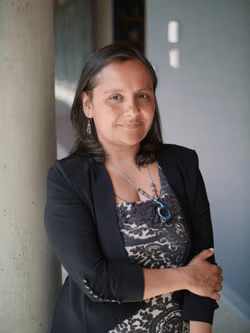
Dr. Vanessa Andreotti
Dr. Vanessa Andreotti's (she/her) talk explored how the stacked challenges facing higher education—including financial precarity, political polarization, ecological and mental health destabilization, technological disruptions like AI, and institutional inertia—are not isolated issues, but interconnected symptoms of deeper systemic shifts unsettling the foundations of modern societies. At the heart of this argument is the idea that what’s needed is not just new content, policies, or reforms, but a shift in how we approach complexity itself. In a moment when circling the roundabout feels more comfortable than choosing an exit, this is a call to pause, take stock, and consider: What new possibilities emerge when we change not just our direction, but how we choose to navigate?
Dr. Vanessa Andreotti (she/her) is a former Canada Research Chair in Race, Inequalities and Global Change (see interview about her research program with Dr. Cash Ahenakew) and a former David Lam Chair in (critical) Multicultural Education (see David Lam Chair Masterclass). Dr. Andreotti has held academic positions in the UK, Republic of Ireland, Aotearoa/New Zealand and Finland.
She has worked extensively across disciplines, sectors and communities problematizing and offering alternatives to common approaches to social change that reproduce simplistic solutions to complex problems, paternalistic relationships with historically and systemically marginalized communities and ethnocentric ideals of sustainability, equity and justice. She is one of the co-founders of the Gesturing Towards Decolonial Futures (GTDF) Arts/Research Collective. Dr. Andreotti is also a member of the College of New Scholars of the Royal Society of Canada.
Dr. Vanessa Andreotti, Professor and Dean of the Faculty of Education at the University of Victoria, explores how the stacked challenges facing higher education are not isolated issues, but interconnected symptoms of deeper systemic shifts unsettling the foundations of modern societies.
Her thought-provoking presentation highlights some of the bold steps that universities must undertake to adapt to the changing landscape in which higher education exists.
Igniting our Practice
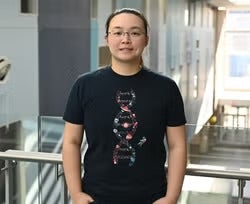
Dr. Brenda Lee (she/her) is an Associate Professor, Teaching Stream in the Department of Physics & Astronomy where she has a teaching portfolio that spans introductory physics and mathematics to biophysics and computational physics. In 2024, she received the Distinguished Teacher Award.
Being a biologist-turned-physicist, Brenda uses her background in biomedical nanotechnology and biophysics to not only highlight the value of interdisciplinary studies, but also the importance of applying theoretical concepts to real-world scenarios. To achieve this, Brenda works to foster an interactive, supportive, and accessible classroom environment in every course she teaches.
Known for her dedication to teaching and to her students, she was the departmental Teaching Fellow from 2022-23, took on the role of Associate Chair, Undergraduate Studies immediately after, and then founded the Physics Tutorial Centre to provide daily tutoring support for undergraduate physics students and all of their classes.
In her Igniting Our Practice session, Dr. Brenda Lee explained how she implemented the first-ever use of Indigenous learning circles in a physics class to encourage student community and inclusive learning, with support and guidance from Savannah Sloat, Manager of Science Indigenous Initiatives.

Dr. Brianna Wiens' (she/her) research program examines how people use media in critical and creative ways to foster community and speak back to power and explores how we build community through digital technology while negotiating its complex power dimensions. Since her MA (Communication: Rhetoric and Culture, CU Boulder) and her PhD (Communication and Culture, York University), she has been interested in the ways that people engage in rhetorical resistance by speaking back to systems in power, and the ways that these rhetorics offer critical sources of data that form the basis of community-centred change.
Her MA explored mediations of activist graffiti and the politics of their aesthetics on social media, while her doctoral work was dedicated to developing a theoretical framework (what she called intersectional entanglements) for grappling with the complexities of online phenomena, like digital social movements, through the example of #MeToo. These experiences directly inform her overarching research goals, which are to: (1) highlight equitable alternatives to normative media practices; (2) amplify the work of racialized, queer, disabled, and other equity-deserving groups; and (3) embrace multiple forms of expertise, knowledge, and lived experience.
To work towards these research goals, she works at the intersections of digital culture, rhetoric, and feminist media studies. Across these fields, she leverages queer and intersectional feminist perspectives to examine the rhetorics, politics, and design of technologies and digital artifacts, and she asks questions about power at individual, community, and structural levels. Her commitment to academia is also a commitment to political mobilizing and to scholarly activism—a constant feminist reminder that the personal (as well as community and structural) is political. Because of this, her interdisciplinary work inevitably draws on her own experience as a mixed-race queer activist-scholar.
Alongside her colleague and co-conspirator, Dr. Shana MacDonald, she is the Co-Director of the Feminist Think Tank, a research-creation collective that advances research on feminist media, art, and design, out of which they co-run the digital archive Feminists Do Media.
In this session, participants explored AI virtual assistants like Amazon’s Alexa and Apple’s Siri as case studies for feminist media analysis. The discussion highlighted how these technologies reflect and reinforce gendered labor, surveillance, and power structures. Attendees examined strategies for engaging students in critical AI analysis and integrating media critique into coursework. The session equipped educators with tools to help students question who—and what—is really doing the work in AI.
Panel Sessions
Contact
Visit our official conference website to learn about current and future conferences.
For questions about the conference, please contact Annik Bilodeau at the Centre for Teaching Excellence.