
Written by Iman (she/her), student
Most people have a general sense of what biology is, but there’s a lot more to it.
Biology is the science of life and at its core, it’s about exploring how living things grow, function, adapt, and interact with the world around them. From studying cells and genes to understanding ecosystems and evolution, biology helps us explain the incredible diversity of life on Earth and how we fit into it.
Biology is the key to unlocking the complexities of life and driving discoveries that shape health care, protect the environment, and push scientific boundaries.


Definition of biology
Biology is a branch of science that deals with living organisms and life processes. It includes the structure, function, growth, origin, evolution, and distribution of living things — everything from microscopic bacteria to blue whales.
By studying biology, scientists uncover how life works at every level. This includes understanding how cells communicate, how species evolve over time, how ecosystems remain balanced, and how diseases spread. It’s a field that continuously adapts with new discoveries, making it one of the most exciting areas of science.
Why study biology?
Whether you’re fascinated by genetics or passionate about environmental conservation, biology offers countless reasons to dive deeper into the study of life.
Students stepping into biology now are joining a field that’s more interconnected, innovative, and impactful than ever before. They’ll have the chance to work with cutting-edge biomedical and molecular technologies, collaborate across disciplines, and tackle real-world challenges, from conserving endangered species to developing therapies that improve health and quality of life. Most importantly, they’ll see how their ideas and curiosity can drive discoveries that transform ecosystems, communities, and medicine itself. The future of biology belongs to those ready to explore without limits.
Personal and intellectual growth
Biology challenges you to be curious, observant, and open to discovery. You’ll learn skills that go far beyond the classroom.
-
Critical thinking: Biology teaches you to question assumptions, analyze information, and solve problems using logic and evidence. Whether you're interpreting lab results or exploring scientific theories, you’ll learn to think deeply and make informed decisions.
- Creativity: Scientific discovery often involves thinking outside the box. Biology encourages creative approaches to designing experiments, visualizing processes, and finding innovative solutions to real-world challenges.
- Collaboration: Many biology courses include group work in labs, field studies, or presentations. These experiences build communication and teamwork skills, which are very important in both academic and professional settings.
- Communication: Writing lab reports, presenting research, and explaining complex ideas in simple terms will help you become a more effective communicator.

Career opportunities
Biology graduates find career opportunities in fields like health care, research, the environment, education, and public policy. They might work as
- physicians, pharmacists, or genetic counsellors;
- molecular biologists or lab technologists;
- wildlife biologists or conservationists;
- science teachers or museum educators; or
- public health officers or policy analysts.
Biology also provides a strong foundation for further studies in medicine, dentistry, optometry, pharmacy, or other graduate programs.
Medical and health professions
Programs like medicine, dentistry, veterinary science, optometry, and pharmacy require a strong understanding of living systems. Biology equips you with knowledge in anatomy, physiology, genetics, and microbiology which are all essential for diagnosing disease, understanding treatment, and improving health outcomes.
Graduate research (master's or PhD)
Biology also leads to advanced study in research-based fields such as
- biochemistry,
- computational biology,
- ecology and evolution,
- microbiology,
- physiology and cell biology.
These areas can lead to careers in academic research, government science agencies, or private sector innovation, especially in biotechnology, pharmaceuticals, or environmental consulting.
Whether you choose to enter the workforce after your degree or continue your studies, biology provides a flexible, future-ready foundation for a wide range of careers.

Contribution to society
Biology isn’t just about studying life — it’s about improving it. Biological research plays a critical role in tackling many of today’s most urgent global challenges. Through biology, we gain the knowledge and tools to
- understand and treat disease,
- combat climate change,
- protect endangered species and restore ecosystems,
- improve global food security, and
- support sustainable living.
Biology is a discipline grounded in curiosity and responsibility. It equips students and researchers with the knowledge to make informed decisions, create positive change, and contribute to a healthier, more sustainable world. Whether in a lab, a hospital, a forest, or a classroom, the impact of biology is everywhere, and studying it gives you the chance to be part of that impact.
Fields of biology
Biology is a broad subject, and you can explore many different areas within it.
Molecular biology
Focuses on the molecular mechanisms inside cells, particularly how DNA, RNA, and proteins interact to control cellular functions. This field plays a big role in medical research, including cancer studies and drug development.
Genetics
Examines how traits are passed from one generation to the next. Genetics helps us understand hereditary diseases, gene therapy, and even how species evolve.
Ecology
Looks at how living things interact with each other and their environments. Ecologists study ecosystems, population dynamics, and environmental impacts like pollution and climate change.
Evolutionary biology
Investigates how species have changed over time and adapted to their environments. It’s essential for understanding biodiversity and the history of life on Earth.
Microbiology
Studies microorganisms such as bacteria, viruses, fungi, and protozoa. Microbiology is key in areas like infectious disease, fermentation, and antibiotics.
Physiology
Explores how the systems within an organism (like the nervous, muscular, or circulatory systems) work together to keep the body functioning.
Biochemistry
Studies the chemical reactions and properties within living systems, focusing on applying chemistry to understand biological processes.

What to expect in a biology undergraduate program
Biology programs at Canadian universities combine coursework, labs, and real-world experience to help you build a solid scientific foundation. At Waterloo, you’ll stand out by gaining hands-on experience through the world’s leading co-op program, as well as access to cutting-edge research opportunities and state-of-the-art lab facilities.
Overview of core biology courses
In the first two years of a biology program, you usually take foundational courses that introduce the major concepts and methods. These often include cell biology, genetics, ecology and evolution, molecular biology, and essential supporting subjects like chemistry, physics, and statistics for the biological sciences. At Waterloo, for example, Biology students take core courses like Cellular Biology and Organismal and Evolutionary Biology, building a strong base of knowledge and skills that prepare you for advanced study in more specialized areas in your upper years.
Lab experience and hands-on learning
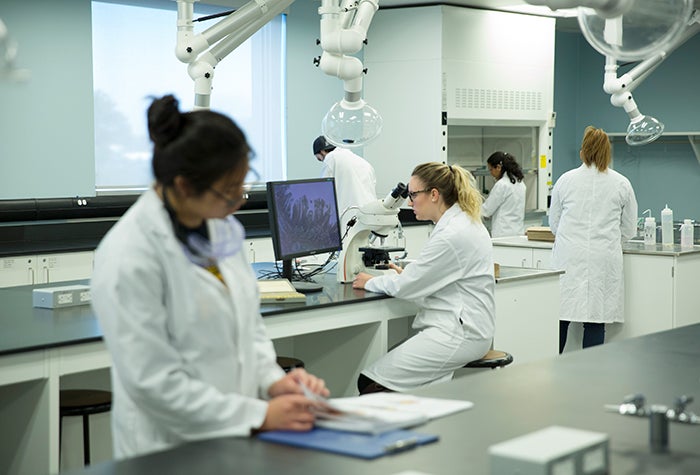
Biology comes to life when you apply what you learn through experiments, field work, and real-world practice. Most programs place a strong emphasis on lab experience, giving you hands-on training in techniques like microscopy, DNA extraction and analysis, bacterial culturing, and more.
Field work is also a common component, especially in areas like ecology or environmental biology. At Waterloo, you can take part in field courses to study terrestrial, aquatic, or marine biology in locations such as Algonquin Park and Jamaica. You can also gain professional skills through co-op work terms if you choose to be in a co-op program.
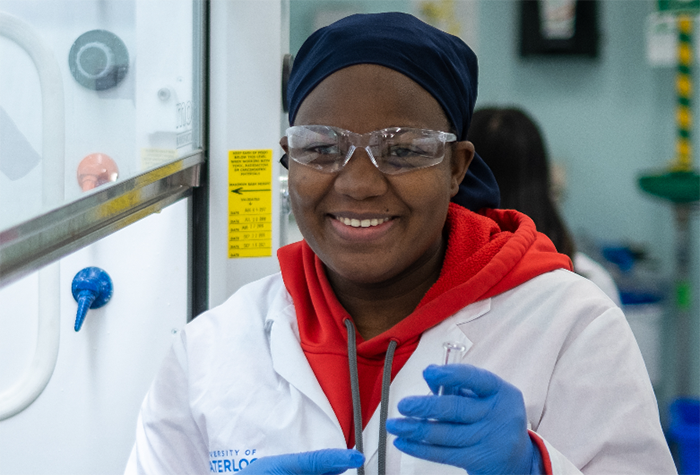
I love hands-on learning because it lets me explore all the different areas I’m interested in. Both labs and my co-op terms have made learning way more exciting and helped me figure out what I want to do next.
Specialization opportunities
As you move into your upper years, you can begin to shape your degree around your specific interests, allowing you to dive deeper into areas you're passionate about while still maintaining the flexibility to explore multiple subfields.
At Waterloo, students have the opportunity to explore a wide range of specialized areas within biology, including molecular and cellular biology, bioinformatics, physiology, conservation biology, and environmental biology.

How to prepare for a biology program
High school courses and prerequisites
To apply for a biology program, most Ontario universities expect you to have completed key Grade 12 courses such as biology, chemistry, math, and English. Some programs may also recommend taking physics, especially for students interested in molecular biology, biophysics, or pre-med pathways. At Waterloo, the specific requirements for Biology include
- Grade 12 English,
- Advanced Functions,
- Calculus and Vectors, and
- two of Biology, Chemistry, Earth and Space Science, Mathematics of Data Management, Physics.
Extracurricular activities
Academic performance is important, but getting involved outside the classroom can help you explore your interests and make what you learn in your courses come to life. Joining science clubs, entering school science fairs or national competitions, or volunteering at places like hospitals, zoos, or environmental organizations can deepen your understanding of biology and show you how it connects to the real world, helping everything click when you’re back in the classroom.

The future of biology
Biology is evolving rapidly thanks to new technologies and global research efforts. Breakthroughs in areas like gene editing, synthetic biology, and personalized medicine are changing how we think about health, sustainability, and life itself.
For me, the most exciting thing in biology/biochemistry right now is the impact of integrating AI and machine learning approaches to address complex biological questions. This has allowed us to solve problems that were seemingly impossible less than five years ago!
As the field continues to grow, students entering biology now will be part of the next generation shaping how we understand and improve life on Earth, whether through innovation, conservation, or discovery.
The future of biology is nothing short of revolutionary. We’re entering an era where we can integrate molecular tools, real-time environmental monitoring, biomedical innovations, and advanced modelling to answer questions we couldn’t even ask a decade ago. From decoding the genetic responses of species to climate change, to developing novel biomedical applications that improve human and animal health, to engineering conservation strategies and testing them in the field; the possibilities are boundless. It’s a thrilling time to be a biologist because the discoveries we make today will directly shape the sustainability of our planet and the health of future generations.
Biology is a field full of wonder, challenges, and discovery. It’s perfect for students who are curious, analytical, and passionate about life in all its forms. Whether your goal is to work in health care, solve environmental problems, or contribute to groundbreaking research, biology offers a strong foundation and endless possibilities.
Related articles

Biology students become award champignons with Indigenous-led mushroom business, MycoNutrients
Waterloo Science students studying biology and biomedicine are finding ways to merge fungi knowledge with today’s growing interest in health and wellness.
Labs — your next-level playground
What makes a scientist a scientist? Some could argue it’s the breadth of knowledge on how the natural world works or achieving expertise in a specific area of study — but many would agree that laboratories (AKA labs) are what propel you from student to scientist.
Is biochemistry a good major?
Do you enjoy biology, chemistry, or are curious about how life works on the smallest scale? Biochemistry could be the perfect major to explore — and you’ve come to the right place to figure out if it’s the right fit for you!