Cultural connection key to healthy aging for Indigenous elders
New research seeks to provide Indigenous older adults with a sense of belonging through culturally grounded interactions, activities and spaces
As we age, meaningful connections play an increasingly vital role in supporting our health and well-being. This truth became especially clear to PhD student Dale Bellaire when her father moved into long-term care, and the familiar community ties he relied on were no longer within reach.
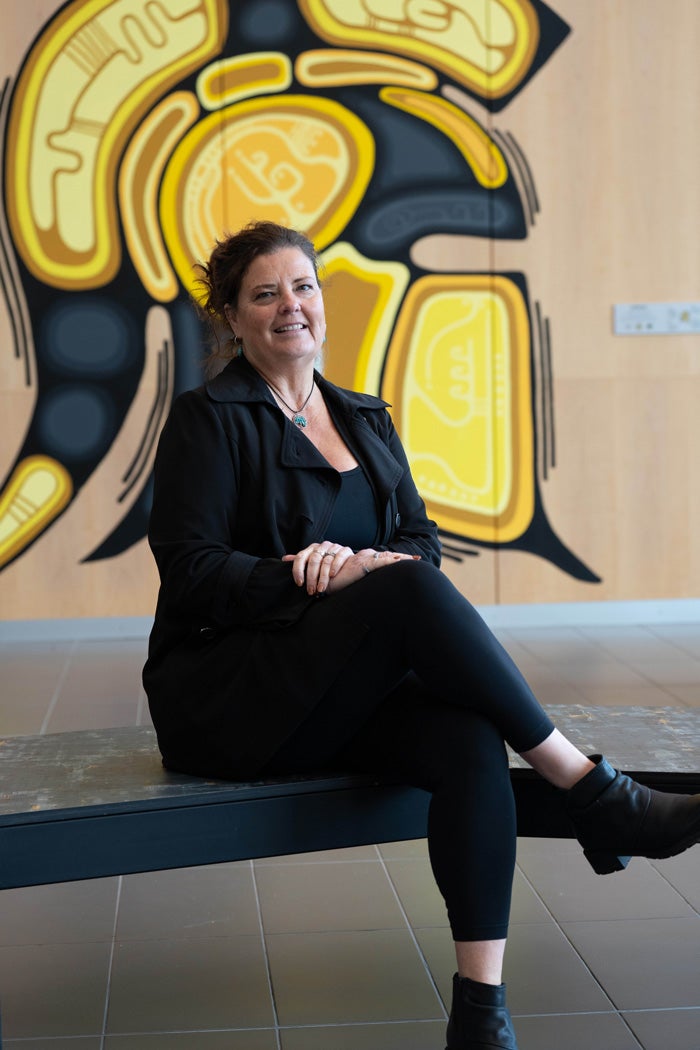
“My dad grew up in a close-knit northern Ontario community,” Bellaire says. “He is Algonquin, and his relationship to the land, shaped through hunting, fishing and spending time outdoors with his large family in North Bay, has always been a central part of who he is. When my siblings and I moved him closer to us and away from the community where he grew up, those connections were hard to maintain or replace.”
Rather than dwell on the difficulty, Bellaire set out to explore how culturally meaningful connection can be supported for Indigenous Elders in urban long-term care. She is now pursuing a PhD that focuses on culturally grounded interactions, activities and spaces that strengthen identity, belonging and well-being for Indigenous older adults. This work also reflects a broader goal: fostering cultural resurgence, particularly in relation to land-based relationships that are often diminished or missing entirely in urban LTC environments.
“From the moment I stepped onto the Waterloo campus, I noticed how accessible and supportive the professors and administrators were,” she says. “Their willingness to share ideas and collaborate created an environment where students are encouraged to explore diverse topics and research.”
Bellaire’s master’s research examined how older competitive athletes maintain their well-being and sense of community, work she sees as closely related to her current study.
“The value of culturally meaningful leisure and activity extends beyond any one group,” she explains. “As we grow older, community and a sense of belonging give us vitality and support our well-being in body and spirit.”
Guided by a Medicine Wheel framework, which places equal emphasis on physical, emotional, mental and spiritual well-being, Bellaire’s research takes on a holistic and culturally responsive approach. This framework also supports reciprocal relationships by reducing power imbalances and engaging Elders and community members as collaborators rather than participants. Her work contributes to the Truth and Reconciliation Commission’s Calls to Action 20–23, which address Indigenous health, and aligns with federal priorities to improve social supports for Indigenous older adults.
Ultimately, Bellaire hopes her research will highlight the importance of Indigenous cultural expression in long-term care and guide the development of environments that foster connection, belonging and identity. Reintroducing culturally grounded, land-informed practices, whether through accessible outdoor spaces, traditional foods, language, spiritual practices, ceremony or community-based activities, has the potential to enhance well-being and support the resurgence of Indigenous cultural strength. This is especially vital for Elders whose relationships to land and cultural lifeways may have been disrupted by moving into urban LTC settings.
“It could be spaces, food, spiritual practices or leisure activities,” she says. “What matters is creating opportunities to connect, build community and support a sense of belonging. I hope this project will help LTC facilities develop tools and environments that better support Indigenous Elders and their families throughout their aging journey.”
The research is funded in part by the Social Sciences and Humanities Research Council Canada Graduate Scholarship – Doctoral Program (2024 competition). Read about other SSHRC-funded research by Waterloo Indigenous students.