
Boozhoo, shé:kon, waachi'ye, tansi, aanii, tungasugiit, tawnshi, greetings!
At Waterloo, you’ll find resources and opportunities for Indigenous students, from weekly meetups and scholarships, and more.


Scholarships
- If you're a citizen or member of a First Nations community (Status/Non-Status), Inuit, and/or Métis, you may be eligible for entrance scholarships valued at up to $40,000.
- Once you've applied to Waterloo and can access the applicant portal, you can apply for these scholarships under the Awards and financial aid tab.
- The application deadline is April 15.
- You'll also be eligible for entrance scholarships available to all students.
Financial waivers for Indigenous students
Waterloo is committed to addressing the goals of truth and reconciliation and removing or reducing the financial barriers of attending university.
Life at Waterloo

Celebrate
Enjoy Soup and Bannock lunches and drumming circles organized through the Indigenous Student Services plus events such as the annual Pow Wow and Indigenous speaker series.

Reflect
The Ceremonial Fire Grounds and Medicine Garden and the beautiful new Indigenous Outdoor Gathering Space offer sacred spaces for individual use, gatherings, and education.

Feel at home
Be part of our close-knit Indigenous residence community, located at United College on Waterloo's campus.
Supporting your success
In addition to the resources for all Waterloo students, Indigenous students have access to a range of services.
From spaces and workshops specifically for Indigenous students to an incubator to support students interested in entrepreneurship, there are staff and resources dedicated to supporting your time at Waterloo.
Resources and supports for Indigenous students
Office of Indigenous Relations (OIR)
A central hub for First Nations, Inuit, and Métis researchers, professors, staff, students, and allies, OIR provides guidance, support, and resources to strengthen our shared vision of reconciliation.
- Indigenous Student Development Fund – support for Indigenous students facing unexpected financial challenges
- Bursaries, awards, and scholarships
- Smudging
Indigenous student clubs
Connect with other Indigenous students through the Indigenous Student Services, the Indigenous Student Association, or the American Indian Science and Engineering Society.
Outdoor gathering space
Skén:nen Tsi Nón:we Tewaya’taróroks is an outdoor classroom setting for educating on First Nations, Métis, and Inuit content and is a space for all campus communities to gather and sit freely when the space is not in use for events and classes.
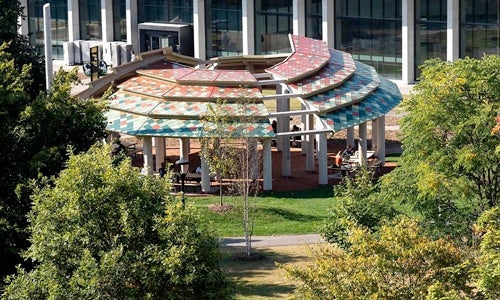
Longhouse Labs
Longhouse Labs (LLabs) builds capacity among Indigenous students and artists while integrating Indigenous knowledge, perspectives, traditions, and leadership broadly within education. LLabs includes a studio and gallery space, an archive, and soon, a garden for land-based learning.
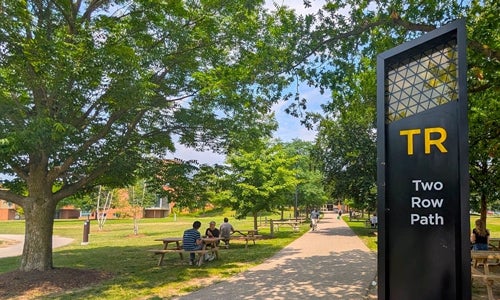
Two Row Path
The main pathway on campus is named Two Row Path, a reference to the Two Row Wampum Belt (Kaswentha) of the Haudenosaunee, believed to be the first and likely the oldest treaty between Europeans and Indigenous Peoples of Turtle Island.
Starting your university journey? Not sure where to start?
Have you studied at college or university?
Finding community as an Indigenous student at Waterloo
Adjusting to university can be difficult but with the right support, the transition can become easier. Chemistry student Brae can attest to that.
Devon, an Environment, Resources and Sustainability student, adds that "the Waterloo Indigenous Student Centre created a space for me to be comfortable in."
Read about Devon's and Brae's experiences and how they've become connected to the campus.
Enhance your learning
Many of Waterloo's programs allow you to include a specialization or a minor, which consists of 8 to 10 courses. These minors are available to all Waterloo students. The minors and language courses listed here are taught at United College, which is part of the University of Waterloo and located on our main campus.
Ready to learn more?
Connect with us
If you have some questions about admissions or supports for Indigenous students, please contact us and we'd be happy to help.

Download a brochure
Request the Indigenous brochure to learn more about the Waterloo experience.

Join us for a tour or event
Explore what the Waterloo campus has to offer!
Student-written articles
Discover more about Indigenous support and initiatives in these student-written articles.
From the Missing Manual
As an Indigenous student at Waterloo, there are plenty of supports across campus to help you feel welcome. Read our article on finding community as an Indigenous student.