Profiles

Filter by:

Limit to profiles where the name matches:
Limit to profiles where the type is one or more of:

Wendi Adair

Professor; Industrial/Organizational Research Area Head

Dr. Adair's research focuses on the impact of culture and low/high context communication on interdependent work outcomes including negotiation outcome, conflict resolution, interpersonal trust, and team performance.

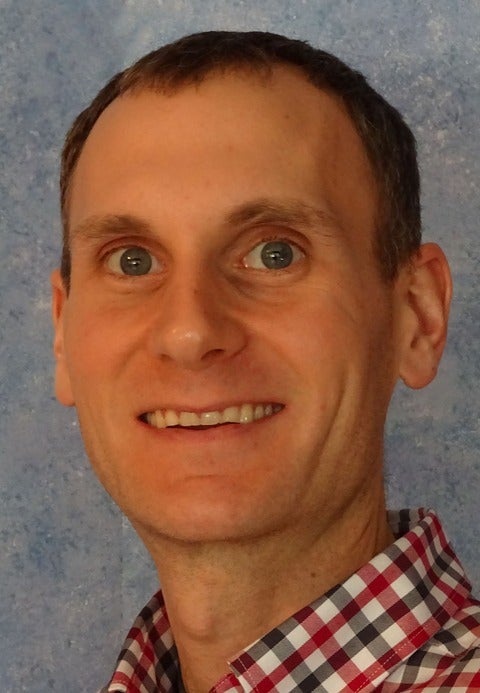
Britt Anderson

Associate Professor

Dr. Anderson's approach to research in cognition emphasizes mechanistically specific and computationally framed hypotheses combined with behavioural studies in normal subjects and people with focal brain injury. His current research focuses on attention and updating.

James Beck

Associate Professor

Dr. Beck's research deals primarily with motivational and self-regulatory processes. He studies the way individuals allocate finite resources, such as time, effort, and attention across multiple, competing demands.

Hilary Bergsieker

Associate Professor

Dr. Bergsieker's research examines the interpersonal dynamics of intergroup interactions and relationships -- probing impression management, strategic communication, nonverbal behaviour, affect, depletion, and trust -- to understand when and why problems can arise even in the absence of animus. 

Derek Besner

Distinguished Professor Emeritus

Dr. Besner's research interests involved basic processes in reading, acquired reading disorders, semantic processing, orthographies and phonologies, computational modelling, intention and control, mental set, and attention and automaticity.

Dr. Bobocel's research program focuses on social justice and the study of fairness/justice in the workplace. Her research aims to understand how unfairness affects employees, why unfairness persists in the workplace, and how to promote the fair treatment and well-being of employees, with a goal to create more effective and functional workplaces.

Douglas Brown

Professor

Dr. Brown's research focuses on three areas: 1) understanding basic processes surrounding organizational leadership and the nature of the influence process through which leaders impact subordinates and subordinates impact leaders, 2) investigating workplace mistreatment and deviance, both in terms of their consequences as well as their antecedents, 3) the nature of the factors that exacerbate and mitigate the negative impact of abusive supervision on employee’s behaviour and well-being, such as retaliation, values, and self-control, and why and when supervisors engage in abusive behaviour.

Dillon Browne

Associate Professor

Dr. Browne's program of research examines the influence of Adverse Childhood Experiences (ACEs), trauma, and socioeconomic status on human development. He considers development in a variety of domains, including cognition, academic achievement, socioemotional functioning, behaviour, and mental health. The approach he takes is unique in that he applies a “family systems” lens to understanding these developmental phenomenon. 

Trent Cash

Postdoctoral Fellow

Much of Dr. Cash's research focuses on one core question: Do decision makers know why they make the decisions that they do? In his postdoctoral research, he plans to apply the KoW paradigm to healthcare settings to investigate patient knowledge of their medical preferences. He also investigates the metacognitive capacities of Large Language Models (LLMs), like ChatGPT and Claude. He will be merging these two lines of inquiry by studying whether LLMs can be programmed to act as reflective conversational partners that can help decision makers better understand their own decision processes. 

Clara Colombatto

Assistant Professor; Cognitive Research Area Head

Dr. Colombatto's research explores various aspects of human perception and cognition at the intersection of vision science, cognitive psychology, and social psychology — with a special focus on the visual roots of social cognition.

Kat Cost

Assistant Professor

Dr. Cost's current research focuses on child developmental outcomes within the socio-ecological model framework. Individual factors such as child health behaviours (e.g. screen behaviours, sleep, physical activity), child temperament, and child sex assigned at birth; proximal contexts such as household income and family functioning; and distal ones such as parental employment quality and neighbourhood quality which have been shaped by systemic racism and classism are all known to impact child developmental outcomes. 

Sarena Daljeet

MA Candidate

Sarena is working under the supervision of Dr. Jonathan Oakman as part of the Psychological Intervention Research Team. Her research addresses the question of how therapy works by examining mechanisms that lead to improvement in psychotherapy, including the therapeutic alliance and emotional processing. She is currently interested in methodological issues within observational coding systems used in psychotherapy research. She is also involved in research on emotion-focused interventions for youth and caregivers.

Dr. Danckert has two research programs in his lab that are relatively independent from one another: boredom and mental model updating. He studies boredom in a wide range of ways: behavioural tasks like foraging which pit exploration against exploitation, sustained attention tasks that are by design monotonous and dull and executive control tasks that to some extent will tap into the capacity for self-control. His work on mental model updating was born out of work on the neglect syndrome – typically arising from right parietal neglect patients behave as though the left half of the world has ceased to exist. 

Stephanie Denison

Professor; Associate Chair Graduate Affairs

Dr. Denison is the director of the Developmental Learning Lab and co-PI for CORAL (the Child Online Research Activities Lab). She and her students study infant and early childhood cognition, mostly as it relates to how children learn and how they use multiple types of information in their inferences.

Mike J. Dixon

Professor Emeritus

Dr. Dixon's research program has investigated gambling behaviour. Much of his research focused on some of the deceptive features of multiline slot machines. In 2010, his lab coined the term “losses disguised as wins” to describe slots outcomes where players, for example, bet 1$ on a spin and won back 20 cents. His work on losses disguised as wins led to policy changes in Australia. His lab also coined the term “dark flow” to describe the unusual state of absorption that problem players especially experience while playing slots. This state appears to be sought after by depressed players who use slot machine play as a maladaptive coping mechanism. The reinforcing sights and sounds of the slot machine captures their attention, preventing their minds from wandering to negative places.

Richard Eibach

Associate Professor; Faculty of Arts Associate Dean, Undergraduate Studies

Dr. Eibach's research focuses on social judgment, with an emphasis on the study of construal processes, naive realism, and egocentrism. More specifically he studies judgmental biases that influence perceptions of social and personal change. He is also interested in social movement dynamics, the development of moral panics, and the relative success of competing ideologies. The theme of change links his interests in social judgment, autobiographical memory processes, intergroup conflict, political psychology, and life-course transitions.

Colin Ellard

Professor Emeritus

Dr. Ellard's research focused on how the organization and appearance of natural and built spaces affects movement, wayfinding, emotion and physiology. His approach to these questions was strongly multidisciplinary and was informed by collaborations with architects, artists, planners, and health professionals. 

Dr. Fernandes' research program involves developing an understanding of the cognitive processes, and brain regions, involved in memory and language. She is interested in knowing how we encode new information, how it is organized and represented in the brain, and how we reactivate the information during retrieval, particularly how these change as people age.

Geoffrey Fong

Professor

Dr. Fong's research focuses on combining psychological theories and research methods with traditional epidemiological survey methods to evaluate the impact of tobacco control policies on entire populations in countries.

Ori Friedman

Professor; Developmental Research Area Head

Dr. Friedman is interested in social cognition in children and adults, and many other topics. His recent research has investigated how people understand thoughts, emotions, and actions; how they think about ownership, rights, and responsibilities; and how they think about fiction, pretense, and counterfactual possibilities.

Dr. Fugelsang's primary focus is on higher-level cognition. His lab’s research has predominantly focused on the interplay between intuitive and analytic processes supporting complex reasoning and decision making. These decisions may involve analogical, deductive, or probabilistic information. The lab has also extended its lines of inquiry to look at the role of intuitive and analytic processes in real world domains, such as creativity, moral judgments and values and one’s susceptibility to misinformation.

Dr. Grossmann's research explores how people make sense of the world around them—their expectations, lay theories, meta-cognitions, forecasts—or it concerns how larger cultural forces impact human behaviour and societal change. Currently, his lab is working on the topics of AI-augmented cognition, wise reasoning, intellectual humility, perspective-taking, mindfulness, normative standards of judgment, and the power of forecasting societal change by advocates of clashing views on the future.

Sara Hart

Professor

Dr. Hart's research has mostly focused on using twin and genomic methods to understand the "nature" and "nurture" of child development. She examines the role of an individual’s genetic variants in predicting school achievement and intervention response. She also spends a lot of time trying to understand the direct role of environments around children, controlling for genetic predispositions.

Dr. Henderson is interested in (a) the role of early temperament on children’s social development, (b) affective and cognitive influences on self-regulation in typically- and atypically-developing children, and (c) developmental psychophysiology.

Neil Hester

Assistant Professor
Dr. Hester's work investigates the myriad factors that explain how perceivers form impressions of targets. This work encompasses topics such as stereotyping and discrimination, social categorization, face perception, and perceptions of bodies and clothing. His research engages with key theories and models in social psychology while also integrating critical ideas from outside of psychology (e.g., intersectionality theory). In my work, he uses a combination of experimental methods, secondary analysis of large datasets, simulation, and mixed methods. 

Annika Hillebrandt

Assistant Professor

Dr. Hillebrandt's research focuses on topics related to behavioural ethics (e.g. understanding outcomes of unethical workplace behaviour, how to reduce unethical workplace behaviour), organizational justice (e.g. how employees form perceptions (un)fairness), and emotions in the workplace (e.g. how employees are influenced by emotions expressed by their coworkers). 

Roxane Itier

Associate Professor; Cognitive Neuroscience Research Area Head

Dr. Itier investigates the temporal dynamics of cognitive processes involved in the perception and recognition of face identity, facial expressions of emotion, gaze discrimination and their interactions, and how these processes relate more broadly to social cognition and individual traits. She is particularly interested in the central role of eyes in these processes, at the behavioural and neural levels. 

Sam Johnson

Assistant Professor

Dr. Johnson uses experiments and modeling to understand both basic cognitive mechanisms underpinning thought and choice, as well as how these mechanisms scale up into social interactions and institutions like markets and governments.

Allison Kelly

Associate Professor

Dr. Kelly's current research interests include social factors (e.g., types of interactions, relationships) that support versus undermine self-compassion, and that heighten versus soften self-criticism, behaviours in daily life that support versus undermine self-compassion, and that heighten versus soften self-criticism, accessible interventions to support self-compassion in daily life, and ways of promoting self-compassion in individuals who are highly self-critical and fearful of self-compassion.

Dr. Koehler's research investigates the intuitive assessment of uncertainty involved in everyday planning, prediction, and decision making. This research includes the study of how people evaluate evidence when estimating the probability of an uncertain event, how generating scenarios or explanations influences the perceived likelihood of future events, and how current intentions influence self-predictions of future behaviour. 

Yisheng Li

Postdoctoral Fellow

Dr. Li's research program bridges computational social sciences and management. His long-term objective is to pursue big data-driven, computationally intensive theory construction. At the University of Waterloo, his postdoctoral research will investigate trying circumstances in life and coping strategies from large-scale, cross-cultural/lingual survey data. 

Colin MacLeod

Distinguished Professor Emeritus

Throughout his career, Dr. MacLeod's research emphasized the broad domain of human cognition, with particular focus on attention, learning, and memory. Most recently, his lab was exploring the production effectthat having said things out loud helps in remembering them—and contingency learning—developing implicit associations between relevant and irrelevant information.  He continues to be fascinated by the interplay between attention and memory, and the role that learning plays in that interaction.

Tara McAuley

Associate Professor

Dr. McAuley's research interests pertain to the development of executive control - a set of inter-related skills that facilitate purposeful, goal-oriented behaviour. Her goal as a clinician scientist is to cultivate a programme of research in which the promotion of these skills is an overarching theme.

Sean McCarron

Postdoctoral Fellow

Dr. McCarron is interested in second language (L2) acquisition, and the role of implicit learning through print exposure (i.e. lifelong reading experience). With Dr. Hart, he is studying the genetics of reading disability using large-scale, longitudinal twin datasets. He is currently look at gender differences in access to language intervention services in schools. This project will determine to what extent this difference in access is driven by true gender differences in language ability, as opposed to structural barriers and stereotypes which may prevent girls from being identified as early or as often as boys. 

Megan McCarthy

Associate Professor, Teaching Stream; Director of Arts First

Dr. McCarthy studies the personality predictors of trust, emotional expression, and conflict behaviour in close relationships, and how these factors, in turn, predict relationship outcomes and individual well-being. She is especially interested in understanding how personality and motivational variables interact to predict how people think, feel, and behave in relationships. She is also interested in the initiation of relationships, particularly across group boundaries (e.g., race, religion, etc.). 

Ian McGregor

Professor

Dr. McGregor's research interests include personal projects, values, grace, inspiration, commitment, motivation, and meaning in life.

John (Jay) Michela

Professor Emeritus

Dr. Michela's research concerned a variety of influences on employee development, satisfaction, motivation and performance. His published work has provided some of his field’s earliest demonstrations of non-linear multi-level modelling, structural equation modelling, and multi-dimensional scaling.

Dr. Moscovitch's research explores the intersection of social anxiety and the self. He investigates how social anxiety shapes people’s thoughts, emotions, and behaviours in social contexts, with particular attention to the role of autobiographical memory and self-schema processes. His work seeks to identify the mechanisms that underlie social anxiety and to translate these insights into more effective psychological interventions. 

Dr. Nilsen examines how children, adolescents, and adults successfully navigate communicative interactions with others. This work has relevance for identifying who may be at risk for communicative challenges and what may be the best way to support youth in their socio-communicative development. 

Dr. Daniela O'Neill

Professor; Director, MASc Developmental and Communication Science Program

Dr. O'Neill's research investigates the development of language and cognition in early childhood (1 to 5 years) with a particular focus on children's early use of language (pragmatic language development) and how it is influenced by children's developing understanding of their own and other people's minds (e.g., adapting their communication to take into account different perspectives or knowledge states of communicative partners). 

Jonathan Oakman

Associate Professor

Dr. Oakman studies the change process in response to psychological interventions covering diverse topics such as case conceptualization, motivation, nonspecific factors in change processes, and interventions to reduce music performance anxiety.

Rotem Paz

Postdoctoral Fellow

As a clinical psychologist and neuropsychologist (licensed in Israel) with training in neuroscience, Dr. Paz is deeply interested in how early experiences and memories shape the brain, biological processes, personality, and subjective experience. 
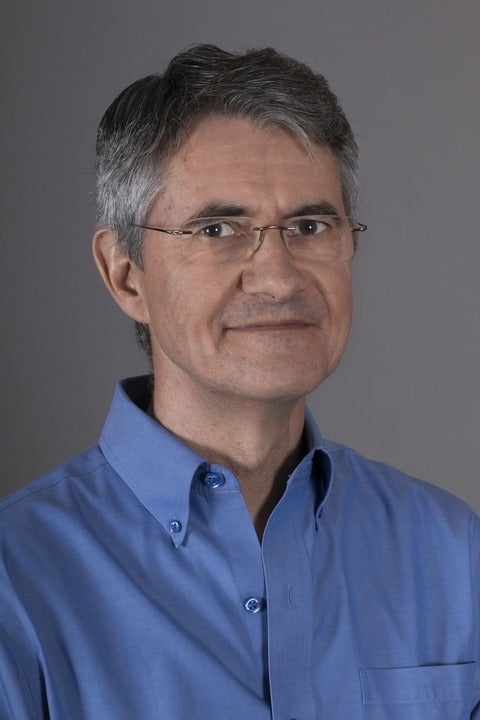
Anju Philip

Assistant Professor, Teaching Stream

Dr. Philip's research focuses on fields of Organizational Behaviour and Leadership, specifically topics of work-life balance, social networks, and racialized employees. Her current research focuses on understanding the work-life experiences of professionally employed racialized women, with a present focus on South Asian women.

Marjory Phillips

Director, Centre for Mental Health Research and Treatment

Dr. Phillips' primary responsibilities include operational oversight for the Centre for Mental Health Research and Treatment, clinical supervision of clinical psychology graduate students and residents, and facilitating research in the CMHRT.

Dr. Purdon is interested in how anxiety and related difficulties develop such as obsessions, intrusive thoughts, worry, rumination, doubt, compulsions, avoidance, and fight/flight responses. 

Kate Ratliff

Associate Professor; Social Research Area Head

Dr. Ratliff's research is in the area of attitudes and social cognition and generally seeks to understand how attitudes and stereotypes form and how they influence judgements and behavior. She uses a variety of tools and methods for understanding bias in different domains, though most of her research is focused on intergroup attitudes.

Uzma Rehman

Associate Professor

Dr. Rehman's research is in the area of human sexuality, with a focus specifically on factors that promote or hinder healthy and open sexual communication between partners. She investigates the role of emotional avoidance in sexual communication and examines how an individual’s working models of intimacy and attachment needs influence the course and types of sexual difficulties they experience in their current relationship. 

Evan F. Risko

Professor; Chair

Dr. Risko's research interests include: 1) distributed cognition, the idea that human cognition often involves, as an integral part, the manipulation of the body and/or physical environment); 2) effort perception, trying to better understand how individuals understand effort and decide how effortful given lines of action might be; and 3) education and training, using research in cognitive psychology to help improve practices in education and training. 

Maksim Rudnev

Research Associate

Dr. Rudnev looks at determinants of values and worldviews across individuals in various countries and cultures. He believes this mystery can be unravelled through various scientific methods, and this belief shapes his dual-focused research interest: understanding the substance of cultural (in)variability and the methods intrinsically linked to cross-cultural inference.

Pamela Seeds

Clinical Associate Professor, Teaching Stream

Dr. Seed's primary research interest is exploring the role of cognition and life stress in depression. Other research interests include exploring diathesis-stress and stress generation models of depression using self-schema organization as a cognitive vulnerability factor, the influence of social support on the adversity, stress, and depression relationship, and the developmental origins of cognitive vulnerability to depression.  

Daniel Smilek

Professor

Dr. Smilek's research explores the factors that influence how people pay attention while they perform tasks in their everyday lives. His lab has explored various aspects of attentional engagement, such as (1) the ubiquitous experience of mind wandering, (2) sustained attention to tasks over protracted periods of time (i.e., vigilance), (3) attention-related errors, (4) media multitasking, and (5) peak engagement (i.e., flow). 

Paul Wehr

Associate Professor, Teaching Stream

Dr. Wehr's passion is undergraduate instruction and support. His focus is on course development, and the use of student response systems (SRS) in the classroom. In addition to an official advising role within the Psychology Department, he consults on a variety of topics – such as note-taking, exam prep, library research, and scientific writing – that help students to adapt and succeed in university and beyond. 

Katherine White

Professor; Associate Chair Undergraduate Affairs

Dr. White's research explores what infants and toddlers know about language (their own, or language in general) and how they come to know it: What knowledge and abilities do infants bring to the task of language acquisition, and how are they altered by experience with the native language? Her work primarily investigates these questions with respect to early perceptual language development (in infants and toddlers aged 6-24 months), with a focus on the acquisition of the speech sound system and early word learning.

Joanne Wood

Distinguished Professor Emerita

Dr. Wood's research focuses on interpersonal interactions and close relationships—in particular, how personality shapes relationship processes.