2026 Pearl Sullivan Emerging Global Leaders Award Recipient
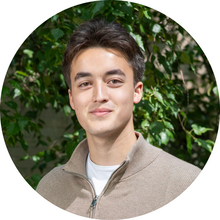
Jarett Dewbury, BASc '26, biomedical engineering
Jarett Dewbury, the 2026 recipient of the Pearl Sullivan Emerging Global Leaders Award, has built an exceptional record of leadership, research and community building in engineering and AI. As a Biomedical Engineering student with a specialization in Medical Artificial Intelligence, he has spent his undergraduate years working to make advanced AI accessible, both in healthcare and within the student community at Waterloo.
As co-founder of WAT.ai, the University of Waterloo's AI Engineering Design Team, Jarett helped grow a community of more than 800 members, launching more than 40 collaborative projects and 10 publications. His research has taken him to MIT, Harvard Medical School and Massachusetts General Hospital, where he has worked on AI diagnostics for resource-limited clinical settings. This work earned him a first-author publication at ICLR and the 2025 Faculty of Engineering Co-op Student of the Year Award.
Jarett plans to pursue a PhD and ultimately found a company focused on AI diagnostics for underserved health systems globally. He also intends to establish an international research scholarship supporting Waterloo undergraduates who present work at conferences abroad, removing the financial barriers he himself has navigated throughout his career.
2026 Pearl Sullivan Emerging Global Leaders Award Finalists
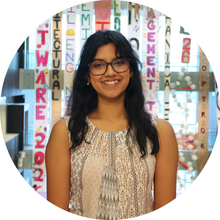
Nevedhaa Ayyappan, BASc '26, systems design engineering
Nevedhaa Ayyappan is a Systems Design Engineering student whose work sits at the intersection of community building, product design, and innovation policy. She has been a longtime host at Socratica, an open collective of artists, engineers and builders, and has helped transform Waterloo's campus culture into one defined by making. Socratica brings together people working on passion projects through weekly coworking sessions, where participants share unfinished work, find collaborators, and grow into confident makers. This year, Nevedhaa co-chaired Socratica's flagship Symposium, a celebration of making that drew over 2,500 attendees from more than 100 cities worldwide. The organization now has active nodes in over 40 cities globally and has partnered with organizations like Anthropic and Shopify to bridge grassroots maker communities with institutional support.
Through her experience working with grassroots communities, global data policy orgs and rapidly-scaling startups, Nevedhaa developed a deep conviction that Canada's innovation challenges are about coordination and infrastructure, not talent. She has seen firsthand, through years of building Socratica and watching graduates leave the country, that the systems meant to support builders in Canada do not connect.
After graduating, Nevedhaa plans to continue working at the intersection of product, policy, and people, researching how Canada can build the connective infrastructure its innovation ecosystem lacks. Her longer-term goal is to establish a science and technology policy institution that ensures that the world's most capable builders can create at the highest level.

Binalpreet Kalra, BASc '26, biomedical engineering
Binalpreet Kalra is a Biomedical Engineering student whose path through Waterloo has been shaped by a conviction that people do their best work when they feel empowered to create. After building a strong foundation in software and hardware through roles at UW Blueprint, Hack the North and the Living Architecture Systems Group, she turned that belief into action by co-founding PRISM Collective, Waterloo's first student-run creative-tech design team. PRISM was built on the recognition that many engineering students are also artists and storytellers, but lack spaces to bring those identities together.
In under a year, PRISM grew to more than 600 community members working on more than ten interdisciplinary projects, with workshops across Waterloo, Toronto and Montreal. The collective secured $15,000 in funding for Rhythms of Chaos, a large-scale installation selected for the Lumière festival at Ontario Place's Trillium Park. Binalpreet also contributed to Nucleate Dojo's DojoGrants program, helping it grow from a $25,000 pilot to more than $150,000 in undergraduate research funding.
After graduating, Binalpreet plans to move to Toronto to continue growing PRISM and pursue formal training in art and design. Her longer-term goal is to open her own studio, developing open-source creative-tech tools and building spaces where engineering is imaginative, interdisciplinary and deeply human.
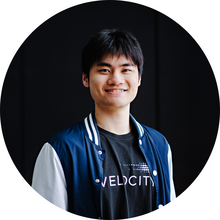
Mulei Mao, BASc '26, mechatronics engineering
Mulei Mao is a Mechatronics Engineering student whose work spans sustainable food innovation, peer mentorship and community building within Waterloo Engineering. Starting with research on duckweed-based biofuels through the GreenHouse Social Impact Incubator, he pivoted to food applications when he identified a more immediate opportunity, ultimately creating PopTein, a plant-based protein popcorn snack that won the Velocity Cornerstone Make a Sale Award.
As President of Tron Mentor Chats, Mulei helped establish more than 100 mentorship pairings between upper- and lower-year Mechatronics students, with deliberate attention to supporting students from underrepresented backgrounds. He has also served as a Mechatronics Executive Ambassador and GreenHouse Student Ambassador, representing the Faculty of Engineering at open houses, hackathons and community events, and mentoring students one-on-one throughout his degree.
After graduation, Mulei plans to continue developing his capstone smart farm project to produce high-quality Wolffia duckweed protein, with the long-term goal of delivering accessible, plant-based nutrition through meal replacements for students and busy professionals.

Olivia Zheng, BASc '26, mechatronics engineering
Olivia Zheng is a Mechatronics Engineering student whose work spans hardware research, community building and human augmentation technology. She founded PRISM Collective in late 2024 to bridge art and technology at Waterloo, a space that hadn't previously existed. In under a year, PRISM supported more than 15 member-led projects and presented work to more than 3,000 people.
Alongside PRISM, Olivia has conducted research at the MIT Media Lab, the University of Toronto, the EPFL CREATE Lab and the Augmentation Lab at MIT, contributing to work in wearable devices, neural implants and neurosurgical robotics. She has also held industry roles at Apple, Fleet Robotics and Impossible Metals, and has presented her research at the Augmentation Summit at MIT Media Lab.
After graduating, Olivia plans to continue advancing neural and assistive health technologies through early-stage research and startup work, while expanding PRISM and similar communities that explore how emerging technologies shape identity, accessibility and human experience.