University of Waterloo students from all six faculties put their problem-solving skills to the test in a hackathon delivered in partnership by the UN-Habitat's Quality of Life Initiative and the University’s Pearl Sullivan Engineering Ideas Clinic.
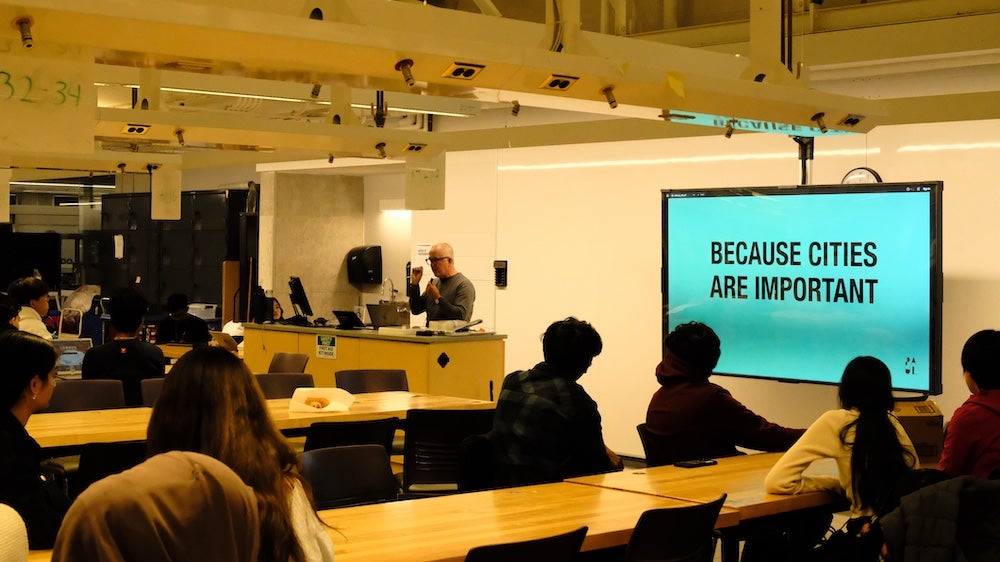
The event, designed to engage university students as strategic partners in community transformation, challenged the 70 participants to solve pressing local problems that affect urban wellbeing in the City of Waterloo.
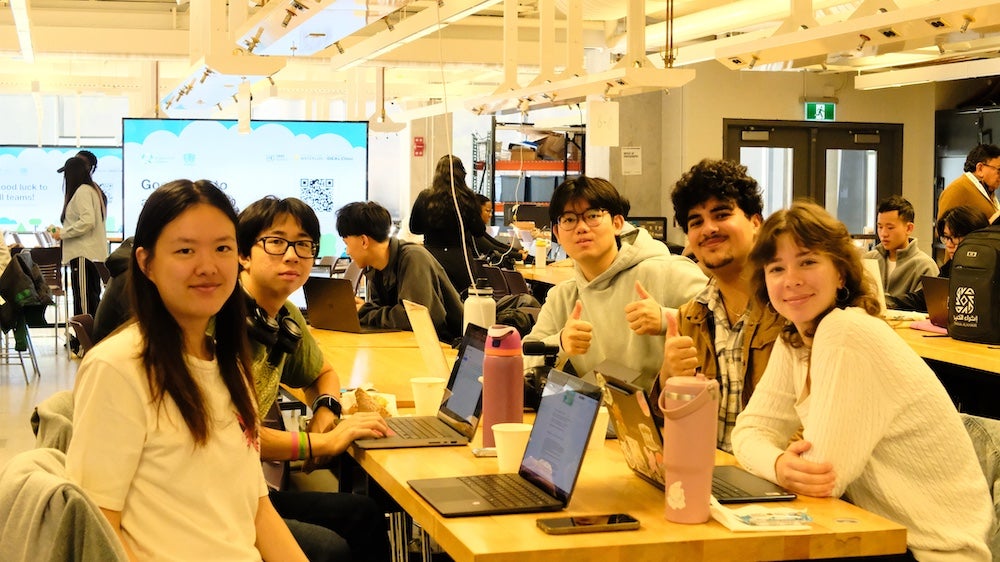
The 24 interdisciplinary student teams worked to identify problem spaces, propose local indicators and prototype youth-led approaches that help municipalities monitor change and target improvement efforts. They used a rapid design cycle to frame issues, collect data, map stakeholders and outline low-cost pilot programs to effect real change.
Three teams stood out for their innovative concepts focused on practical, city-embedded ideas to protect affordable housing, provide easy access to health care and deliver mobility aids.
The winning projects and team members:
-
Right2Return: Cesar Arriojas, Jasmine Garcha and Alffino John.
-
WellNest: Alice Hlushko, Catherine Huang, Liam Wong, Brendan Dong, Sepehr Ahmadnejadabkenar.
-
Umbrella Share: Jonathan Xiao, Kieran Beals, William Chenyin, Peng Bai


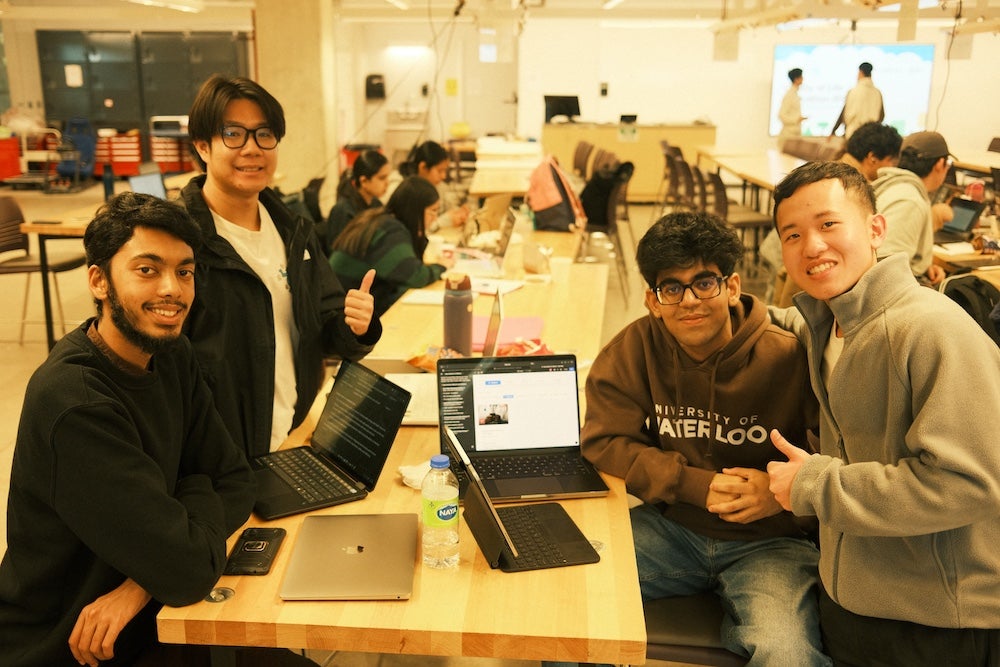
“Jasmine and I are Health students, and Alffino studies Engineering,” Cesar Arriojas, from Right2Return, said. “The truly interdisciplinary format of this event made a hackathon finally feel accessible to those of us with little experience in coding!
“Drawing on one of our courses, HLTH 260, we focused on renovictions and built an information-first concept — inspired by Prince Edward Island’s rent registry — to help tenants spot illegal increases. In a few intense hours, we worked our shared knowledge and skills into a cohesive solution and, to our surprise, won first place. We really enjoyed working together, and we’re grateful to the organizers for giving us the confidence to trust in our diverse abilities.”
Cities can drive meaningful progress on social, economic and environmental fronts, but youth are often under-tapped in shaping priorities and solutions. The hackathon underscored the Ideas Clinic’s mission to blend academic curriculum with real-world problem solving, while advancing UN-Habitat’s city-by-city approach to improving quality of life through actionable indicators and resident engagement.

The winning team Right2Return with the event's keynote speaker Paul Kalbfleisch (left).
The Ideas Clinic will travel to Ghana in December to oversee the next Quality of Life Initiative hackathon at the University of Ghana.
“In innovation, partnership is integral. Reality is the world is built by teams. This platform is a great example of what that looks like.” — Grayson Bass, innovation advisor, Quality of Life Initiative, UN-Habitat.
The Quality of Life Hackathon was designed by the Quality of Life Initiative and facilitated by the Pearl Sullivan Engineering Ideas Clinic. Supervisors and mentors included the Quality of Life Initiative Innovation team: Linh Khuong, Dipto Biswas, Connie Kang, Guruprasanna Rajukannan Suresh, Ishu Trivedi and Mohamed Fouda; and the Ideas Clinic team. Guest judges included Kauê Braga from C40, Kathleen Sullivan from UN-Habitat, and Paul Kalbfleisch, a Waterloo based consultant and author of The Joy Experiments: Reimagining Mid-sized Cities to Heal Our Divided Society.
Get in touch with Silas Ifeanyi the engineering educational developer at the Pearl Sullivan Engineering IDEAs Clinic at the University of Waterloo, to find out how you can support and participate in upcoming interdisciplinary workshops and innovation challenges designed to improve educational outcomes.
