The Faculty of Engineering is mourning the loss of Dr. Brian Le Lievre, a professor emeritus in civil and environmental engineering. Le Lievre died on Jan. 2, 2026, at the age of 98.
Le Lievre was part of the University of Waterloo’s earliest generation of scholars in soil mechanics and geotechnical engineering, helping shape the department in its founding years. Across more than 25 years at Waterloo, he taught, mentored and led with a steady focus on students and the discipline.
Born in 1927 in Wagin, Western Australia, Le Lievre developed an early interest in mathematics, physics and problem-solving. He earned a civil engineering degree from the University of Western Australia and began his career in Tasmania, where he worked on major infrastructure projects.
Drawn by the scale of hydroelectric development in North America, he later travelled west, a journey that included time in London, England. There he met Marie, who was also travelling to Canada on the same transatlantic ship. They married shortly after arriving in Canada and shared a 70-year partnership centred on curiosity and a deep commitment to family.
Le Lievre later pursued doctoral studies in civil engineering and joined Waterloo, where he served as associate chair for civil undergraduate studies. Colleagues remembered him for his steady leadership and genuine care for students, staff and faculty.
They also pointed to the intellectual roots that shaped his approach. In Waterloo’s early soil mechanics community — strongly influenced by Cambridge-trained leaders in civil engineering, including Waterloo Engineering deans Dr. Douglas Wright and Dr. Archie Sherbourne — Le Lievre was known for bringing rigour and clarity to complex ideas, grounded in careful observation and evidence.
“Brian helped set the tone for soil mechanics at Waterloo in the early days: clear and practical, always anchored in evidence,” said Dr. Leo Rothenburg, distinguished professor emeritus and colleague of Le Lievre.
“When I arrived in 1983, he welcomed me with steady guidance and a generosity that showed up in small, daily ways. He cared about students, staff and colleagues, and he cared about doing the work well. He will be missed.”
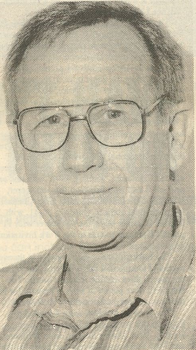
Dr. Brian Le Lievre (source: Gazette article “Retiring: prof came here as grad", November 20, 1991).