The College's Commitment to Curiosity and Creativity in Community
Research at Grebel
At Grebel, excellence in research and creativity is central to our mission and identity. Our support for research reflects the vision of founding president Winfield Fretz that Grebel students and faculty would be fully embedded in the university and “compete in intellectual discourse and research with any person on the university faculty or other colleges.” This vision continues to guide us today. Our faculty are not only educators but also active researchers, composers, performers, and advocates who contribute to multiple scholarly disciplines and take those conversations beyond the College into the community.
Research takes many forms at Grebel. It can mean composing a new piece of music, uncovering lost voices in Mennonite history, exploring causes of conflict, or deepening our understanding of the Bible and Christian faith. It is expressed and assessed in peer-reviewed books and articles, public performances, and community-engaged projects. While an individual’s creativity and curiosity may lead them to explore a particular topic, the work often extends beyond the walls of the academy into the community, where it helps us understand ourselves and the world more deeply.
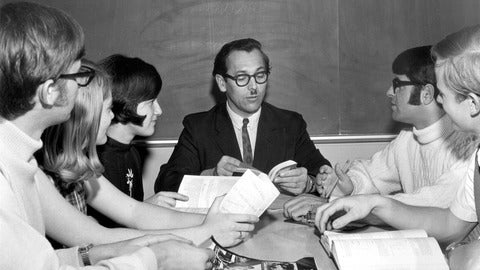
Our research also enhances our teaching. When faculty bring insights from their scholarship into the classroom, they model independent, thoughtful, and informed conversation. By offering students the opportunity to engage in research and creative work, they help students become curious, critical, and compassionate in whatever fields they go into. A critical support for faculty and student scholarship is our library and the Mennonite Archives of Ontario, which extends the opportunity for research to scholars from across the world, community members interested in genealogy, and pastors looking for sermon insights.
The impact of Grebel scholarship extends beyond the concert hall, journals, and books. Faculty at Grebel consult with civic leaders; visit schools and churches; and take on leadership roles in professional organizations. They are sought out by the media and organizations on a variety of topics. Recent examples include spirituality in the latter stages of life; the significance of Pope Francis’s visit to Canada; carceral abolition and transformative justice; and the design for Canada Post’s Christmas nativity stamp. This diversity of expression reflects the interdisciplinary nature of Grebel’s academic programs.
Faculty research, at its core, is driven by their individual interests and artistic inspiration. One of the joys of working at Grebel is the opportunity to celebrate each other’s research breakthroughs and steady perseverance in Faculty Forum presentations or more formal events like the Eby Lecture. In addition to the intrinsic value of scholarly curiosity and new knowledge and creativity, Grebel faculty contribute to the College’s mission “to seek wisdom, nurture faith, and pursue justice and peace in service to church and society” by modelling the kind of intellectual engagement we hope to see in our students and in society. Discovering something from the past can illuminate who we are in the present, and careful contextual reading of the Bible can shed new light on our own relationship to the divine. Studying the causes and effects of conflict can help prevent future conflict from erupting, and a sublime musical movement might move us in ways that are inaccessible to words alone.
In a world where higher education faces increased scrutiny and constraints on free inquiry and expression, a vibrant culture of scholarly excellence is not taken for granted. It enriches our teaching, lifts our spirits, informs our constituent communities, and helps us imagine a better world.

This spring, Troy Osborne and David Neufeld led a group of alumni and friends on a trip to Europe, bringing their historical research to life and marking 500 years of Anabaptism.