The Water Innovation Challenge
New Innovation Research Challenge Seeks Proposals for Novel Applications of BlackBerry Technologies to Advance Progress Against UN Sustainable Development Goals
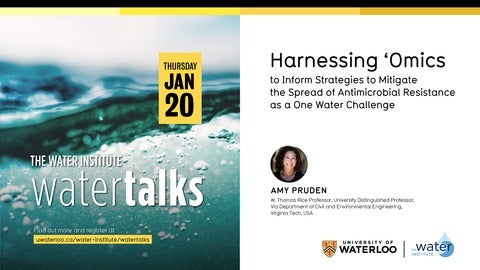
As part of the Water Institute's WaterTalks lecture series, Amy Pruden, W. Thomas Rice Professor, University Distinguished Professor, Via Department of Civil and Environmental Engineering, Virginia Tech, USA will present: Harnessing 'Omics to Inform Strategies to Mitigate the Spread of Antimicrobial Resistance as a One Water Challenge.
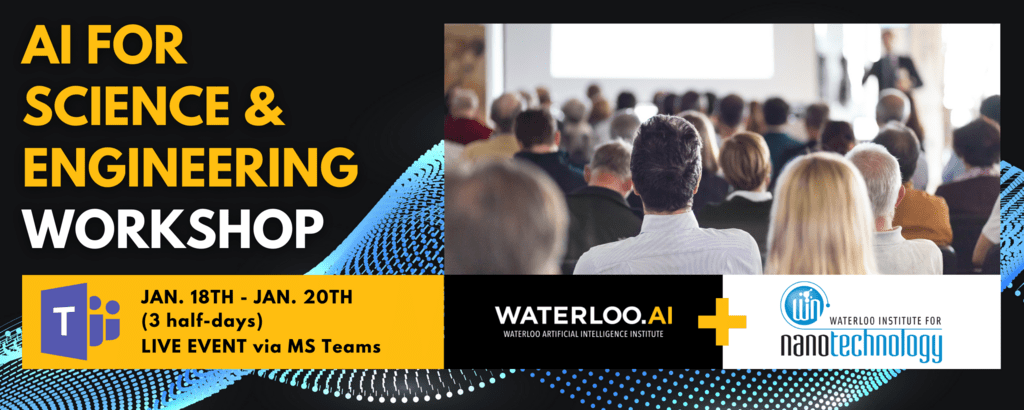
Waterloo.AI and WIN Joint Workshop on “Artificial Intelligence for Science & Engineering”
What is it like to identify as LGBTQ+ in Engineering at Waterloo and beyond? Stop by this panel discussion hosted by EngiQueers, with panelists from the faculty, industry, and alumni of Waterloo Engineering, to learn more. There will be opportunities for members of the audience to ask questions. This panel discussion will not be recorded.

Meet with experts who have taken their academic experience and found opportunities to bring quantum to market. As part of this panel, they will discuss their personal pathway into commercialization including challenges and lessons learned.
In chemical engineering and nanotechnology engineering, you'll impact many industries, ranging from medical to pharmaceuticals, electronics to automotive, and a variety of consumer goods! On Thursday, December 9 at 7:00 PM ET, learn how students in these two programs are engineering the world all around us.
In geological engineering and environmental engineering, the world is your classroom! On Monday, December 11 at 8:30PM ET, learn how students in these two programs are engineering our earth for a better future.
Whether we like it or not, whether we realize it or not, applications of Artificial Intelligence have quickly become a ubiquitous part of everyday life. The Google Maps we all rely on, your daily newsfeed, and the conversations you have with Alexa or Siri are all driven by AI. Some worry that over-smart AI-driven computers will one day control us, or that AI-driven social media apps threaten personal welfare, science-based truth and democracy. Other observers maintain that AI will free people from mundane, repetitive tasks and rapidly facilitate rapid socioeconomic development.
Meet graduate student researchers from science,
engineering, and mathematics and hear how they discovered quantum information
science found their way into research, and how the skills they gained in
their undergraduate studies are helping them develop the next generation of
quantum technology.