General fields of application of the research programs include:
- Fluid mechanics
- Fluid physics flow
- Fire research
- Interdisciplinary fluid physics
- Microfluidics
- Micro nano-scale transport
- Multi-physics interaction
- Turbulent combustion modelling
Professor Information:

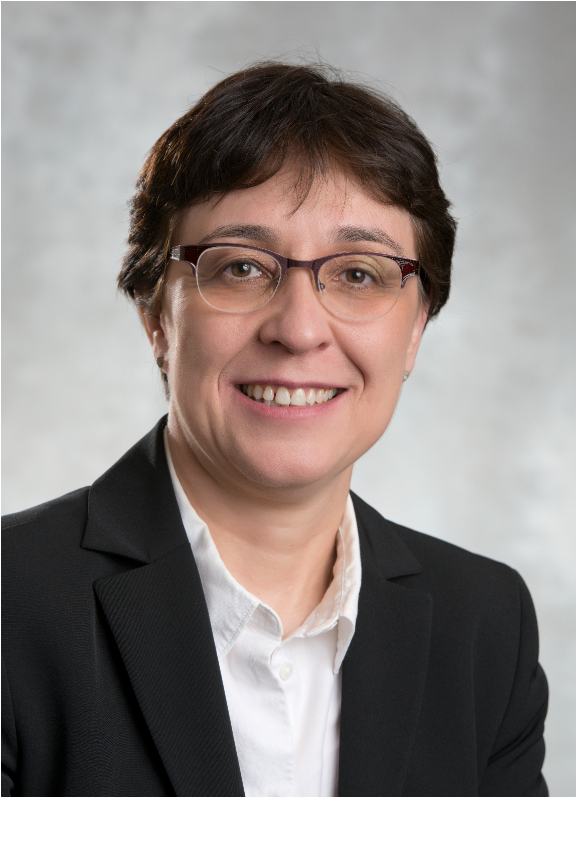
Cecile Devaud is a Professor in Mechanical and Mechatronics Engineering. She is also a member of Waterloo Engineering’s Fire Research Group and the Waterloo Institute for Sustainable Energy.
Her research group focuses on Computational Fluid Dynamics (CFD) for turbulent reacting flows. They are interested in developing and implementing new mathematical models for problems related to turbulent mixing, flame stabilization and emissions. Applications are diverse; ranging from aero and automotive engines to fire scenario analysis. More recently, some research activities have been devoted to numerical simulations of two-phase flows and compartment fires related to the nuclear industry.
Professor Devaud has special interest in using simulation to understand the relationship between turbulence and fire, specifically how turbulence can reduce or intensify fire, how fire can increase turbulence, and how these processes contribute to the growth or extinction of fires. She also studies the more subtle dangers of fire, such as toxic gases like carbon monoxide and particulates like soot. The implications of her research are practical and result in greater safety for firefighters and those they rescue.
Professor Devaud holds a US patent along with Waterloo professors – Amir Khajepour, A. Fazeli and A. Nasser for “Air hybrid engine with a plurality of air tanks".
- Computational fluid dynamics
- Turbulent combustion modelling
- Lifted flames
- Auto-ignition
- Buoyant plumes

Throughout his career, Professor Hamdullahpur has been an active researcher in thermo-fluids and energy engineering, a passionate teacher and an academic administrator. He has authored hundreds of scientific and academic publications and supervised over 50 graduate students. He was named a Fellow of the Canadian Academy of Engineering in 2014. He has served in various academic and administrative roles, including as a vice-president academic and provost at the University of Waterloo.
- Energy Conversion Systems
- Fluidized Beds: Hydrodynamics and Combustion
- Hydrodynamics of Gas-solid Two-Phase Flow Systems
- Cyclone Modeling
- Fluidized Bed Drying
- Fluidized Bed gasification of Bio-mass
- Solid Oxide Fuel Cells
Research Interests
- Multiphysics simulations, Turbulent simulations (LES/DNS), High-speed aerothermodynamics, Supercritical mixing and combustion, Turbulence modelling in two-phase flow, Low-order modelling of fluid systems, Acoustics and thermoacoustic coupling
- Multiphysics simulations
- Turbulent simulations (LES/DNS)
- High-speed aerothermodynamics
- Supercritical mixing and combustion
- Turbulence modelling in two-phase flow
- Low-order modelling of fluid systems
- Acoustics and thermoacoustic coupling
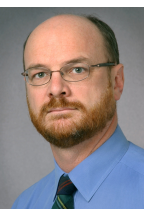
David Johnson is a Professor in the Department of Mechanical and Mechatronics Engineering at the University of Waterloo.
His research interests are in the development and application of Particle Image Velocimetry (PIV) to flows, the measurement techniques for internal flows, the turbulent recirculation flows, jet and nozzle flows, wind energy and wind turbines, large scale PIV and measurement techniques, as well as the incompressible flow turbomachinery.
Professor Johnson currently leads, and is also the founder of, the Wind Energy Research Group (WEG) at the university. The WEG works with wind turbine aerodynamics and aeroacoustics (noise). Professor Johnson and his team have several publications on incompressible flow turbomachinery, pump internal velocity measurements, fan design and performance measurement, and experimental and numerical studies of turbulent recirculating flows. Ever since working at the Ontario Hydro Research Division in the late 1980s, Professor Johnson has been involved in renewable energy research in Canada and Denmark.
- Development and Application of Particle Image Velocimetry (PIV) to Flows
- Measurement Techniques for Internal Flows
- Turbulent Recirculating Flows
- Jet and Nozzle Flows
- Development and Application of Particle Image Velocimetry (PIV) to Flows
- Wind Energy and Wind Turbines
- Large Scale PIV and Measurement Techniques
- Incompressible Flow Turbomachinery (Turbines, Fans and Pumps)
Fue-Sang Lien is a Professor in the Mechanical and Mechatronics Engineering department. Professor Lien is also the head of Waterloo Computational Fluid Dynamics Engineering Consulting.
His research interests include computational fluid dynamics, turbulence modeling, wind engineering and dispersion, aerodynamics and aeroacoustics.
Professor Lien was a member of the Scientific Committee in the 4th International Symposium on Wind Engineering in 2006. He was also a member of the Computational Fluid Dynamics Society of Canada from 1998-2006 and a member of the International and National Scientific Committee in the 5th International Conference on Computational Heat and Mass Transfer.
- Computational Fluid Dynamics
- Urban Flow and Dispersion Modelling
- Turbulence Modeling and Large Eddy Simulation
- Free-Surface Flow
- Buoyancy-Driven Flow
- Turbomachinery Flow
- Unsteady Combustion
- Aeroacoustics
- Inverse Problem
- Energy

Sushanta Mitra is a full Professor in the Department of Mechanical & Mechatronics Engineering and is cross-appointed as a Professor of Chemical Engineering, Electrical & Computer Engineering, Physics & Astronomy, and Chemistry at the University of Waterloo. He serves as the Executive Director of Canada’s largest nanotechnology institute – the Waterloo Institute for Nanotechnology (WIN). Before joining Waterloo, he had several administrative roles in Canadian higher education, including Department Chair (Lassonde School of Engineering), Associate Vice-President Research (York University) and Assistant Vice-President Research (University of Alberta). He also served as the President of the Canadian Society for Mechanical Engineering. For his contributions to science and engineering, he has been elected a fellow of several professional organizations, including the Canadian Academy of Engineering, the Royal Society of Chemistry, the American Physical Society, the American Association for the Advancement of Science and a foreign fellow of both the Indian National Academy of Engineering and the National Academy of Sciences India. He has an entrepreneurial mind, being the Founder & CEO of a Canadian startup, Aquabits Inc. (on quantum computing) and a Dutch startup, SLE Enterprises B.V. (on ultra-fast encapsulation technology), supported by the University of Waterloo.
Research Interests
- Microfluidics and Nanofluidics, Interfacial Science, Bio-MEMS, Integrated Water Management, Fuel Cells, Transport Processes, Porous Media
- Microfluidics and Nanofluidics
- Bio-MEMS
- Integrated Water Management
- Fuel Cells
- Transport Processes
- Connectivity and Internet of Things
- Nanotechnology
- IoT
- Devices
- Application Domains
- Networking and Data
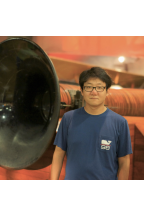
Zhao Pan is an Assistant Professor in the Department of Mechanical and Mechatronics Engineering at the University of Waterloo and the Principal Investigator of the Interdisciplinary Fluid Physics Lab - Pan Lab. Prior to joining Waterloo, he worked at Utah State University and Florida Center for Advanced Aero-propulsion (FCAAP, FSU) as a postdoctoral fellow.
His research interests span from fundamental fluid physics (e.g., jets, bubbles, droplets, and cavitation), micro/bio-fluids, to advanced fluid flow diagnostics. Most of his studies are driven by curiosity and serve both academia and the community with creative ideas and broader social impact.
Working with scientists and engineers from different fields, his multi-disciplinary fluid dynamics studies have been published in journals such as PNAS, Nature Plants, J. Fluid Mech, Phys. Rev. Fluids, Phys. Fluids, and Soft Matter, etc.
- Fluid dynamics
- Bio-mechanics
- Micro-fluids
- Flow diagnostics
- Uncertainty quantification
- Velocimetry-based pressure measurement
- Cavitation
- Droplets and bubbles
- Jets
- Dynamics and controls

One of professor Peterson’s research projects is Energy Harvesting from Small-Scale Fluid Structures, which addresses the challenge of extracting usable energy from small-scale aquatic environments. More specifically, this program seeks to exploit coherent fluid flow structures for energy harvesting.
Professor Peterson’s group is also heavily involved in studying the Laminar Flow in a Curved Tube with an Implanted Stent Model. This research examines the role of stent struts, that is, implanted mechanical devices for reopening an occluded vessel, on the axial and secondary fluid flow development. This problem is tackled from an analytical perspective, modelling the stent as a small perturbation to a nominally circular cross-sectional geometry, as well as experimentally and numerically when the flow parameters and geometry are such that the analytical problem is intractable. This fundamental flow study has implications beyond the vasculature, such as heat transfer and mixing.
- Fluid mechanics
- Biofluid mechanics
- Cardiovascular flows
- Underwater propulsion
- Smart materials
- Biological Fluid Dynamics
- Fluid/Structure Interaction
- Vortex Dynamics
- Energy Harvesting
- Optical Diagnostic Methods for Fluid Mechanics
- Vibrations

Carolyn Ren is a Professor in the Department of Mechanical and Mechatronics Engineering and director of Waterloo Microfluidics Laboratory. She currently holds a Tier 1 Canada Research Chair in Microfluidic Technologies. She was recently named one of WXN Canada’s Top 100 Most Powerful Women (2021). She is also a Member of the Royal Society of Canada College (2018) and a Fellow of the Canadian Society of Mechanical Engineering (2012). She was recognized as one of 20 leading innovators in Women of Innovation: The Impact of Leading Engineers in Canada. Dr. Ren is also an entrepreneur and her microfluidic innovations have spurred the launch of four start-up companies with her students (Advanced Electrophoresis Solutions, Alphaxon, QuantWave Technologies, and Air Mircrofluidics Systems.
Current research programs focus on developing microfluidics enabled wearable technologies and products such as active knee sleeve and edema sleeve, instrumentation for protein fractionation, water quality monitoring and infectious disease diagnosis such as the COVID-19 and enabling tools for automated high-throughput single particle or single cell analysis using active droplet microfluidic platform technologies.
- Microfluidics
- Lab-on-a-chip
- Droplet Microfluidics
- Soft Robots
- Microwave Sensing
- Protein Fractionation
- Computational Fluid Dynamics
- Soft lithography
- Bacterial Detection
- Advanced Manufacturing
- Connectivity and Internet of Things
- Water
- Heating, high throughput screening

Professor Weckman’s research expertise lies in the development of improved diagnostic techniques for use in reacting and non-reacting flows, reacting turbulent flows, and stability considerations in turbulent flows. The Fire Research Group’s projects entail the application of basic principles of fire science in order to understand the behaviour of full-scale fires, the flammability and performance of materials and products, fire initiation and spread, methods for fire detection and suppression, and also several ancillary issues.
- Reacting Turbulent Flows: Fires and Fire Modeling, Pool Fire Research
- Stability Considerations in Turbulent Flows
- Development of Improved Diagnostic Techniques for use in Reacting and Non-Reacting Flows
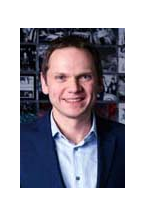
Serhiy Yarusevych is a Professor in Mechanical and Mechatronics Engineering and is the principal investigator in the Fluid Mechanics Research Lab
His research interests lie in the general area of fluid dynamics and aerodynamics. Specific areas of interest include but not limited to experimental fluid mechanics, flows over lifting surfaces at low Reynolds numbers, flows over buff bodies, flow induced vibrations, flow control, energy harvesting from fluids, industrial aerodynamics and hydrodynamics, wind turbines, and unmanned air vehicles.
Professor Yarusevych’s research combines experimental, numerical, and analytical approaches to gain insight into key flow phenomena and estimate main performance parameters. The laboratory has a wide range of experimental facilities used to study boundary layer development, laminar-to-turbulent transition, separated flows, wakes, and other external and internal flows of interest in fundamental fluid mechanics and engineering applications.
An important aspect of the research conducted by his research team is improving existing experimental methods and developing new techniques for experimental research in fluid mechanics. Both flow visualization and quantitative flow diagnostic are of interest.
Professor Yarusevych’s research has been sponsored by national and international funding agencies, including NSERC, Ontario Centres of Excellence, DFG, as well as numerous industrial partners, including Bombardier Aerospace, Babcock & Wilcox Canada, GTAA, RWDI, Suncor, and Stratotynamics.
- Experimental Fluid Dynamics
- Turbulence
- Boundary-layer Separation
- Transition
- Flow and Noise Control
- Hot Wire Anemometry
- Laser Doppler Velocitmetry
- Low Reynolds Number Flows
- Flows Over Bluff Bodies
- Flow Induced Vibrations
- Wind Turbines
- Unmanned Air Vehicles
- Aerodynamics and Aeroacoustics
- Experimental and Computational Fluid Dynamics
- Fluid Structure Interactions