Current research topics include:
- Alternative fuels
- Conduction, convection and radiation
- Emerging energy
- Fuel cell and green energy
- Greener Production
- Microelectronics heat transfer
Professor Information:

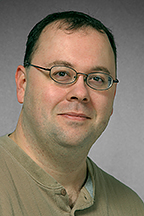
Research interests
- Energy
- Fenestration
- Spectroscopy
- Green Buildings
- Energy Efficiency
- Photovoltaics
- Solar Thermal Research
- Shading
- Hybrid Solar Systems
- Heat Pumps
- Smart Buildings
- Renewable Energy
- Energy Storage
- Energy Conservation in Buildings
- Energy and Energy Storage
- Fenestration
- Spectroscopy
- Green Buildings
- Energy Efficiency
- Photovoltaics
- Solar Thermal Research
- Hybrid Solar Systems
- Heat Pumps
- Smart Buildings
- Renewable Energy
- Energy Conservation in Buildings
- Heat Recovery Systems
- Windows and Shading
- Surface Optics Measurements
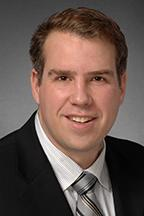
Research Interests
- Radiation heat transfer, Combustion diagnostics, Nanoparticle metrology, Inverse analysis and optimal design, Gas/surface scattering, Molecular gas dynamics, Energy, Nanotechnology, Automotive, Nanoparticle Metrology, Heat transfer in materials processing
- Radiation heat transfer
- Combustion diagnostics and nanoparticle metrology
- Inverse analysis and optimal design
- Gas/surface scattering
- Molecular gas dynamics

Professor Fraser is the past-President of the University of Waterloo Faculty Association and is serving in his eighth year as a Professional Engineers Ontario Councillor. He is also a life member of the Sandford Fleming Foundation, a member of the Ontario Engineering Competition Board, and a founding board member of Engineers without Borders.
His research interests focus on energy conversion systems. Primarily, the characterization of spark ignition engine combustion, the integration and control of alternative fuels powertrains into vehicles, and the application of energy and the second law of thermodynamics to the characterization and optimization of complex thermodynamic systems.
- Life Cycle Analysis
- In-cylinder Combustion Diagnostics
- Alternative Fuels
- Exergy Analysis of Energy Conversion Systems
- Exergy Analysis of Ecosystems
- Window Thermal Performance Modelling
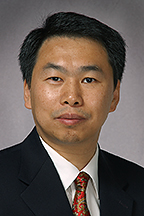
Professor Li's main research interests and activities are in the area of thermal fluid/science, including energy systems and energy storage, various energy conversion devices, propulsion and power generation systems, aerosol generation and applications, and transportation fuel cell and battery systems. These research projects involve thermodynamics, fluid dynamics, hydrodynamic stability, multiphase flow, heat and mass transfer, liquid atomization and sprays, combustion, power generation and propulsion systems.
- Mechanism of liquid atomization and spray formation
- Modelling of probability distribution of droplet sizes and velocities for practical sprays (such as in diesel and aircraft engines)
- Experimental characterization of spray formation processes and spray droplet sizes and velocities by high-speed imaging systems and phase-Doppler interferometry
- Modelling of transport phenomena in fuel cells
- Performance modelling and optimization of proton exchange membrane fuel cells
- Temperature Modelling of Hot Rolling Stocks

Graduate studies
- Not currently accepting applications for graduate students
- Energy and environmental performance of buildings in cold climates
- Large-scale decarbonization of existing buildings
- Integrating sustainability considerations into engineering education
- Sustainability management theory

Graduate studies
- Currently considering applications from graduate students. A completed online application is required for admission; start the application process now.
- Surface Engineering and Surface Thermofluids
- Contact Angle, Wettability, and Adhesion
-
Superhydrophobic Surfaces
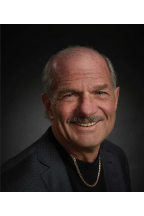
Gerry Schneider is a professor in the Department of Mechanical and Mechatronics Engineering at the University of Waterloo.
His research interests are in control volume-based finite element methods, speed flow prediction methods, phase change energy transportation, and machine vision.
- Control-Volume-Based Finite Element Methods
- All-Speed Flow Prediction Methods
- Phase-Change Energy Transport. Equation Solving for Physical Problems
- Machine Vision
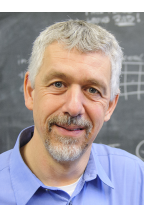
Dr. Teertstra’s research interests are in conduction and convection modeling for microelectronics and optoelectronics cooling and the experimental measurement of heat transfer in micro- and nano-scale applications using reduced pressure environment testing methods. He is also interested in predicting and modeling air cooling limits for applications in electronics.
- Conduction and Convection Modeling for Microelectronics
- Optoelectronics Cooling
- Experimental Measurement of Heat Transfer in Micro-and Nano-scale Applications
- Predicting and Modelling Air Cooling Limits for electronics applications
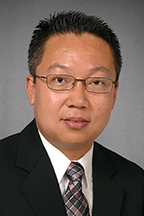
Research Interests
- Nanotechnology for energy, Nanomaterial synthesis and characterization, Alternative fuels and renewable energy resources, Combustion science and technology, Micro- and nano-scale transport phenomena, Fabrication of nanostructured electrodes, Application of energetic nanomaterials, Density functional theory and molecular dynamics, Electro-chemical energy storage devices, Supercapacitors and dye sensitized solar cells, Biomass gasification, Biofuel combustion, CO2 capture and storage, Synthesis, characterization and applications of nanomaterial, Developing nanothermite and energetic nanocomposites, fabrication of nanotube and nanowire based electrodes for advanced energy devices.
- Biofuel combustion
- Combustion generated particulates
- CO2 capture and storage
- Flame synthesis of nanostructures
- Characterization and functionalization of nanomaterial
- Application of carbon nanomaterial in energy systems
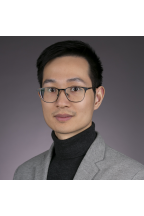
Professor XiaoYu Wu’s research group, Greener Production @ Waterloo combines expertise in thermal science, material engineering and techno-economics to develop sustainable technologies for energy conversion and chemical production. Both experimental and numerical methods will be applied to develop a fundamental understanding of the thermodynamics and kinetics in the processes. Thermo-electro-chemical processes is of interest to maximize system versatility. The kinetics and reaction mechanisms can be obtained from high throughput benchtop reactors and physical models. System-scaled numerical analysis will be used to investigate the optimal operating conditions and the energy-chemical integration. Techno-economic assessment will also be explored to evaluate the costs. These findings will accelerate the material development and process optimization and facilitate the commercialization of these technologies. The goal is to utilize renewable resources and improve global living standards.
- Energy storage
- System analysis
- Techno-economic assessment
- Sustainability
- Reacting flow
- Oxygen transport membrane reactor
- Thermochemical redox kinetics
- Fuel cell
- Hydrogen production
- CO2 capture and utilization
- Renewable fuels