Specific areas of research include:
- Electronic Packaging
- Functional Nanomaterials for Sustainability and Health
- Materials Interface Foundry
- NEMS/MEMS
- Welding and Joining
- Water Treatment
Professor Information:

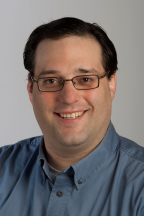
Dr. Biro’s primary research interests are: metallurgical changes during welding, development of defects during welding, increasing process robustness to improve manufacturability, physical simulation of the welding process, welding of advanced high strength steels (AHSS), dissimilar material joining and weld evaluation. He currently sits on a variety of industry committees with the AWS and the CCIIW. From his work with industry Dr. Biro was responsible for $25M in savings to manufacturing costs from the results his projects. He has been awarded over $1M in grants and currently has over 50 journal papers and 30 conference papers.
- Metallurgical transformations during welding
- Post-weld properties
- Improving weld process robustness (increasing manufacturability)
- Effect of microstructure and mechanical property hetrogenity on weld performance
- Physical simulation of the welding process
- Weld defect formation
- Welding advanced high strength steel (AHSS)
- Dissimilar material welding
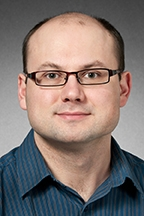
Professor Gerlich’s research interests are in the physical metallurgy of welded components, friction stir welding and processing, roll bonding, overlay welding, and material characterization of light alloys, steels, and metal matrix composites using quantitative electron microscopy.
His current efforts focus mainly on welding metallurgy of high strength steels, and dissimilar metal joining for transportation applications. To-date he has published over 60 journal papers, and 25 conference papers.
- Physical Metallurgy Of Welded Components
- Mechanical Properties Of Pipeline Welds
- Friction Stir Welding Of Dissimilar Materials
- Materials Characterization Using Quantitative Electron Microscopy
- Roll Bonding
- Overlay Welding
- Physical Metallurgy
- Mechanical Metallurgy
- Materials Characterization
- Fatigue and Failure of Materials
- Deformation of Mechanisms
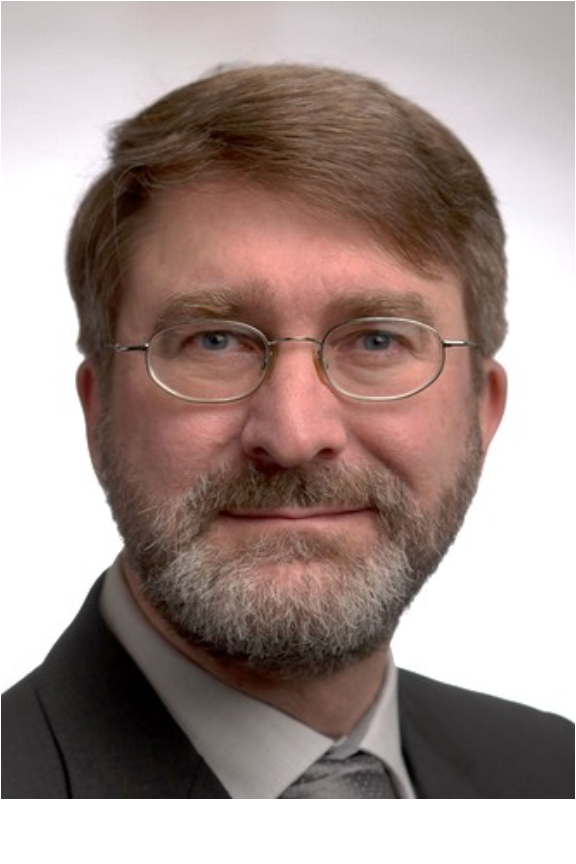
Graduate researchers in Michael’s group conduct experimental, analytical, and numerical investigations. They work with new materials, methods, and theories, and collaborate with other research groups on campus. Students and postdocs out of Michael's group were hired by companies like Microbonds, Kulicke and Soffa, Samsung, Bell, Telus, Government of Canada, Analog Devices, Tesla, Meta, Qualcomm, Nvidia, Google, SK Hynix, etc.
- Advanced materials joining processes
- Sensor technology
- Microfabrication technology
- Thermosonic and ultrasonic wire bonding

Dr. Musselman joined the University of Waterloo in 2015, where his research focuses on the development of functional nanomaterials for a variety of devices, including photovoltaic solar cells, light emitting diodes, memristors, quantum-tunnelling diodes, and novel sensors. He is interested in developing scalable methods for manufacturing nanomaterials, including spatial atomic layer deposition and pulsed laser approaches.
- Nanomaterials
- Spatial Atomic Layer Deposition
- Photovoltaic Solar Cells
- Nanoelectronics And Sensors
- Electrochemistry
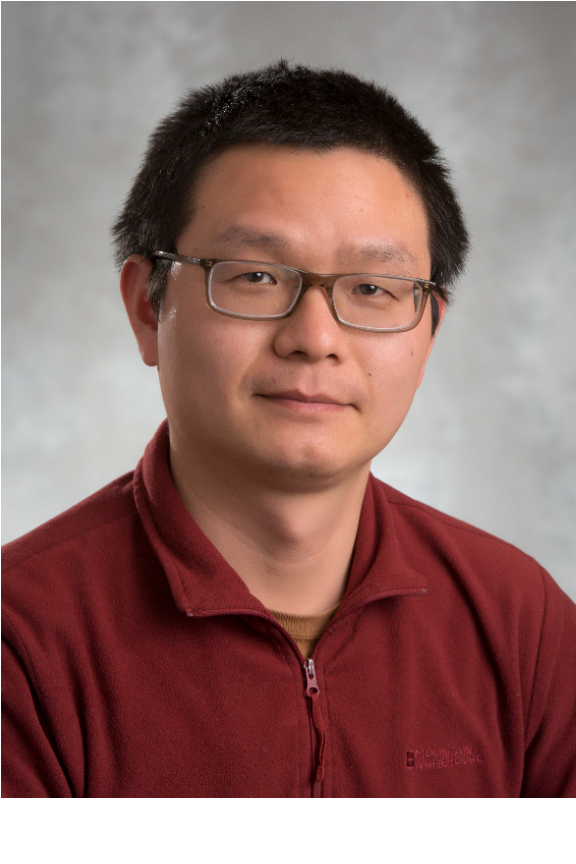
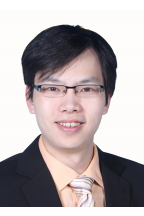
Dr. Peng received the BASc and MASc degrees in Materials Science and Engineering from the China University of Geosciences at Beijing in 2007 and 2010, respectively, and the PhD degree in Mechanical Engineering and Nanotechnology from the University of Waterloo in 2014. From 2014 to 2015, he worked as a postdoctoral fellow in the Centre for Advanced Materials Joining at the University of Waterloo. He then took an associate professor position in the Mechanical Engineering department at the Beihang University, China. In 2021, he moved back to the MME at the University of Waterloo. Dr. Peng’s research activities and interests are in the general area of materials science and processing technologies for micro/nano electronics, medical and aerospace applications, specialized in micro/nano-joining, laser processing, and brazing.
- Micro/nano joining
- Laser processing
- Brazing
- Welding Metallurgy
- Materials Property
- Devices

An accomplished materials engineer, Wells also served as the Associate Dean of Outreach for Waterloo Engineering between 2008 and 2017, and chaired its Women in Engineering committee for many years. She chaired the Ontario Network of Women in Engineering from 2013 to 2018.
Wells began her academic career as a professor in materials engineering at the University of British Columbia from 1996 to 2007, and has worked in the steel industry in Canada and internationally.
The co-author of two books including one on Canadian women innovators and the second on Canadian women in materials, her research focuses on the relationship between processing, structure and properties for advanced metallic alloys used in the transportation sector.
- Process modelling
- Hot deformation of metallic materials
- Casting of light metals
- Boiling water heat transfer
- Microstructure/processing models
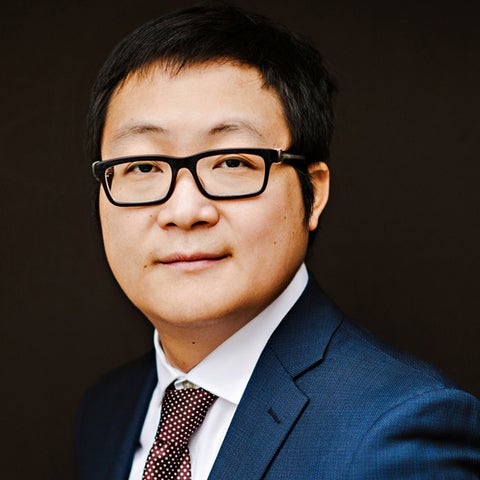
Professor Yimin Wu is the inaugural Tang Family Chair in New Energy Materials and Sustainability. Professor Wu’s research focuses on the design of new energy materials for solar fuels and batteries, and novel electronic, photonic, responsive materials for flexible electronics and soft robotics, and energy efficient neuromorphic computing through a deep understanding of energy transduction processes at interfaces. Wu is the director of the Materials Interfaces Foundry (MIF) at the University of Waterloo and serves on the board of directors in Waterloo Institute for Nanotechnology. Wu also serves on the editorial board of Energy and Environmental Materials. Wu has authored and co-authored more than 90 peer-reviewed journal papers, which includes Nature, Nature Energy (x 2), Nature communications (x 2). Wu is also listed as an inventor on 7 US/international patents. Wu has delivered over 30 invited lectures across the world in last 5 years.
- Advanced Manufacturing
- Materials Interfaces
- Energy Materials
- Solar Fuels
- Batteries
- In situ Multimodal Characterizations
- Artificial Intelligence
- Connectivity and Internet of Things
- Electronic and Photonic Materials
- Responsive Materials
- Sensing
- Healthcare
- Nanotechnology
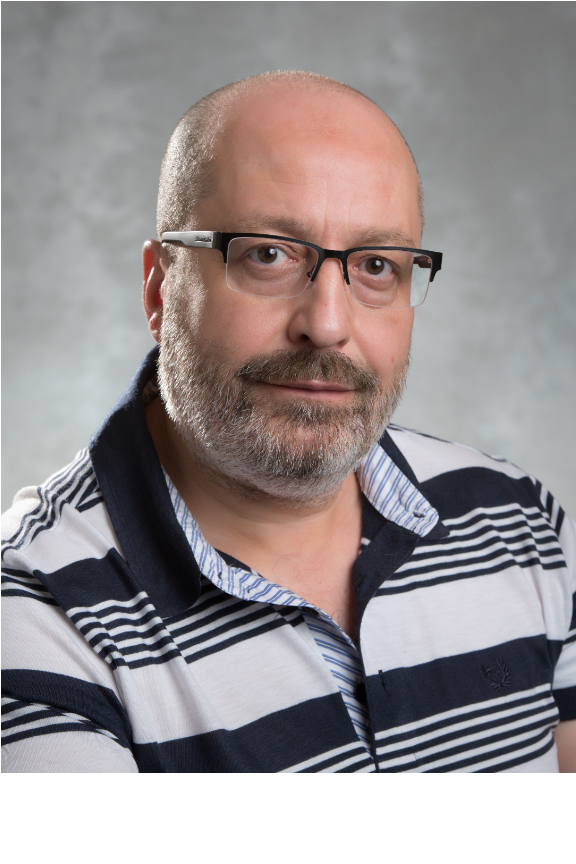
Dr. Yavuz’s research area is micro and nanoscale materials and device design, fabrication, functionalization and characterization, in four key applications areas: a. high-temperature-superconductor (HTSC) accelerators for “driven subcritical fission” superconducting magnets (thorium-recycle nuclear reactors); b. HTSC-Quantum Interference Devices (SQUIDs) for bio-sensing and Qubits for quantum information storage; c. Nano- and micro-opto-electro-mechanical systems (O-N/MEMS) devices for sensing, actuation and energy harvesting, and d. O-N/MEMS packaging, and reliability.
- Materials (Thin Films, Nanowires and Nanotubes) for Nano and Micro-Electro-Mechanical-Systems (N/MEMS)
- Nanojoining and Nanojunctions for Nano and Microelectronics
- High Temperature Superconducting Materials
Professor Zhou’s expertise lies in the areas of advanced welding and joining technologies, nanomaterials fabrication in applications such as nanosensing and water treatment, and laser processing of shape memory alloys. His research has applications in several areas such as microelectronics, medical and health-related, and automotive industries. He is a fellow of CAE, AWS and ASM.
- Laser and resistance welding for automotive applications.
- Microjoining for medical devices and electronic components: wire bonding, laser and resistance microwelding, soldering, etc
- Science and technology of welding and joining: process development and optimization, metallurgy and bonding mechanisms, and numerical modeling and simulation.
- Diffusion brazing for aerospace applications.
- Materials
Adjunct professors
Corbin, S.F., Adjunct Professor, Dalhousie University
Lenard, J.G., Distinguished Professor Emeritus
Retired professors
Esmaeli, S., Professor Emeritus, Adjunct PEng
Carolyn Hansson, Professor Emerita
Slawson, P.R., Professor Emeritus
Varin, R.A., Professor Emeritus, Adjunct