News

Filter by:

Limit to news where the title matches:
Limit to items where the date of the news item:
Date range
Limit to news items where the audience is one or more of:

Originally built as a way to secure cryptocurrency transactions, blockchain is a digital platform that verifies and records exchanges. Blockchains are global networks that can have millions of users, each adding information or data that is secured through cryptography. This creates an indisputable history of these transactions that cannot be modified by a single user, eliminating opportunities for fraud, and it is this feature that has some heralding blockchain as a way of increasing cybersecurity.

A University of Waterloo researcher has spearheaded the development of the first computational model of the human kidney.

The new model will allow scientists to gain better insights into how new drugs that target the kidney, such as diabetes medication, may work. It will also enable researchers to better learn about the functions of the kidney, including the how the organ regulates the body's salt, potassium, acid content without having to employ invasive procedure on a patient.

A new cybersecurity system developed by researchers at the University of Waterloo has a set a new standard in the fight to protect people from malicious online attacks.   

The new tool, a naming system called Bitforest, is one of the first systems that provides an efficient method of decentralized, online security in a way that is easy for the average person to use. The naming system converts more easily remembered names, such as usernames and domain names, to values like public keys needed for securely communicating with computer services and devices.

Congratulations to all the students who participated in the Bernoulli Trials Contest which was held March 2. This year, the three winners each correctly answered 12 of the 15 questions correctly. Jiahui Huang, Gian Cordana Sanjaya, and Luming Zhang each received a $50 prize.
Albert Gevorgyan placed second with 11 of the 15 questions answered correctly and received a $22 prize.
Jamie Sebastian and Anton Iliashenko received the last of the cash prizes at $14 each.

University Professor M. Tamer Özsu has received the 2018 Lifetime Achievement Award in Computer Science from CS-Can/Info-Can. Conferred annually since 2014, these prestigious national awards recognize faculty members in departments, schools and faculties of computer science who have made outstanding and sustained achievement in research, teaching and service.

Thursday, February 7, 2019

Making homes smart could become easier

Making your house “smart” could soon become cheaper and easier, thanks to new technology developed by researchers at the University of Waterloo.

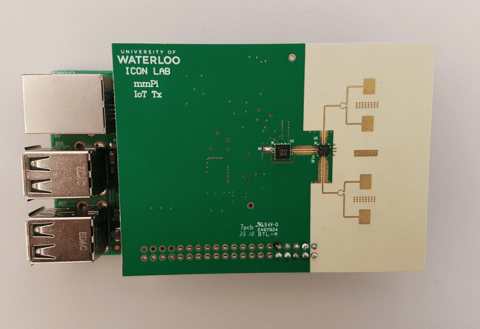
Their recent study describes an approach that can be used to deploy, for the first time, battery-free sensors into a home using existing WiFi networks. Previous attempts to use battery-free sensors ran into some obstacles making the efforts impractical. These hurdles include the need to modify existing WiFi access points, challenges with security protocols, and the need to use energy-hungry components.